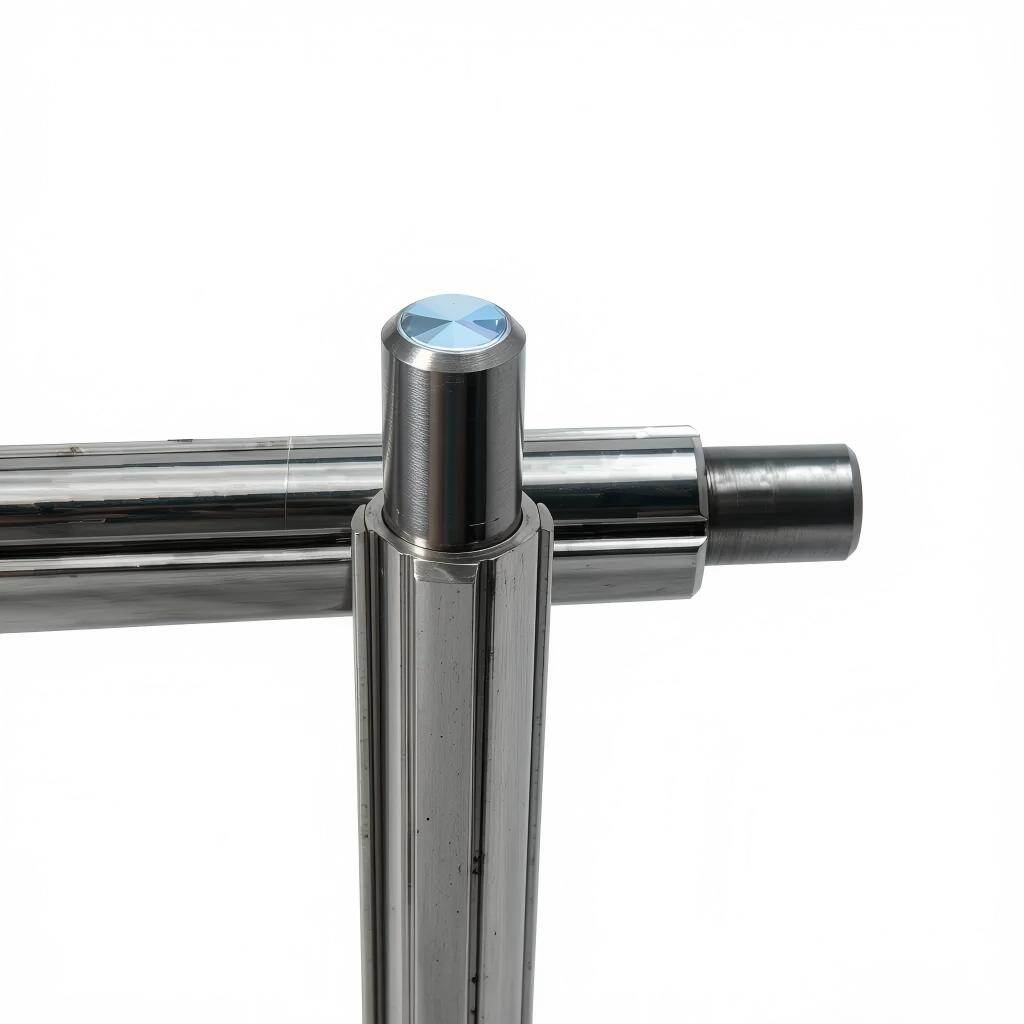
Icebreaker propellers and hull structures endure extreme conditions, including ice impact, corrosive frigid seawater, and cyclic loading, imposing nearly exacting material requirements. This article analyzes the rationale for using titanium alloys in critical icebreaker components, suitable grades, performance advantages, and key technical considerations for procurement and manufacturing.
Icebreakers aren't ordinary vessels; every critical component battles the ice.
When navigating in Arctic and polar waters, icebreakers experience loads on their propellers and hull structures far exceeding those of conventional vessels. Propellers must continuously rotate in a mixture of ice and water while directly impacting floating ice and ice ridges of varying thickness and hardness. The hull, particularly underwater attachments and seawater systems, is subjected to the combined effects of ice abrasion, low-temperature seawater corrosion, and cyclic stresses over extended periods.
Traditionally, icebreaker propellers are made of stainless steel or nickel-aluminum bronze, while hull sections in the ice belt use high-strength low-temperature steel. While these materials perform well in their respective applications, they each have performance limits under combined extreme conditions: heavy ice loading, seawater corrosion fatigue, and low-temperature brittleness. Titanium alloys, with their superior combination of high specific strength, excellent low-temperature toughness, and inherent resistance to seawater corrosion, have a long track record in Russian polar vessels, marine engineering, and specialized shipboard equipment. They are increasingly being considered for critical components in polar vessel projects.
Why are icebreaker propellers made of titanium?
The propeller is one of the most severely stressed components on an icebreaker. During interaction with ice, the blades must withstand extremely high impact loads while also resisting corrosion fatigue from seawater and cavitation erosion. These three damage mechanisms act in combination, imposing comprehensive performance requirements on the material.
1. High specific strength provides impact resistance
Titanium has a density of approximately 4.5g/cm³, only about 60% that of stainless steel, yet its strength rivals high-strength steel. This high specific strength allows titanium propeller blades to be designed thinner and more efficient for the same weight, while also resisting plastic deformation or fracture under ice impact. The reduced weight of the propeller also lowers the overall load on the shafting and propulsion system.
2. Excellent resistance to seawater corrosion fatigue
Propellers experience cyclic alternating stresses during rotation, which, combined with seawater corrosion, can easily lead to corrosion fatigue cracks. Titanium alloys exhibit superior corrosion fatigue resistance in seawater environments and demonstrate better durability than traditional copper alloys in many marine applications. Their dense surface oxide film can rapidly self-heal after minor strain damage, delaying crack initiation and propagation. For icebreaker propellers required to operate continuously for thousands of hours in icy water, this characteristic directly translates to a significantly extended service life.
3. High resistance to cavitation erosion
When propellers rotate at high speeds, pressure fluctuations on the blade surface generate cavitation bubbles. The collapse of these bubbles creates micro-jets that impact the material surface, causing erosion and spalling. A stable oxide film on titanium surfaces can rapidly regenerate, reducing continuous attack by corrosive media on the substrate and enhancing long-term service reliability. Under more severe cavitation conditions, such as in ice-water mixtures, the superior cavitation corrosion resistance of titanium alloys provides an additional safeguard for their application.
4. Exploring Applications of Polar Propulsion Systems
Russia has accumulated extensive experience in titanium alloy ship propulsion systems and specialized marine equipment, with some polar vessel projects exploring the application of titanium alloy propulsion components. These efforts demonstrate that titanium alloy propulsion parts have the potential to deliver long-term reliable performance under extreme ice loading conditions.
Other Key Applications of Titanium Alloys in Icebreakers
Unlike propellers, the demand logic for titanium alloy in other parts of icebreakers differs. Key considerations here extend beyond strength and toughness to include resistance to ice erosion wear, low-temperature toughness, and seawater corrosion resistance.
1. Corrosion protection and maintenance-free operation for underwater accessories
Underwater components such as rudders, stern tubes, and sea chest valves are constantly immersed in seawater. Traditional steel relies on coatings and cathodic protection systems to resist corrosion. In contrast, titanium alloys possess inherent resistance to seawater corrosion and can operate long-term in polar waters without any coating. For icebreakers that frequently operate for extended periods in polar regions with limited dry-dock maintenance opportunities, using maintenance-free underwater titanium alloy components significantly reduces full-life-cycle maintenance costs.
2. Seawater Piping and Heat Exchange System
The seawater cooling, fire suppression, and ballast water systems of icebreakers continuously transport corrosive seawater. Titanium alloy piping offers significant corrosion resistance in these applications. Gr.2 commercial pure titanium welded pipes are well-established for use in seawater lines, while Gr.7 palladium-containing grades provide added safety in conditions involving acidic media or high-temperature seawater.
3. Low-temperature toughness of critical ice-zone accessories
Polar seawater temperatures can drop to -2°C or lower, while air temperatures may reach -50°C. Within this range, titanium alloys exhibit increased strength as temperature decreases, while maintaining excellent toughness and avoiding the brittle transition characteristic of conventional ferritic steels. This makes them uniquely valuable for critical load-bearing components and structural connections in ice-prone regions.
4. Weldability and Dissimilar Metal Joining
Localized use of titanium alloys in ship hulls involves a key technical challenge: joining dissimilar metals, specifically titanium to steel. Since titanium and steel cannot be directly fusion-welded, reliable connections are achieved using titanium-steel transition joints. Modern titanium welding techniques and explosive cladding processes are now mature, enabling the feasible localized application of titanium alloys in ship hulls.
Icebreaker Titanium Alloys: Grades and Typical Applications
App Components | Recommended Grades | nominal component | Selection Logic |
Seawater piping | Gr.2 | CP Ti | Saltwater corrosion resistant with excellent weldability |
Heat Exchanger | Gr.2 / Gr.7 | CP Ti / Ti-Pd | Corrosion-resistant, Gr.7 for acidic or high-temperature seawater conditions |
Underwater Fittings (Rudders, Stern Tube Brackets, Sea Chests) | Gr.2 / Gr.5 | CP Ti or 6Al-4V | Saltwater corrosion resistant, maintenance-free |
High-Strength Fasteners and Load-Bearing Structures | Gr.5 (VT6) | 6Al-4V | High specific strength, excellent impact resistance, and superior corrosion fatigue performance |
Special Components of the Propulsion System | Gr.5 (VT6) | 6Al-4V | High strength, cavitation-resistant, corrosion-fatigue resistant |
Low-temperature, high-toughness components | Gr.23 (ELI) | 6Al-4V ELI | Excellent low-temperature fracture toughness |
Special acoustic structure | Gr.2 or other material options | Design dependent | Select materials by integrating acoustic performance with structural design. |
Key Technical Requirements in Manufacturing and Procurement
1. Casting and Forging Processes
Large propeller blades are typically manufactured using casting or forging processes. Titanium alloy castings require strict control of gas content during pouring to prevent porosity and shrinkage. Forged blades demand precise control of forging temperature and deformation to achieve uniform microstructure and consistent mechanical properties. Regardless of the process, suppliers must provide complete process documentation and inspection reports.
2. Dissimilar Metal Joining: Titanium to Steel
Connections between titanium alloy components and steel structures in the hull must use titanium-steel transition joints or other connection methods approved by the classification society. Manufacturing, welding procedure qualification, and non-destructive testing of transition joints shall be included in procurement technical requirements to ensure long-term reliability of dissimilar metal connections.
3. Low-temperature mechanical performance testing
All titanium alloy components for icebreaker ice-zone parts shall undergo low-temperature tensile and impact testing at the design temperature, with actual test results recorded in the material certificate. For components subject to cyclic loading, such as propellers, corrosion fatigue and fatigue crack growth rate data are critical inputs for design evaluation; obtaining these performance data during the material selection phase is recommended.
4. Non-Destructive Testing Requirements
Non-destructive testing (NDT), such as ultrasonic and penetrant inspection, is typically required for critical load-bearing components. The specific scope shall be determined based on classification society rules and project technical specifications. Inspection standards and acceptance criteria must be clearly defined in the contract, generally following ASTM, GOST, or applicable classification society regulations.
5. Files and Authentication
Icebreaker projects typically require classification society plan approval and certification. Material documentation must comply with relevant classification societies (e.g., RMRS, DNV, BV). Material certificates, non-destructive testing reports, and welding procedure documents must form a complete traceability chain to support full-process verification from raw materials to finished products.
Frequently Asked Questions
Q1: What are the advantages of titanium alloy propellers compared to copper alloy propellers?
Titanium alloy propellers are lighter, offer superior resistance to corrosion fatigue and cavitation erosion, and provide longer service life in harsh conditions such as ice regions. Although their initial manufacturing cost is higher than that of copper alloys, titanium alloys deliver overall advantages for icebreaker applications when considering total lifecycle maintenance costs.
Q2: Can titanium alloy structural components be directly welded to a traditional steel hull?
Titanium and steel cannot be directly fusion welded. A titanium-steel clad transition joint is typically used to join these dissimilar metals: the titanium side is welded to the titanium structure, while the steel side is welded to the steel hull. The design and manufacturing of the transition joint require specialized technical validation and classification society approval.
Q3: Which titanium alloy grade is commonly used in ship propulsion systems?
Ti-6Al-4V (ASTM Gr.5, Russian equivalent VT6) is one of the most widely used high-strength titanium alloys in shipbuilding and marine engineering, offering significant value in propulsion systems and critical structural component design. Material selection must be determined based on a comprehensive assessment of component loading conditions, environmental factors, and classification society regulations.
Q4: Can you supply marine-grade titanium forgings and plates?
We supply titanium plates, tubes, bars, and forgings for Arctic and marine projects that meet ASTM, EN, and customer-specific requirements. Our services include grade selection, material documentation review, third-party inspection support, and machining per drawings. To learn about our specific product capabilities, please send us your technical specifications.
Conclusion
The material requirements for icebreaker propellers and critical structural components represent one of the most demanding technical challenges in shipbuilding. Titanium alloys are applied in this field due to their unique, comprehensive performance—proven over years of polar operations. For clients planning to build polar vessels or procure titanium alloy components, selecting a partner with proven marine-grade titanium supply experience and technical support capabilities is a crucial step toward ensuring smooth material procurement and project execution.
If you are evaluating titanium alloy solutions for icebreaker or polar vessel projects and need technical selection guidance, class society certification support, or machining to print services, please send us your project requirements. We can provide tailored material proposals and quotes.
[Submit your project requirements to receive marine-grade titanium alloy material solutions and technical support]
(Yucheng Haitai Industry | Titanium Plate, Tube, Bar, Forged Parts |yuchenghaicompany.com)
English Version
Titanium Alloys for Icebreakers and Polar Vessels: Propulsion Systems and Critical Components
Icebreaker propellers and critical components face simultaneous ice impact, frigid seawater corrosion, and cyclic loading — placing extreme demands on materials. This article examines the application logic of titanium alloys in polar vessel propulsion systems and critical components, suitable grades and their performance advantages, as well as key technical considerations for procurement and manufacturing.
Icebreakers aren't ordinary vessels; every critical component battles the ice.
When navigating through Arctic and polar waters, icebreakers experience loads on their propellers and hull structures that far exceed those of conventional vessels. Propellers must continuously rotate in a mixture of ice and water while directly impacting floating ice and ice ridges of varying thickness and hardness. The hull, particularly underwater attachments and seawater systems, is subjected to the combined effects of ice friction, low-temperature seawater corrosion, and cyclic stresses.
Traditionally, icebreaker propellers are made of stainless steel or nickel-aluminum bronze, while hulls in the ice belt use high-strength low-temperature steel. While these materials perform well individually, they each reach performance limits under combined extreme ice loading, seawater corrosion fatigue, and low-temperature toughness requirements. Titanium alloys, with their unique combination of high specific strength, excellent low-temperature toughness, and inherent resistance to seawater corrosion, have a long track record in Russian polar vessels, marine engineering, and specialized shipboard equipment. They are increasingly being considered for critical components in polar vessel projects.
Why are icebreaker propellers made of titanium?
The propeller is one of the most severely stressed components on an icebreaker. During interaction with ice, blades must withstand extremely high transient impact loads while also resisting seawater corrosion fatigue and cavitation erosion. These three damage mechanisms act in combination, imposing comprehensive performance requirements on the material.
1. High specific strength provides impact resistance.
Titanium has a density of approximately 4.5g/cm³, roughly 60% that of stainless steel, yet its strength rivals high-strength steel. This high specific strength allows titanium propeller blades to be designed thinner and more efficient at the same weight, while resisting plastic deformation or fracture under ice impact. The reduced weight also lowers the overall load on the shafting and propulsion system.
2. Excellent resistance to seawater corrosion fatigue
During operation, propellers are subjected to cyclic alternating stresses combined with seawater corrosion, making them highly susceptible to corrosion fatigue cracks. Titanium alloys exhibit superior corrosion fatigue resistance in seawater environments and demonstrate greater durability than traditional copper alloys in many marine applications. Their dense surface oxide film can rapidly self-heal after minor strain damage, delaying crack initiation and propagation. For icebreaker propellers that must operate continuously for thousands of hours in icy water, this characteristic directly translates to extended service life.
3. High resistance to cavitation erosion
When propeller blades spin at high speeds, pressure fluctuations cause cavitation on their surfaces. The collapse of these bubbles generates micro-jets that impact the material, leading to surface spalling. On titanium, a stable oxide film forms and rapidly regenerates, reducing continuous corrosion from aggressive media and enhancing long-term reliability. In harsher conditions like ice-water mixtures, where cavitation is more severe, titanium alloys' superior resistance to cavitation erosion provides additional assurance for their application.
4. Exploring Applications of Polar Propulsion Systems
Russia has accumulated extensive experience in titanium alloy ship propulsion systems and specialized marine equipment, including exploratory applications of titanium alloy propeller components in certain polar vessel projects. These efforts demonstrate that titanium alloy propulsion components have the potential to deliver long-term reliable performance under extreme ice loading conditions.
Other critical applications of titanium alloys in icebreakers
Unlike propellers, the demand logic for titanium alloy in other icebreaker components differs. Key focus areas include not only strength and toughness but also resistance to ice erosion wear, low-temperature toughness, and seawater corrosion resistance.
1. Corrosion protection and maintenance-free operation for underwater accessories
Underwater components such as rudders, stern tubes, and sea chest valves are constantly immersed in seawater. Traditional steel relies on coatings and cathodic protection systems to resist corrosion. In contrast, titanium alloys possess inherent resistance to seawater corrosion and can operate long-term in polar waters without any coating. For icebreakers that frequently operate for extended periods in polar regions with limited dry-dock maintenance opportunities, using maintenance-free underwater titanium alloy components significantly reduces full-life-cycle maintenance costs.
2. Seawater Piping and Heat Exchange System
The seawater cooling, fire suppression, and ballast water systems of icebreakers continuously transport corrosive seawater. Titanium alloy piping offers significant corrosion resistance in these applications. Gr.2 commercial pure titanium welded pipes are well-established for use in seawater lines, while Gr.7 palladium-containing grades provide added safety in conditions involving acidic media or high-temperature seawater.
3. Low-temperature toughness of critical ice-zone accessories
Polar seawater temperatures can drop to -2°C or lower, while air temperatures may reach -50°C. Within this range, titanium alloys exhibit increased strength as temperature decreases, while maintaining excellent toughness and avoiding the brittle transition characteristic of conventional ferritic steels. This makes them uniquely valuable for critical load-bearing components and structural connections in ice-prone regions.
4. Weldability and Dissimilar Metal Joining
Localized application of titanium alloys in ship hulls involves the critical challenge of joining dissimilar metals—titanium and steel. Direct fusion welding between these materials is not feasible; instead, reliable connections are achieved using titanium-steel composite transition joints. Modern titanium welding technologies and explosive cladding processes are now mature, enabling the practical localized use of titanium alloys in ship structures.
Icebreaker Titanium Alloys: Grades and Typical Applications
App Components | Recommended Grades | nominal component | Selection Logic |
Seawater piping | Gr.2 | CP Ti | Saltwater corrosion resistant with excellent weldability |
Heat Exchanger | Gr.2 / Gr.7 | CP Ti / Ti-Pd | Corrosion-resistant, Gr.7 for acidic or high-temperature seawater conditions |
Underwater Fittings (Rudders, Stern Tube Brackets, Sea Chests) | Gr.2 / Gr.5 | CP Ti or 6Al-4V | Saltwater corrosion resistant, maintenance-free |
High-Strength Fasteners and Load-Bearing Structures | Gr.5 (VT6) | 6Al-4V | High specific strength, excellent impact resistance, and superior corrosion fatigue performance |
Special Components of the Propulsion System | Gr.5 (VT6) | 6Al-4V | High strength, cavitation-resistant, corrosion-fatigue resistant |
Low-temperature, high-toughness components | Gr.23 (ELI) | 6Al-4V ELI | Excellent low-temperature fracture toughness |
Special acoustic structure | Gr.2 or other material options | Design dependent | Select materials by integrating acoustic performance with structural design. |
Key Technical Requirements in Manufacturing and Procurement
1. Casting and Forging Processes
Large propeller blades are typically manufactured via casting or forging. For titanium alloy castings, gas content during pouring must be tightly controlled to prevent porosity and shrinkage. Forged blades require precise control of forging temperature and deformation to achieve uniform microstructure and stable mechanical properties. Regardless of the process used, suppliers must provide complete process documentation and inspection reports.
2. Dissimilar Metal Joining: Titanium to Steel
Connections between titanium alloy components and steel structures in the hull must use titanium-steel transition joints or other connection methods approved by the classification society. Manufacturing, welding procedure qualification, and non-destructive testing of transition joints shall be included in procurement technical requirements to ensure long-term reliability of the dissimilar metal joint area.
3. Low-temperature mechanical performance testing
All titanium alloy materials used in icebreaker ice-zone components shall undergo low-temperature tensile and impact testing at the design temperature, with actual test results recorded in the material certification. For components subjected to cyclic loading, such as propellers, corrosion fatigue and fatigue crack growth rate data are critical inputs for design assessment; obtaining relevant performance data during the material selection phase is recommended.
4. Non-Destructive Testing Requirements
Non-destructive testing (NDT), such as ultrasonic and penetrant inspection, is typically required for critical load-bearing components. The specific scope shall be determined based on classification society rules and project technical specifications. Inspection standards and acceptance criteria must be clearly defined in the contract, generally following ASTM, GOST, or applicable classification society regulations.
5. Files and Authentication
Icebreaker projects typically require classification society review and certification. Material documentation must comply with the requirements of relevant classification societies (e.g., RMRS, DNV, BV). Material certificates, non-destructive testing reports, and welding procedure documents shall form a complete traceability chain to support full-process verification from raw materials to finished products.
Frequently Asked Questions
Q1: What are the advantages of titanium alloy propellers over copper alloy propellers?
Titanium alloy propellers are lighter, more resistant to corrosion fatigue and cavitation erosion, and offer longer service life in harsh conditions such as ice zones. Although their initial manufacturing cost is higher than that of copper alloys, titanium alloys provide overall advantages for icebreaker applications when considering total lifecycle maintenance costs.
Q2: Can titanium alloy structural components be directly welded to a conventional steel hull?
Titanium and steel cannot be fusion welded directly. A titanium-steel transition joint is typically used to connect the dissimilar metals: the titanium side is welded to the titanium structure, while the steel side is welded to the steel ship hull. The design and manufacturing of the transition joint require specialized technical validation and classification society approval.
Q3: Which titanium alloy grade is commonly used for ship propulsion systems?
Ti-6Al-4V (ASTM Gr.5, Russian equivalent VT6) is one of the most widely used high-strength titanium alloys in shipbuilding and marine engineering, offering significant value in propulsion systems and critical structural component design. Final material selection should be determined by evaluating component loading conditions, environmental factors, and applicable classification society rules.
Q4: Do you offer marine-grade titanium forgings and plates?
We supply ASTM, EN, and customer-specific titanium plates, tubes, bars, and forgings for Arctic and marine projects. Our services include grade selection, material documentation review, third-party inspection coordination, and machining support per drawings. For product availability details, please send us your technical specifications.
Conclusion
Icebreaker propellers and critical structural components demand materials that represent one of the most advanced technical challenges in shipbuilding. Titanium alloys are the solution, thanks to their unique, proven performance in long-term polar operations. For clients planning to build polar vessels or procure titanium components, partnering with a supplier experienced in marine-grade titanium and capable of providing technical support is essential for ensuring smooth material delivery and project success.
If you are evaluating titanium alloy materials for icebreaker or polar vessel projects and need technical selection guidance, classification society certification support, or machining services per drawings, please send us your project requirements. We will provide tailored material solutions and quotes.
[Submit your project requirements to receive marine-grade titanium alloy solutions and technical support]
(Yucheng Haitai Industry | Titanium Plates, Tubes, Rods, Forgings |yuchenghaicompany.com)