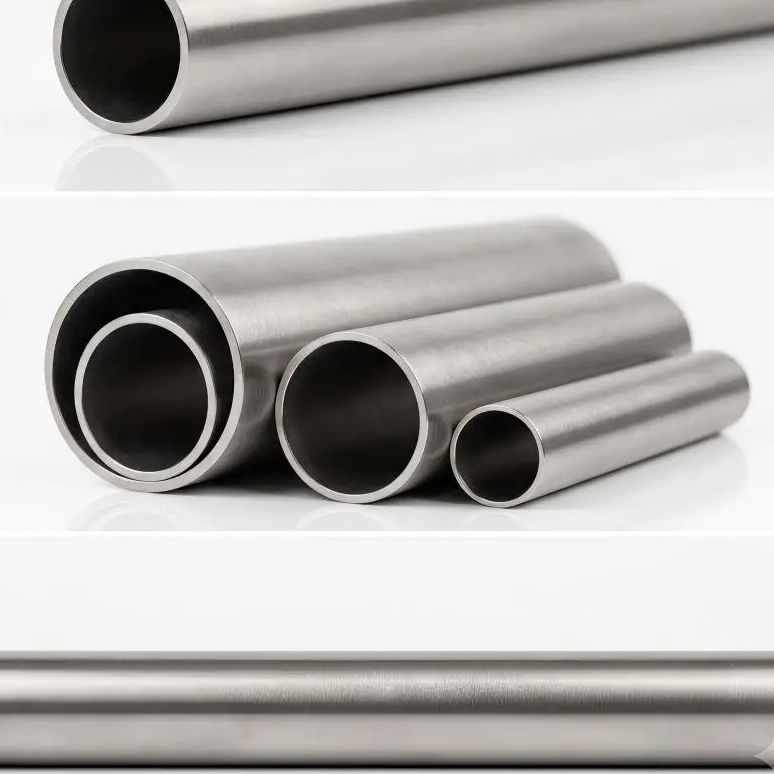
Discover how chemical plants in Kuwait and Qatar select Gr.2, Gr.7, Gr.12, and Gr.5 titanium grades. Covers corrosion resistance, ASTM standards, typical applications, and procurement requirements.
Gulf Chemical's Corrosion Environment: Not a Single Challenge, but Multiple Overlapping Threats
The chemical industries in Kuwait and Qatar focus on oil and gas processing, petrochemical derivatives, and fertilizer production. Key units include natural gas sweetening, sulfur recovery, chlor-alkali plants, acetic acid, and nitric acid facilities. A common characteristic of these processes is that process streams contain high concentrations of chloride ions, hydrogen sulfide, carbon dioxide, organic acids, or inorganic acids, often at elevated temperatures. Additionally, cooling media are typically seawater from the Arabian Gulf, exposing the shell side of heat exchangers to chloride-induced corrosion as well.
In environments where multiple corrosion factors converge, material selection isn't about "what works," but rather "which material maintains safety margins during unexpected operational fluctuations." This is why, in recent years, our chemical clients in Kuwait and Qatar have increasingly specified titanium alloys—particularly corrosion-resistant grades.
Advantages of Titanium in Gulf Chemical Environments: Beyond Chloride Resistance
1. High resistance to pitting and crevice corrosion from chlorides
Chloride ions are the primary cause of pitting and crevice corrosion, whether from chlorine-containing media on the process side or seawater in the cooling water side. Commercially pure Gr.2 titanium exhibits stable corrosion resistance in these environments; its surface titanium oxide film can self-repair under oxygenated conditions. Under proper design, manufacturing, and operating conditions, Gr.2 titanium tubes typically demonstrate extremely low corrosion rates and can achieve long-term service life matching the equipment's design life. For heat exchangers and condensers using seawater cooling, this translates directly to higher equipment availability.
2. Alloying enhances resistance to acidic media.
When processes involve reducing acids (such as hot hydrochloric acid or dilute sulfuric acid) or pose a risk of acid concentration in tight crevices, palladium-bearing corrosion-resistant titanium alloys (e.g., Gr.7) offer significantly superior corrosion resistance compared to pure titanium. For gas desulfurization and sour gas treatment facilities common in Kuwait and Qatar, Pd-containing grades provide clear technical advantages for specific equipment. For sour oil and gas equipment requiring high strength, consider Ru-bearing titanium alloys such as Gr.28. For general chemical processing equipment undergoing corrosion resistance upgrades, prioritize Gr.7 or Gr.12.
3. Moderate strength with good machinability
Although Gr.2 is not as strong as Gr.5, it is sufficient for chemical heat exchangers and pressure vessels. Its excellent weldability and cold formability result in lower fabrication and field installation costs, which is a key reason EPC contractors include titanium in their design plans from the start.
Grade Selection: Find the best match for your operating conditions
Gr.2: Industrial Pure Titanium, the top choice for the chemical industry
Gr.2 is the most widely used titanium grade in the chemical industry. It performs well in most oxidizing chloride environments, such as brine solutions, seawater coolers, wet chlorine gas handling (suitable for wet chlorine conditions; dry chlorine is generally not recommended), and chlorine dioxide bleaching equipment. Gr.2 is the standard specification for chlor-alkali plants, seawater cooling heat exchangers, and petrochemical intermediate processing equipment in Kuwait and Qatar.
However, Gr.2 may be insufficient under the following operating conditions:
The process side contains reducing acids (e.g., formic acid, oxalic acid, or high-concentration hydrochloric or sulfuric acid).
The device has unavoidable tight gaps, and there is a risk of acidic medium accumulation within these gaps.
Consider upgrading to Gr.12 or Gr.7.
Gr.12: Corrosion-Resistant Upgrade with Great Value
Gr.12 (Ti-0.3Mo-0.8Ni) builds on Gr.2 by adding small amounts of molybdenum and nickel, improving resistance to crevice corrosion and offering better tolerance to certain weak reducing acids than Gr.2. In moderately severe chemical environments, Gr.12 provides a higher safety margin than Gr.2, with a relatively controlled cost increase. Typical applications include acidic water treatment systems containing hydrogen sulfide, organic acid heat exchangers at moderate temperatures, and vessel linings in areas prone to gasketed crevices.
Gr.7: For extreme corrosive environments
Gr.7 (Ti-0.2Pd), alloyed with trace palladium, offers far superior corrosion resistance in reducing acids and high-temperature, high-concentration chloride environments compared to Gr.2. In service conditions involving chlorides, acidic condensates, or specialized reducing acids, Gr.7 is an excellent choice for high-corrosion-resistant heat exchangers. Although Gr.7 costs more than Gr.2 and Gr.12, the price difference is negligible when weighed against the potential loss from unplanned downtime on critical equipment.
Gr.5: The choice when prioritizing strength
Gr.5 (Ti-6Al-4V) is a high-strength titanium alloy primarily used in valve components, fasteners, and rotating parts of compressors and pumps where higher mechanical loads are expected. It is important to note that the key advantage of Gr.5 lies in its high strength rather than corrosion resistance. In most chemical corrosion environments, commercially pure titanium Gr.2 typically has more established application experience. Additionally, Gr.5 exhibits slightly higher susceptibility to hydrogen embrittlement compared to pure titanium; specific suitability should be evaluated for sour service conditions containing hydrogen sulfide (H₂S).
Material Selection Quick Reference
Operating Conditions | Recommended Grades | Typical Devices |
Seawater and chloride environments | Gr.2 | Seawater coolers, chlor-alkali heat exchangers, wet chlorine equipment |
High-temperature seawater + crevice corrosion risk | Gr.12 | Acid water treatment, organic acid heat exchangers, lined vessels |
Reducing acids, high-temperature acidic environments | Gr.7 | Acid Gas Condenser, High Corrosion-Resistant Heat Exchanger |
High-strength structural components | Gr.5 | Valves, Fasteners, Rotating Parts |
Key Criteria and Document Requirements
When procuring titanium materials for chemical projects in Kuwait and Qatar, the following ASTM standards are most commonly referenced as foundational specifications. Final selection must be confirmed based on project technical specifications and process parameters.
Product Form | Common Standards | Instructions |
Heat Exchanger Tubes (Seamless/Welded) | ASTM B338 | Applies to Gr.2, Gr.7, and Gr.12. |
panels | ASTM B265 | For tube sheets, shells, and linings |
Pipe (Seamless/Welded) | ASTM B861 / B862 | Process piping and seawater piping |
Forged Parts | ASTM B381 | Flanges and Tube Sheet Forgings |
bar stock | ASTM B348 | For machining fasteners and valve components |
Castings | ASTM B367 | Castings such as pump housings and valve bodies |
Projects in Kuwait and Qatar are typically led by international EPC contractors or state-owned oil companies, with strict requirements for material documentation. When requesting a quotation, ensure the following details are clearly specified:
EN 10204 3.1 or 3.2 Material Certificate: Covers chemical composition, mechanical properties, and heat treatment condition
Lot Traceability: Complete traceability chain from raw material melting batches to finished tubes and plates
Non-Destructive Testing Report: Eddy Current or Ultrasonic Inspection Report for Tubes
NACE MR0175 Compliance Statement (if applicable to sour service): Confirmation of material suitability under specified environmental conditions.
PMI Material Verification Report: Provided as per project requirements to ensure on-site materials match the certification.
Procurement Considerations: Selecting a Titanium Supplier for the Gulf Chemical Project
1. Do you have experience supplying international engineering projects?
Chemical projects in Kuwait and Qatar typically partner with internationally renowned EPC contractors, imposing stringent requirements on supplier documentation, delivery commitments, and quality consistency. Suppliers with verifiable track records in the chemical industry can significantly reduce communication costs throughout the project lifecycle.
2. Can you provide full file and certification support?
As previously noted, chemical projects have stringent requirements for material certificates, test reports, and compliance declarations. A supplier's ability to clearly list the available documentation at the quoting stage is a key indicator of their professionalism.
3. Small-batch and custom service capabilities
Chemical projects are not always large-scale new builds. Turnarounds, equipment replacements, and small-scale upgrades often require small quantities of diverse titanium tubes, plates, or forgings. Prototype orders and replacement projects in the Gulf region are also common. Flexible supply capabilities are highly valuable in these scenarios. Suppliers willing to accept low-volume orders and perform custom cutting and machining per drawings best align with the flexibility needs of actual chemical procurement.
4. Third-party inspection cooperation
Owners of chemical projects typically engage third-party agencies such as SGS, TÜV, and Bureau Veritas for factory inspections and witness testing. Suppliers must have the capability and willingness to cooperate with this process, which directly demonstrates confidence in product quality.
5. Logistics and documentation experience in the Middle East region
Customs clearance in Kuwait and Qatar is relatively complex, with strict formatting requirements for documents such as certificates of origin, commercial invoices, and packing lists. Suppliers with experience shipping to the Middle East can help buyers avoid customs delays caused by documentation issues.
Yucheng Hai Titanium supplies ASTM-compliant titanium pipes, plates, bars, and forgings for chemical, desalination, and oil & gas projects in the Middle East. We support small-batch customization and machining to drawings, providing complete material certificates and test report packages.
Frequently Asked Questions
Q1: Is Gr.2 suitable for all seawater cooling applications in chemical plants in Kuwait and Qatar?
Under standard seawater cooling conditions, Gr.2 is the most common choice, with its corrosion resistance and cost-effectiveness proven over time. If the cooling water contains sulfides, ammonia, or potential acidic conditions due to leaks from the process side, evaluate whether an upgrade to Gr.7 or Gr.12 is necessary. Providing a complete analysis of the cooling water is recommended so the supplier can confirm material suitability.
Q2: What is the approximate cost difference between Gr.7 and Gr.12? How do you balance them in real-world projects?
Gr.7 contains precious palladium, making its price significantly higher than Gr.2. Gr.12 costs fall between Gr.2 and Gr.7. In moderately severe environments where corrosion risk is manageable, selecting Gr.12 balances cost and safety. For critical equipment or locations with extremely high maintenance costs, owners prefer Gr.7 to ensure longer maintenance intervals.
Q3: What precautions should be taken when using titanium in acidic environments containing hydrogen sulfide?
Titanium generally performs well in the acidic environments covered by NACE MR0175/ISO 15156, but suitability must be confirmed based on specific hydrogen sulfide partial pressure, temperature, pH, and alloy grade. Provide complete operating conditions during the inquiry phase and clearly specify NACE compliance requirements in procurement documents.
Q4: What grades and product forms can you supply for projects in Kuwait or Qatar?
We supply heat exchanger tubes, plates, pipes, bars, and forgings in grades Gr.2, Gr.5, Gr.7, Gr.12, and more. We support custom machining to drawings, cut-to-length services, and provide material certificates and test reports compliant with international EPC requirements.
Conclusion
The chemical processing environment in Kuwait and Qatar demands comprehensive material performance: resistance to chlorine, acids, and long-term stability across the full lifecycle. Titanium alloy grades offer a gradient of solutions tailored to varying levels of corrosion challenges. Selecting the right grade isn't about overspending—it's about minimizing unplanned downtime risk.
If you are evaluating titanium alloy solutions for chemical projects in Kuwait or Qatar and need material selection advice tailored to specific process media and operating conditions, please send us your operating parameters. We will provide a professional analysis and quote within 24 hours.
[Submit your operating parameters to receive material selection recommendations and a quote within 24 hours]
(Yucheng Haitai Industry (Dongguan) Co., Ltd. | CNC Precision Titanium Rods | TA1 / TA2 / TC4 / TC4 ELI Titanium Rods |yuchenghaicompany.com)
English Version
Titanium Materials for Chemical Processing Plants in Kuwait and Qatar: Grade 2, Grade 7, Grade 12 & ASTM B338 Tube Selection Guide
Discover how titanium grades Gr.2, Gr.7, Gr.12, and Gr.5 are selected for chemical plants in Kuwait and Qatar. Covers corrosion resistance, ASTM B338 tubes, ASTM B265 plates, applications, and procurement requirements.
Gulf Chemical's Corrosion Environment: Not a Single Challenge, but Multiple Overlapping Threats
The petrochemical industries in Kuwait and Qatar focus on oil and gas processing, petrochemical derivatives, and fertilizer production. Key units include natural gas sweetening, sulfur recovery, chlor-alkali, acetic acid, and nitric acid plants. These processes share a common challenge: process fluids often contain high concentrations of chloride ions, hydrogen sulfide, carbon dioxide, organic acids, or inorganic acids, while operating at elevated temperatures. Additionally, since cooling media are typically seawater from the Arabian Gulf, the shell side of heat exchangers is also exposed to chloride-induced corrosion.
In environments where multiple corrosion factors converge, material selection isn't about "what works," but rather "which material maintains safety margins during unexpected operational fluctuations." This is why, in recent years, our chemical clients in Kuwait and Qatar have increasingly specified titanium alloys—particularly corrosion-resistant grades.
Advantages of Titanium in Gulf Chemical Environments: Beyond Chloride Resistance
1. High resistance to pitting and crevice corrosion from chlorides
Chloride ions are the primary cause of pitting and crevice corrosion, whether from chlorine-containing media on the process side or seawater in the cooling water side. Commercially pure Gr.2 titanium exhibits stable corrosion resistance in these environments; its surface oxide film can self-repair under oxygenated conditions. With proper design, manufacturing, and operation, Gr.2 titanium tubes typically achieve very low corrosion rates and support long-term service aligned with the equipment's design life. For heat exchangers and condensers using seawater cooling, this translates directly to higher equipment availability.
2. Alloying enhances resistance to acidic media.
When processes involve reducing acids (such as hot hydrochloric acid or dilute sulfuric acid) or present a risk of acid concentration in tight crevices, palladium-containing corrosion-resistant titanium alloys (e.g., Gr.7) offer significantly superior corrosion resistance compared to pure titanium. For gas desulfurization and sour gas treatment units common in Kuwait and Qatar, Pd-containing grades provide distinct technical advantages for specific equipment. For sour oil and gas equipment requiring high strength, consider Ru-containing titanium alloys such as Gr.28. For general chemical processing equipment upgrades focused on corrosion resistance, Gr.7 or Gr.12 are typically the first choices.
3. Moderate strength with good machinability
Although Gr.2 is not as strong as titanium alloy Gr.5, it is sufficient for chemical heat exchangers and pressure vessels. Its excellent weldability and cold-forming capability lead to lower manufacturing and field installation costs, which is a key reason EPC contractors include titanium in their design plans from the outset.
Grade Selection: Find the best match for your operating conditions
Gr.2: Industrial Pure Titanium, the top choice for the chemical industry
Gr.2 is the most widely used titanium grade in the chemical industry. It performs well in most oxidizing chloride environments, such as brine, seawater coolers, wet chlorine gas handling (suitable for wet conditions; dry chlorine is generally not recommended), and chlorine dioxide bleaching equipment. In Kuwait and Qatar, Gr.2 is standard for chlor-alkali plants, seawater heat exchangers, and petrochemical intermediate processing units.
However, Gr.2 may be insufficient under the following operating conditions:
The process side contains reducing acids (e.g., formic acid, oxalic acid, or high-concentration hydrochloric or sulfuric acid).
The device has unavoidable tight gaps, and there is a risk of acidic medium accumulation within these gaps.
Consider upgrading to Gr.12 or Gr.7.
Gr.12: Corrosion-Resistant Upgrade with Great Value
Gr.12 (Ti-0.3Mo-0.8Ni) builds on Gr.2 by adding small amounts of molybdenum and nickel, improving resistance to crevice corrosion and offering better tolerance for certain weakly reducing acids than Gr.2. In moderately severe chemical environments, Gr.12 provides a higher safety margin than Gr.2, with only a moderate increase in cost. Typical applications include acidic water treatment systems containing hydrogen sulfide, organic acid heat exchangers at moderate temperatures, and vessel linings subject to gasket crevices.
Gr.7: For extreme corrosive environments
Gr.7 (Ti-0.2Pd), alloyed with trace palladium, exhibits far superior corrosion resistance in reducing acids and high-temperature, high-concentration chloride environments compared to Gr.2. In conditions involving chlorides, acidic condensates, or specific reducing acids, Gr.7 is an excellent choice for highly corrosion-resistant heat exchangers. Although Gr.7 costs more than Gr.2 and Gr.12, the price difference is negligible compared to the cost of unplanned downtime on critical equipment.
Gr.5: The choice when prioritizing strength
Gr.5 (Ti-6Al-4V) is a high-strength titanium alloy primarily used in valve components, fasteners, and rotating parts for compressors and pumps where high mechanical loads are expected. It is important to note that Gr.5's main advantage lies in its high strength rather than corrosion resistance. In most chemical corrosion environments, commercially pure titanium Gr.2 typically has more established application experience. Additionally, Gr.5 is slightly more susceptible to hydrogen embrittlement than commercially pure titanium; specific suitability should be evaluated for sour service conditions containing hydrogen sulfide (H₂S).
Material Selection Quick Reference
Operating Conditions | Recommended Grades | Typical Devices |
Seawater and chloride environments | Gr.2 | Seawater coolers, chlor-alkali heat exchangers, wet chlorine equipment |
High-temperature seawater + crevice corrosion risk | Gr.12 | Acid water treatment, organic acid heat exchangers, lined vessels |
Reducing acids, high-temperature acidic environments | Gr.7 | Acid Gas Condenser, High Corrosion-Resistant Heat Exchanger |
High-strength structural components | Gr.5 | Valves, Fasteners, Rotating Parts |
Key Standards and Document Requirements
For titanium procurement in Kuwait and Qatar chemical projects, the following ASTM standards are most commonly cited as baseline specifications. Final selection must be confirmed based on project technical specifications and process parameters.
Product Form | Common Standards | Instructions |
Heat Exchanger Tubes (Seamless/Welded) | ASTM B338 | Applies to Gr.2, Gr.7, and Gr.12. |
panels | ASTM B265 | For tube sheets, shells, and linings |
Pipe (Seamless/Welded) | ASTM B861 / B862 | Process piping and seawater piping |
Forged Parts | ASTM B381 | Flanges and Tube Sheet Forgings |
bar stock | ASTM B348 | For machining fasteners and valve components |
Castings | ASTM B367 | Castings such as pump housings and valve bodies |
Projects in Kuwait and Qatar are typically led by international EPC contractors or state-owned oil companies, with strict requirements for material documentation. When requesting a quotation, ensure the following details are clearly specified:
EN 10204 3.1 or 3.2 Material Certificate: Covers chemical composition, mechanical properties, and heat treatment condition
Lot Traceability: Complete traceability chain from raw material melting batches to finished tubes and plates
Non-Destructive Testing Report: Eddy Current or Ultrasonic Inspection Report for Tubes
NACE MR0175 Compliance Statement (if applicable to sour service): Confirmation of material suitability under specified environmental conditions.
PMI Material Verification Report: Provided as per project requirements to ensure on-site materials match the certification.
Procurement Considerations: Selecting a Titanium Supplier for the Gulf Chemical Project
1. Do you have experience supplying international engineering projects?
Chemical projects in Kuwait and Qatar typically partner with internationally renowned EPC contractors, imposing stringent requirements on supplier documentation, delivery commitments, and quality consistency. Suppliers with verifiable track records in the chemical industry can significantly reduce communication costs throughout the project lifecycle.
2. Can you provide full file and certification support?
As previously noted, chemical projects have stringent requirements for material certificates, test reports, and compliance declarations. A supplier's ability to clearly list the available documentation at the quoting stage is a key indicator of their professionalism.
3. Small-batch and custom service capabilities
Chemical projects are not always large-scale new builds. Equipment maintenance, component replacements, and small-scale upgrades often require small quantities of diverse titanium tubes, plates, or forgings. Prototype orders and replacement projects in the Gulf region's chemical plants are also common. Flexible supply capabilities are highly valuable in these scenarios. Suppliers willing to handle low-volume orders and provide custom cutting and machining per drawings better align with the flexibility needs of actual chemical procurement.
4. Third-party inspection cooperation
Owners of chemical projects typically engage third-party agencies such as SGS, TÜV, and Bureau Veritas for factory inspections and witness testing. Suppliers must have the capability and willingness to cooperate with this process, which directly demonstrates confidence in product quality.
5. Logistics and documentation experience in the Middle East region
Customs clearance in Kuwait and Qatar is relatively complex, with strict formatting requirements for documents such as certificates of origin, commercial invoices, and packing lists. Suppliers with experience shipping to the Middle East can help buyers avoid customs delays caused by documentation issues.
Yucheng Hai Titanium supplies ASTM-compliant titanium pipes, plates, bars, and forgings for chemical, desalination, and oil & gas projects in the Middle East. We support small-batch customization and machining to drawings, providing complete material certificates and test report packages.
Frequently Asked Questions
Q1: Is Gr.2 suitable for all seawater cooling applications in chemical plants in Kuwait and Qatar?
Under standard seawater cooling conditions, Gr.2 is the most common choice, with its corrosion resistance and cost-effectiveness proven over time. If the cooling water contains sulfides, ammonia, or potential acidic conditions from process-side leaks, evaluate whether an upgrade to Gr.7 or Gr.12 is necessary. Provide full water analysis data for supplier assessment of material suitability.
Q2: What is the approximate cost difference between Gr.7 and Gr.12? How do you balance them in real-world projects?
Gr.7 contains precious palladium, making its price significantly higher than Gr.2. The cost of Gr.12 falls between that of Gr.2 and Gr.7. In moderately severe environments with manageable corrosion risk, selecting Gr.12 offers a balance between cost and safety. For critical equipment or locations where maintenance costs are extremely high, owners prefer Gr.7 to ensure longer maintenance intervals.
Q3: What precautions should be taken when using titanium in acidic environments containing hydrogen sulfide?
Titanium generally performs well in the acidic environments covered by NACE MR0175/ISO 15156, but suitability must be confirmed based on specific hydrogen sulfide partial pressure, temperature, pH, and alloy grade. Provide complete operating parameters during the inquiry phase and explicitly state NACE compliance requirements in procurement documents.
Q4: What grades and product forms can you supply for projects in Kuwait or Qatar?
We supply heat exchanger tubes, plates, pipes, bars, and forgings in Gr.2, Gr.5, Gr.7, Gr.12, and other grades. We offer custom machining per drawings, cut-to-length services, and material certificates and test reports compliant with international EPC requirements.
Conclusion
The chemical environments in Kuwait and Qatar demand comprehensive material performance: resistance to chlorine, acids, and long-term stability across the full lifecycle. Titanium alloy grades offer a gradient of solutions tailored to varying corrosion challenges. Selecting the right grade isn't about overspending—it's about minimizing unplanned downtime risks.
If you are evaluating titanium alloy options for chemical projects in Kuwait or Qatar and need material selection advice tailored to specific process media and operating conditions, please send us your operational parameters. We will provide a professional analysis and quote within 24 hours.
[Submit your operating parameters to receive material selection recommendations and a quote within 24 hours]
Yucheng Haitai Industry (Dongguan) Co., Ltd. | Swiss-type Precision Titanium Rods | TA1 / TA2 / TC4 / TC4 ELIyuchenghaicompany.com)