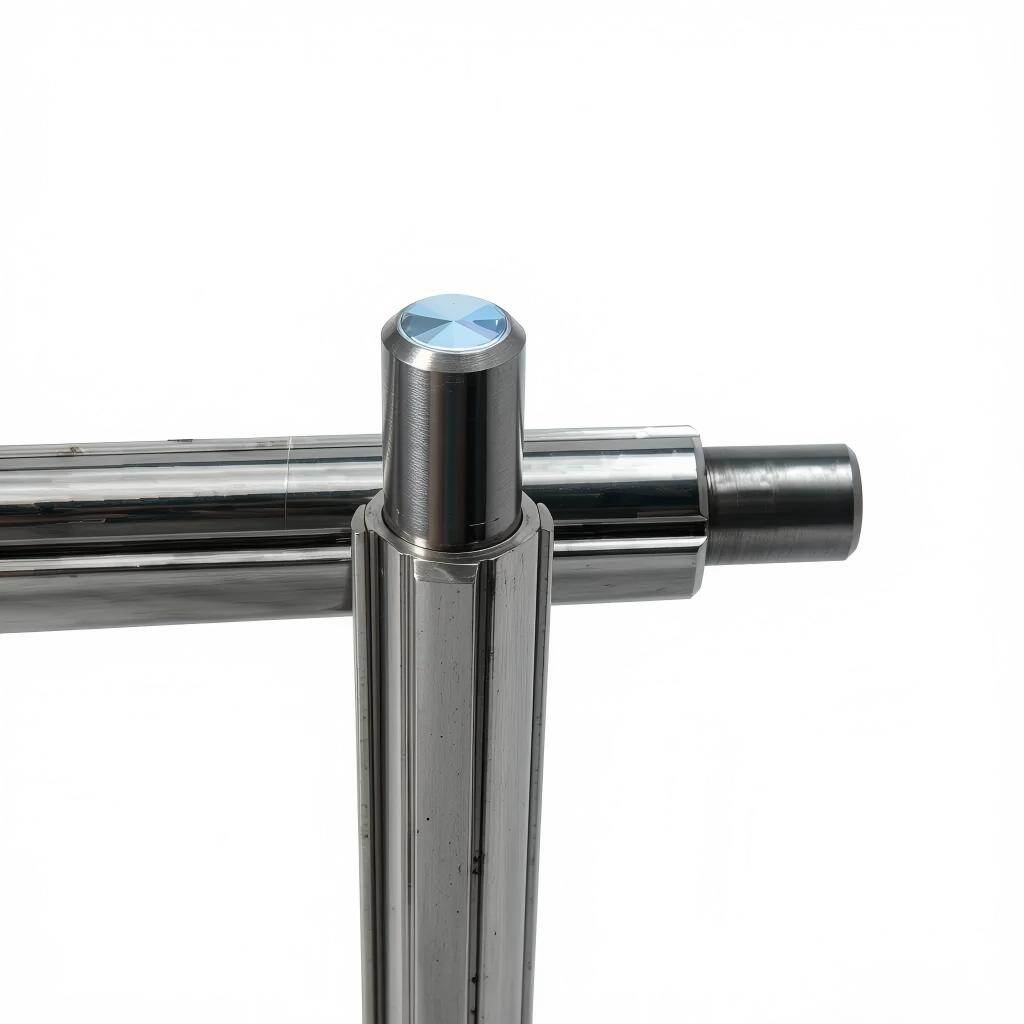
Discover why ASTM B338 Gr.2 titanium tubes are widely used in Middle East seawater desalination projects. This guide covers applications, applicable standards, grade selection, and procurement tips for titanium heat exchanger tubes in thermal desalination plants.
Material selection logic for large-scale desalination plants: It's not about "what to use," but "what you dare to avoid."
In the Middle East, desalination is not a supplementary water source but a lifeline for national survival. Desalination complexes in countries like the UAE and Saudi Arabia have a combined daily capacity of millions of cubic meters, representing the pinnacle of thermal desalination globally. Inside these facilities, Multi-Stage Flash (MSF) and Multi-Effect Distillation (MED) units operate around the clock, processing hot, high-salinity seawater from the Arabian Gulf. For engineers, the challenge isn't "what materials are available," but rather "which materials can ensure long-term stability under these harsh operating conditions."
Commercial Grade 2 titanium has become one of the most widely used materials for key heat exchange components in large-scale thermal desalination projects. This is not an arbitrary preference by any design institute; it is a conclusion validated by over 30 years of operational data. When processing hundreds of thousands of tons of seawater daily, even localized corrosion can lead to costly shutdowns and reduced freshwater output. Titanium remains a reliable solution that ensures long-term operation while minimizing corrosion-related maintenance.
Why Titanium: Proven in Large-Scale Desalination Projects
1. Excellent corrosion resistance in high-temperature seawater
Sea surface temperatures in the Arabian Gulf can exceed 35°C in summer, with brine temperatures in MSF units potentially surpassing 110°C. Under these conditions, chloride ions exhibit extremely aggressive corrosion against metals. Conventional copper-nickel alloys (e.g., Cu-Ni 90/10) are susceptible to erosion and pitting, while super duplex stainless steels face crevice corrosion risks under prolonged high-temperature exposure. In contrast, titanium—particularly Gr.2—demonstrates exceptionally low corrosion rates in chloride-rich seawater across this temperature range. The protective titanium oxide film formed on its surface remains dense and stable even at elevated temperatures, enabling minimal corrosion rates when operated under properly controlled conditions.
Large-scale desalination facilities in the Gulf region, including projects in the UAE and Saudi Arabia, have validated the reliability of titanium heat exchange components through long-term operation. These plants contain tens of thousands of thin-walled titanium tubes that continue to operate with very low failure rates, providing critical reference data for industry material selection.
2. High heat exchange efficiency with a balance of strength and thin-wall design
Grade 2 titanium typically has a minimum tensile strength of around 345 MPa, depending on the product form and applicable standards. This strength is sufficient to meet pressure requirements for evaporator heat transfer tubes while allowing wall thicknesses as thin as 0.4 mm to 0.7 mm—0.5 mm being one of the most common choices in modern thermal desalination applications. Thin walls offer higher heat transfer coefficients and lower thermal resistance, directly improving evaporation efficiency. For facilities with daily capacities reaching hundreds of thousands of cubic meters, even a 1% efficiency gain translates into significant energy savings. Additionally, the lightweight design of thin-walled tubes reduces bundle weight, simplifying transportation and installation—a key advantage in large-scale modular plant construction.
3. Long-term maintenance-free operation drives lifecycle cost advantages
The design life of an MSF or MED evaporator typically ranges from 25 to 30 years. Over this period, the cost of tube replacement extends far beyond the price of new tubes alone—it includes lost freshwater production during downtime, labor expenses, and supply reliability risks associated with equipment failure. Once installed, titanium tubes generally operate reliably for the entire equipment lifespan without requiring bundle replacement due to corrosion. This delivers a highly competitive total cost of ownership among all available materials. For governments and utilities, water supply reliability is the top priority—and titanium meets this need perfectly.
Key Application: Where is titanium used in large-scale desalination plants?
evaporator heat exchange tube bundle
This is the area with the highest titanium consumption and the most stringent technical requirements. ASTM B338 Gr.2 thin-welded or seamless tubes are extensively used in MSF brine heaters, recovery section heat exchangers, and MED evaporator heat transfer tubes across all effects. Common dimensions range from an outer diameter of 19-25.4 mm to a wall thickness of 0.4-0.7 mm. Welded tubes are widely adopted in most non-high-pressure sections due to their cost-effectiveness and uniform wall thickness; however, seamless tubes may be specified for certain high-temperature, high-pressure sections.
For welded titanium tubes, buyers should prioritize weld integrity, eddy current inspection results, and dimensional consistency, as tube reliability directly impacts the long-term performance of heat exchangers.
Tube sheets and baffles
The tube sheet of the evaporator provides support and connection for the titanium tube bundle, withstanding pressure and temperature differentials on both sides. ASTM B265 Gr.2 titanium plates are widely used to manufacture tube sheets and internal baffles to ensure electrochemical compatibility with titanium tubes and prevent galvanic corrosion caused by dissimilar metal contact.
Seawater inlet and outlet pipes and valves
Although not as widely used as heat exchanger tubes, Gr.2 titanium piping (ASTM B861/B862) is increasingly applied in brine inlet lines, concentrate discharge lines, and certain valve internals within evaporators. In high-temperature concentrated seawater conditions, titanium piping prevents corrosion products from contaminating the quality of desalinated water.
Condenser and Water Box
On the cooling water side of MSF condenser units, seawater flows through the shell while steam passes through the tubes, exposing components to combined chloride and thermal stress. Titanium tubes and titanium-lined water boxes are widely used to ensure long-term stable operation of the condensers.
Grade and Standard Quick Reference Table
App Components | Recommended Grades | Common Standards | Instructions |
Evaporator heat exchange tubes | Gr.2 | ASTM B338 | Primary use of thin-wall welded pipes; seamless pipes selected for specific high-pressure sections. |
Tube sheet / Baffle / Shell liner | Gr.2 | ASTM B265 | Ensure electrochemical compatibility with the heat exchange tubes. |
Seawater Pipe (Seamless) | Gr.2 | ASTM B861 | High-pressure sections, special areas |
Seawater Pipe (Welded) | Gr.2 | ASTM B862 | Low-Pressure, High-Flow Pipeline |
Forged components (flanges, nozzles) | Gr.2 | ASTM B381 | Forged components must have traceable materials. |
Extreme Corrosion Risk Environment | Gr.7 | ASTM B338/B265 | For acidic cleaning conditions or special water quality |
When requesting a quote, always provide the Material Test Certificate (MTC) and specify the need for EN 10204 3.1 or 3.2 certification. For large-scale desalination projects, buyers typically also require eddy current inspection reports, ultrasonic testing reports, and third-party inspection coordination. Large-scale desalination EPC projects generally mandate full batch traceability from sponge titanium/raw materials to finished tubes.
Procurement Guidelines: Selecting Titanium Suppliers for Large-Scale Desalination Projects
For large-scale desalination projects, supply chain management is a major challenge. When evaluating titanium suppliers, EPC contractors and owners focus on the following key areas:
1. Large-scale, stable delivery capabilities
A large MED unit may require millions of meters of titanium tubes with strict delivery schedules. Suppliers must have reliable raw material sources, sufficient production capacity, and the flexibility to ramp up output urgently. Inquiring about a supplier's largest single-project supply history is a direct way to assess their delivery capability.
2. Quality Consistency and Batch-to-Batch Stability
For long-cycle supply, the chemical composition, mechanical properties, and dimensional tolerances of pipes must remain highly consistent. Suppliers shall provide statistical process control data and complete batch inspection reports to demonstrate a quality control system that ensures no drift across the entire batch.
3. Familiar with technical specifications from international engineering firms and owners.
Major desalination projects in the Middle East are typically executed by well-known international EPC contractors with strict requirements for technical documentation, packaging, and logistics. Suppliers with proven experience in international titanium tube projects—such as Yucheng Haitai Materials—are dedicated to providing ASTM-compliant titanium products and fully traceable documentation for overseas industrial projects. This helps clients avoid specification misunderstandings and documentation delays, significantly reducing communication costs for buyers.
4. Third-party inspection cooperation
Owners typically engage third-party inspection agencies such as SGS, TÜV, and Bureau Veritas to conduct on-site factory inspections and witness testing. Suppliers must demonstrate openness and experience in accommodating such inspections and be able to promptly provide all supporting documentation.
Frequently Asked Questions
Q1: Why are large-scale desalination projects more inclined to use welded pipes instead of seamless pipes?
Welded pipes typically offer tighter wall thickness tolerances than seamless pipes, ensuring more consistent heat transfer efficiency. They are also more cost-effective and available in the same lengths, reducing the need for additional welding connections. Within allowable pressure limits, welded pipes represent a more economical and efficient choice.
Q2: What is the maximum temperature for Gr.2 in thermal desalination?
In flowing seawater, Gr.2 maintains stable corrosion resistance at temperatures up to 120°C. However, for engineering design, a conservative operating temperature is typically used—generally not exceeding 115°C—to ensure long-term safety margins.
Q3: Do I need to add Gr.7 or Gr.12 configuration for the titanium heat exchanger tube?
Under normal seawater conditions, Gr.2 is fully sufficient. Gr.7 (with palladium) is designed for special applications involving potential reducing acidic media (e.g., periodic cleaning with hydrochloric acid). Gr.12 serves certain moderately severe environments. Most desalination systems do not require a full upgrade to Gr.7 or Gr.12.
Q4: When requesting quotes from suppliers, what information should be provided besides dimensions and standards?
Recommended details: design temperature, pressure, seawater quality analysis (especially chloride ion concentration and total suspended solids), need for cut-to-length, required documentation (e.g., third-party inspection, EN 10204 type), and packaging/shipping requirements. The more complete the information, the more accurate the quote.
Conclusion
From early projects in the Gulf region to today's large-scale thermal desalination plants, titanium has evolved from an "advanced choice" to a "proven solution." This status is backed by over three decades of real-world operational experience. For any desalination project committed to long-term, reliable water supply, choosing titanium does not increase costs—it effectively reduces operating risks for decades to come.
If you're involved in large-scale desalination projects in the Middle East or globally and need reliable Gr.2 heat exchanger tubes, tube sheets, or piping solutions, send us your project specifications. We'll provide technical selection recommendations and a quote within 24 hours.
[Submit your project specs for a professional selection recommendation and quote within 24 hours]
(Yucheng Haitai Industry (Dongguan) Co., Ltd. | CNC Precision Titanium Rods | TA1 / TA2 / TC4 / TC4 ELI Titanium Rods |yuchenghaicompany.com)
English Version
Titanium Heat Exchanger Tube Supplier Guide for Middle East Desalination Plants: ASTM B338 Gr.2
Discover why ASTM B338 Grade 2 titanium tubes are widely used in Middle East desalination plants. This supplier guide covers applications, standards, grades, and procurement considerations for thermal desalination projects.
Material selection for large-scale desalination plants isn't about "what to use"—it's about "what you dare not use."
In the Middle East, seawater desalination is not a supplementary source but a lifeline for national survival. Desalination complexes in countries like the UAE and Saudi Arabia collectively process millions of cubic meters daily, representing the pinnacle of thermal seawater desalination technology worldwide. Inside these facilities, Multi-Stage Flash (MSF) and Multi-Effect Distillation (MED) units continuously process hot, highly saline waters from the Arabian Gulf. The challenge engineers face is not "what materials are available," but "which materials can ensure long-term stability under these extreme operating conditions."
Commercial pure titanium Gr.2 has become one of the most widely used materials for key heat exchange components in large-scale thermal desalination projects. This is not an accidental preference by any design institute, but a conclusion validated by over 30 years of operational data: when processing hundreds of thousands of tons of seawater daily, even localized corrosion can lead to costly shutdowns and reduced freshwater output. Titanium is a reliable material solution that ensures long-term operation while minimizing corrosion-related maintenance.
Why Titanium: Proven in Large-Scale Desalination Projects
1. Excellent corrosion resistance in high-temperature seawater
The surface temperature of the Arabian Gulf can exceed 35°C in summer, and in MSF units, the maximum brine temperature may surpass 110°C. Under these conditions, chloride ions are highly corrosive to metals. Conventional copper-nickel alloys (such as Cu-Ni 90/10) are prone to erosion and pitting, while super duplex stainless steels face crevice corrosion challenges under prolonged high-temperature exposure. Titanium—particularly Gr.2—exhibits extremely low corrosion rates in chlorinated seawater within this temperature range. The titanium oxide film formed on its surface remains dense and stable at high temperatures, enabling minimal corrosion rates under properly controlled operating conditions.
Large desalination facilities in the Gulf region, including projects in the UAE and Saudi Arabia, have validated the reliability of titanium heat exchange components through long-term operation. Within these plants, tens of thousands of thin-walled titanium tubes continue to operate with minimal failure rates, providing a critical reference for industry material selection.
2. High heat transfer efficiency with a balance of strength and thin-wall design
Grade 2 titanium typically has a minimum tensile strength of around 345 MPa, depending on the product form and applicable standards. This strength meets the pressure requirements for evaporator heat exchanger tubes while allowing wall thicknesses as low as 0.4 mm to 0.7 mm — with 0.5 mm being one of the most common choices in modern thermal desalination applications. Thinner walls improve the heat transfer coefficient and reduce thermal resistance, directly boosting evaporation efficiency. For facilities with daily capacities reaching hundreds of thousands of cubic meters, even a 1% efficiency gain translates into significant energy savings. Additionally, the lightweight design of thin-walled tubes reduces bundle weight, facilitating transportation and installation — a critical advantage in large-scale modular plant construction.
3. Long-term maintenance-free operation drives lifecycle cost advantages
A single MSF or MED evaporator typically has a design life of 25 to 30 years. Over this timeframe, the cost of tube replacement extends far beyond the price of new tubes—it includes lost freshwater production during downtime, labor expenses, and the risk of water supply disruption due to equipment failure. Once installed, titanium tubes generally operate reliably for the entire equipment lifecycle without needing replacement due to corrosion. This delivers a highly competitive total cost of ownership among all available materials. For governments and utilities, water supply reliability is the top priority—and titanium meets that need perfectly.
Key Applications: Where is Titanium Used in Large-Scale Desalination Plants?
Evaporator heat exchanger tube bundle
This is the component with the highest titanium usage and the most stringent technical requirements. ASTM B338 Gr.2 thin-welded or seamless tubes are extensively used in MSF brine heaters, heat exchangers in the recovery section, and evaporator heat transfer tubes across all effects of MED. Common dimensions include an outer diameter of 19-25.4 mm and a wall thickness of 0.4-0.7 mm. Welded tubes are widely adopted in most non-high-pressure sections due to their cost-effectiveness and uniform wall thickness; however, some high-temperature and high-pressure sections may specify seamless tubes.
For welded titanium tubes, buyers should prioritize weld integrity, eddy current inspection results, and dimensional consistency, as tube reliability directly impacts the long-term performance of heat exchangers.
Tube sheets and baffles
The tube sheet supports and connects the titanium tube bundle while withstanding pressure and temperature differentials on both sides. ASTM B265 Gr.2 titanium plates are widely used to manufacture tube sheets and internal baffles, ensuring electrochemical compatibility with the titanium tubes and preventing galvanic corrosion caused by dissimilar metal contact.
Seawater Inlet and Outlet Pipes and Valves
Although not as widely used as heat exchanger tubes, Gr.2 titanium piping (ASTM B861/B862) is increasingly deployed in brine inlet lines, concentrate discharge lines, and select valve internals within evaporators. This is especially critical when processing high-temperature concentrated seawater, where titanium piping prevents corrosion products from contaminating the desalinated water quality.
Condenser and Water Box
In the condenser of MSF units, seawater flows on the shell side while steam flows on the tube side, subjecting components to combined chloride and thermal stress. Titanium tubes and titanium-lined water boxes are widely used to ensure long-term stable operation of the condenser.
Grade and Standard Quick Reference Table
App Components | Recommended Grades | Common Standards | Instructions |
Evaporator heat exchange tubes | Gr.2 | ASTM B338 | Primary use of thin-wall welded pipes; seamless pipes selected for specific high-pressure sections. |
Tube sheet / Baffle / Shell liner | Gr.2 | ASTM B265 | Ensure electrochemical compatibility with the heat exchange tubes. |
Seawater Pipe (Seamless) | Gr.2 | ASTM B861 | High-pressure sections, special areas |
Seawater Pipe (Welded) | Gr.2 | ASTM B862 | Low-Pressure, High-Flow Pipeline |
Forged components (flanges, nozzles) | Gr.2 | ASTM B381 | Forged components must have traceable materials. |
Extreme Corrosion Risk Environment | Gr.7 | ASTM B338/B265 | For acidic cleaning conditions or special water quality |
When requesting a quote, always provide the Material Test Certificate (MTC) and specify that EN 10204 3.1 or 3.2 certification is required. For large-scale desalination projects, buyers typically also request eddy current testing and ultrasonic testing reports, along with third-party inspection support. Large-scale desalination EPC projects usually require full traceability from sponge titanium/raw materials to finished pipes, including heat/batch numbers.
Procurement Guide: Selecting Titanium Suppliers for Large-Scale Desalination Projects
For large-scale desalination projects, supply chain management is a major challenge. When evaluating titanium suppliers, EPC contractors and owners focus on the following key areas:
1. Large-scale, stable delivery capabilities
A large-scale MED unit may require over a million meters of titanium tubes with strict delivery schedules. Suppliers must have reliable raw material sourcing, sufficient production capacity, and the flexibility to scale up quickly in emergencies. Asking suppliers about their largest single-project supply record is a direct way to verify their delivery capability.
2. Quality Consistency and Batch-to-Batch Stability
For long-cycle supply, the chemical composition, mechanical properties, and dimensional tolerances of pipes must remain highly consistent. Suppliers shall provide statistical process control data and complete batch inspection reports to demonstrate a quality control system that ensures no drift across the entire batch.
3. Familiar with technical specifications from international engineering firms and owners.
Large-scale desalination projects in the Middle East are typically executed by internationally recognized EPC contractors with strict requirements for technical documentation, packaging, and logistics. Suppliers with proven experience in international titanium tube projects—such as Yucheng Haitai Materials—specialize in providing ASTM-compliant titanium products and fully traceable documentation for overseas industrial projects. This helps clients avoid specification misunderstandings and documentation delays, significantly reducing communication costs for buyers.
4. Third-party inspection cooperation
Owners typically engage third-party inspection agencies such as SGS, TÜV, or Bureau Veritas to conduct on-site inspections and witness testing at supplier facilities. Suppliers must be prepared and experienced in accommodating such inspections and promptly provide all required supporting documentation.
Frequently Asked Questions
Q1: Why are large-scale desalination projects more inclined to use welded pipes instead of seamless pipes?
Welded tubes typically offer tighter wall thickness tolerances than seamless tubes, ensuring more consistent heat transfer efficiency. Additionally, welded tubes are more cost-effective and can be produced in equal lengths, reducing the need for connecting welds. Within allowable pressure limits, welded tubes represent a more economical and efficient choice.
Q2: What is the maximum temperature for Gr.2 in thermal desalination?
In flowing seawater, Gr.2 maintains stable corrosion resistance at temperatures up to 120°C. However, for engineering design, a conservative operating temperature is typically selected—usually not exceeding 115°C—to ensure long-term safety margins.
Q3: Do you need to configure Gr.7 or Gr.12 for the titanium heat exchange tubes?
Under normal seawater conditions, Gr.2 is fully sufficient. Gr.7 (with palladium) is designed for special applications involving potential reducing acidic media (e.g., periodic cleaning with hydrochloric acid). Gr.12 is intended for certain moderately severe environments. Most desalination systems do not require a full upgrade to Gr.7 or Gr.12.
Q4: When requesting quotes from suppliers, what information should be provided besides dimensions and standards?
Recommended details: design temperature and pressure, seawater quality analysis (especially chloride ion concentration and total suspended solids), need for cut-to-length, required documentation (e.g., third-party inspection, EN 10204 type), and packaging and shipping requirements. The more complete the information, the more accurate the quote.
Conclusion
From early projects in the Gulf region to today's large-scale new thermal desalination plants, titanium has evolved from an "advanced option" to a "mature solution" in thermal seawater desalination. This status is supported by over three decades of extensive operational experience under real-world conditions. For any desalination project committed to long-term, stable water supply, choosing titanium is not about increasing costs—it's about effectively reducing operational risks for decades to come.
If you are working on large-scale desalination projects in the Middle East or globally and need reliable Gr.2 heat exchanger tubes, tube sheets, or piping solutions, send us your project specifications. We will provide technical selection recommendations and a quote within 24 hours.
[Submit your project specs to get professional selection advice and a quote within 24 hours]
Yucheng Haitai Industry (Dongguan) Co., Ltd. | Swiss-type Precision Titanium Rods | TA1 / TA2 / TC4 / TC4 ELIyuchenghaicompany.com)