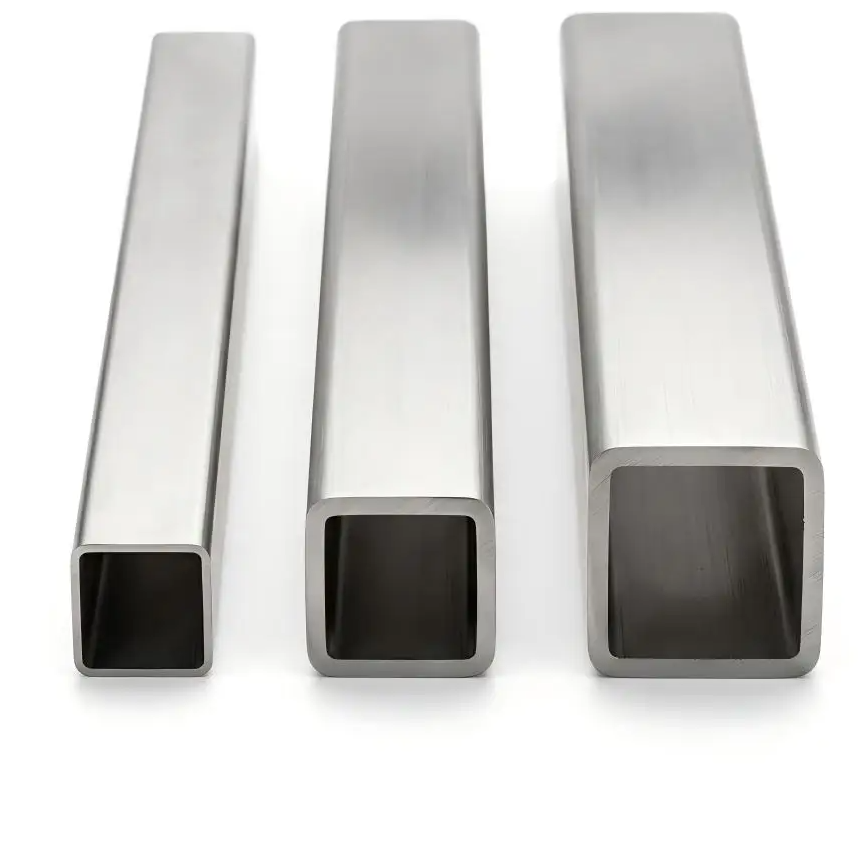
Learn how chemical plants choose between Grade 2 and Grade 12 titanium heat exchanger tubes. Compare corrosion resistance, ASTM standards, total cost of ownership, and procurement considerations.
Why are more and more chemical industry players adopting titanium heat exchangers?
The chemical industry clusters in the MOP industrial zone and surrounding areas of Rayong Province in Eastern Thailand are among the largest in Southeast Asia. Facilities producing caustic soda, chlor-alkali products, terephthalic acid, phosphoric acid, and other chemicals are densely concentrated. The process media exhibit extremely high corrosivity toward metallic materials. Traditionally, many factories have relied on stainless steel or graphite heat exchangers. While these perform adequately under mild operating conditions, they face significant challenges to equipment lifespan and reliability when exposed to environments with high chloride content, elevated temperatures, or acidic conditions.
Based on our experience serving chemical and industrial clients across Southeast Asia, more and more factories are adopting Grade 2 titanium tubes to replace traditional stainless steel pipes. This shift improves corrosion resistance and reduces maintenance costs. Behind this trend is a renewed understanding of total cost of ownership by plant managers: rather than facing frequent shutdowns for pipe replacements, it's smarter to select more reliable materials during the initial design phase.
Core Advantages of Titanium in Corrosive Chemical Environments
Chemical heat exchangers often operate under extreme conditions: one side carries process media, while the other uses cooling water or steam. This setup involves large temperature differences, high flow rates, and sometimes erosion from solid particles. In such environments, titanium is increasingly chosen due to two key properties.
First, it has natural resistance to chloride environments.
Titanium Grade 2 demonstrates excellent resistance to chloride pitting and crevice corrosion in industrial seawater and other chloride-containing environments. This is particularly critical for applications involving chlorine-based media, such as chlor-alkali, PVC, and epoxy resin systems.
Second, the self-healing capability of the surface passivation film.
The passive oxide film on titanium can naturally reform when exposed to an oxygen-containing environment.This means titanium heat exchange tubes maintain stable protective performance even when the medium contains small solid particles that cause mild abrasive wear, unlike coating materials that fail rapidly once damaged.
Under appropriate operating conditions, ASTM B338 Grade 2 titanium tubing exhibits extremely low corrosion rates in many chloride-containing applications. However, corrosion rates are influenced by multiple factors including temperature, concentration, flow velocity, and pH; final material selection must be evaluated based on specific process parameters.
Gr.2 vs. Gr.12: How to Choose the Best Value
When communicating with Thai customers, the most common question is: How do I choose between Gr.2 and Gr.12?
Gr.12 (Ti-0.3Mo-0.8Ni) is based on pure titanium with small additions of molybdenum and nickel. It offers superior resistance to crevice corrosion and performs better in weakly reducing acid environments compared to Gr.2. However, the material cost is also higher. The key to selection lies in precise matching to operating conditions, rather than simply opting for a "higher-grade" alloy.
Here is a concise material selection logic:
The medium is primarily oxidizing (e.g., chlorinated brine, nitrate environments) with moderate operating temperatures—Gr.2 handles this perfectly.
If the medium contains weak reducing acids (e.g., formic acid, oxalic acid), if the equipment has unavoidable crevice structures, or if operating temperatures are high — consider Gr.12.
Seawater cooling water on the shell side — Gr.2 is more than sufficient; no upgrade needed.
Gr.2 vs. Gr.12 Comparison
Comparison Items | Gr.2 | Gr.12 |
Pitting corrosion resistance to chloride ions | Excellent | Excellent |
Pitting corrosion resistant | Good | Better |
weak reducing acid | Average | Good |
Strength | Moderate | Slightly above Gr.2 |
Material Cost | Lower | Usually higher than Gr.2 |
Recommended Operating Conditions | Oxidizing chlorine environment, seawater cooling | High-temperature crevice areas, weak acidic environments |
Material selection should be based on matching the operating conditions, not on choosing the most expensive option. If Gr.2 already meets the design life requirements in the target medium, selecting Gr.12 offers no additional practical benefit.
Total Cost of Ownership: The Economics of Titanium Heat Exchangers
The initial purchase price of titanium tubes is higher than that of stainless steel, which is an objective fact. However, the total cost of a heat exchanger must be evaluated within the context of the equipment's full lifecycle.
Qualitative comparison of two materials in chemical heat exchanger applications:
Cost Dimension | 316L Stainless Steel | Gr.2 Titanium |
Initial Acquisition Cost | Lower | High |
Corrosion resistance | Depends on chloride levels, temperature, and operating conditions. | Performs excellently in oxidizing chlorine environments |
Maintenance Requirements | May be higher | Usually lower |
Expected Lifespan | Highly dependent on environmental conditions | Long-term stability under applicable operating conditions |
Unexpected downtime risk | Medium to high (especially in chlorine-containing media) | Low |
Scrap Value of Obsolete Assets | Very Low | Has some resale value |
Service life varies significantly across different media environments, so no single lifespan value applies to all operating conditions. The comparison above provides an evaluation framework; specific economic analyses should be based on actual medium parameters and historical maintenance data.
Another key point: waste titanium tubes have recycling value. At the end of their service life, titanium components can be sold by weight for scrap value, offsetting part of the initial premium cost.
Key Standards to Define When Procuring Titanium Heat Exchange Tubes
For procuring titanium heat exchanger tubes for a chemical project in Thailand, the following ASTM standards are most frequently cited:
Titanium Tubes (Seamless and Welded): ASTM B338 Gr.2 or Gr.12, the core standard for heat exchanger tubes.
Titanium Plate/Tube Sheet: ASTM B265 Gr.2 or Gr.12, used to manufacture tube sheets and shell assemblies.
Welded vs. Seamless Tubes: Most chemical heat exchangers can meet requirements with thin-walled welded tubes, offering better cost-efficiency. Unless design specifications explicitly mandate seamless tubes, there is no need to incur additional material costs.
Additionally, an increasing number of EPC contractors for chemical projects in Thailand require EN 10204 3.1 material certificates. Some projects with European backgrounds may also require 3.2 certification. We recommend clearly specifying certificate requirements during the inquiry stage to avoid delays in delivery timelines. Eddy current and ultrasonic testing reports should also be included as standard documentation upon tube delivery.
How to Evaluate and Select Titanium Suppliers
Titanium grades and standards are publicly available. What truly determines procurement experience and project success is the supplier's reliability and service capability. Below are key dimensions we recommend evaluating:
1. Actual supply experience in the chemical industry
Can the supplier provide verifiable supply records in the chemical industry? Can they offer well-reasoned material selection recommendations for specific media? These are far more valuable than a one-page quote.
2. Verify transparency
We encourage customers to engage third-party inspection agencies such as SGS, TÜV, or Bureau Veritas. A supplier confident in their product quality will not shy away from independent inspections. Those unwilling to accept third-party verification should raise red flags.
3. Small-batch and custom service capabilities
Chemical projects often require maintenance, pipe replacement, and non-standard dimensions. A supplier's willingness to accept small-batch orders and their ability to cut pipes to custom specifications based on drawings directly reflect their customer service attitude and flexibility.
4. Southeast Asia export experience
Customs clearance at Thai ports, FORM E certificate of origin processing, and moisture-proof packaging requirements for exports—these details are critical in practice. Suppliers with actual shipping experience in Southeast Asia can significantly reduce hidden communication costs for buyers.
Frequently Asked Questions
Q1: How many years does a titanium heat exchange tube typically last?
Under applicable operating conditions, it is not uncommon for Gr.2 titanium bundles to operate for 15 to 25 years. The key factors are whether the medium and operating temperature remain within design parameters, and whether abnormal overheating or over-concentration occurs.
Q2: Can titanium and stainless steel tubes be mixed in the same heat exchanger?
Not recommended. Titanium and stainless steel are susceptible to galvanic corrosion; avoid direct contact between dissimilar metals in conductive media during heat exchanger design. Either use titanium throughout or implement reliable electrical insulation isolation.
Q3: What is the maximum operating temperature for Gr.2 titanium tube?
For long-term use, it is generally recommended that Gr.2 not exceed 300°C. Most operating conditions for chemical heat exchangers fall below this temperature.
Q4: Do you offer custom-length cutting services?
Yes. For B338 Gr.2 welded pipes with wall thicknesses ranging from 0.5mm to 0.7mm, we can cut them to your specified lengths to minimize on-site fabrication.
Q5: Can you provide samples?
Yes. We can arrange for sample tubes to be shipped via courier so customers can verify the chemical composition and perform welding process tests. Once the grade and machinability are confirmed, we will proceed with the bulk order.
Conclusion
Titanium heat exchangers in Thailand's chemical industry are no longer isolated cases but a proven, mature solution validated by numerous projects. From early pilot trials to their current status as a standard option for new installations and equipment retrofits, the underlying logic remains consistent: when handling corrosive media, selecting the right material delivers far greater long-term value than the short-term savings from frequent repairs.
If you're evaluating heat exchanger materials for a chemical project in Thailand and have questions about the suitability of Gr.2 vs. Gr.12, or need material selection recommendations based on your specific operating conditions, please send us your process media parameters and operating data. We'll provide expert analysis to help you make a more confident decision.
Submit your operating parameters for material selection analysis. We'll respond within 24 hours.
(Yucheng Haitai Industry | Precision Turned Titanium Rods | TA1 / TA2 / TC4 / TC4 ELI)yuchenghaicompany.com)
English Version
Titanium Heat Exchanger Tubes for Chemical Plants: Choosing Between Grade 2 and Grade 12
Discover how chemical plants choose titanium heat exchanger tubes. Compare Grade 2 vs. Grade 12 titanium, ASTM B338 standards, corrosion resistance, and lifecycle cost factors.
Why are more and more chemical industry players adopting titanium heat exchangers?
The industrial zones in Mueang Rayong and surrounding areas of Eastern Thailand host one of Southeast Asia's largest chemical clusters. Facilities producing caustic soda, chlor-alkali products, terephthalic acid, phosphoric acid, and other chemicals are densely concentrated. The process media here exhibit extreme corrosivity toward metallic materials. Traditionally, many plants rely on stainless steel or graphite heat exchangers, which perform adequately under mild operating conditions. However, in environments with high chloride content, elevated temperatures, or acidic conditions, equipment lifespan and reliability face significant challenges.
Based on our experience serving chemical and industrial clients across Southeast Asia, an increasing number of factories are adopting Grade 2 titanium tubes to replace traditional stainless steel pipes. This shift enhances corrosion resistance and reduces maintenance costs. The trend reflects a deeper understanding of total cost of ownership: rather than facing frequent shutdowns for pipe replacements, it is more effective to select more reliable materials during the initial design phase.
Core Advantages of Titanium in Corrosive Chemical Environments
Chemical heat exchangers often operate under extreme conditions: one side carries process media, while the other uses cooling water or steam. This setup involves large temperature differences, high flow rates, and sometimes erosion from solid particles. In such environments, titanium is increasingly chosen due to two key properties.
First, it has natural resistance to chloride environments.
Titanium Grade 2 demonstrates excellent resistance to chloride pitting and crevice corrosion in industrial seawater and other chloride-containing environments. This is particularly critical for applications involving chlorine-based media, such as chlor-alkali, PVC, and epoxy resin systems.
Second, the self-healing capability of the surface passivation film.
The passive oxide film on titanium can naturally reform when exposed to an oxygen-containing environment.This means titanium heat exchange tubes maintain stable protective performance even when the medium contains small solid particles that cause mild abrasive wear, unlike coating materials that fail rapidly once damaged.
Under appropriate operating conditions, ASTM B338 Grade 2 titanium tubing achieves extremely low corrosion rates in many chloride-containing applications. However, corrosion rates are influenced by multiple factors including temperature, concentration, flow velocity, and pH; material selection must be evaluated based on specific process parameters.
Gr.2 vs. Gr.12: How to Choose the Best Value
When communicating with Thai customers, the most common question is: How do I choose between Gr.2 and Gr.12?
Gr.12 (Ti-0.3Mo-0.8Ni) contains small amounts of molybdenum and nickel added to pure titanium. It offers superior resistance to crevice corrosion and better performance in weakly reducing acidic environments compared to Gr.2. However, this comes at a higher material cost. The key to selection lies in precise matching with operating conditions, rather than simply opting for a "higher-grade" designation.
Here is a concise material selection logic:
The medium is primarily oxidizing (e.g., chlorinated brine, nitrate environments) with moderate operating temperatures—Gr.2 handles this perfectly.
If the medium contains weak reducing acids (e.g., formic acid, oxalic acid), if the equipment has unavoidable crevice structures, or if operating temperatures are high — consider Gr.12.
Seawater cooling water on the shell side — Gr.2 is more than sufficient; no upgrade needed.
Gr.2 vs. Gr.12 Comparison
Comparison Items | Gr.2 | Gr.12 |
Pitting corrosion resistance to chloride ions | Excellent | Excellent |
Pitting corrosion resistant | Good | Better |
weak reducing acid | Average | Good |
Strength | Moderate | Slightly above Gr.2 |
Material Cost | Low | Usually higher than Gr.2 |
Recommended Operating Conditions | Oxidizing chlorine environment, seawater cooling | High-temperature crevice areas, weak acidic environments |
Material selection should prioritize matching operating conditions, not cost. If Gr.2 meets the design life requirements for corrosion rate in the target medium, upgrading to Gr.12 offers no additional practical benefit.
Total Cost of Ownership: The Economics of Titanium Heat Exchangers
The initial purchase price of titanium tubes is higher than that of stainless steel, which is an objective fact. However, the total cost of a heat exchanger must be evaluated within the context of the equipment's entire lifecycle.
Qualitative comparison of two materials in chemical heat exchanger applications:
Cost Dimension | 316L Stainless Steel | Gr.2 Titanium |
Initial Acquisition Cost | Low | High |
Corrosion resistance | Depends on chloride levels, temperature, and operating conditions. | Performs excellently in oxidizing chlorine environments |
Maintenance Requirements | May be higher | Usually lower |
Expected Lifespan | Highly dependent on environmental conditions | Long-term stability under applicable operating conditions |
Unexpected downtime risk | Medium to high (especially in chlorine-containing media) | Low |
Scrap Value of Obsolete Assets | Very Low | Has some resale value |
Service life varies significantly across different media environments, so no single value applies to all operating conditions. The above comparison provides an evaluation framework; specific project economic analysis should be based on actual medium parameters and historical operations data.
Another key point: waste titanium tubes have recycling value. At the end of their service life, titanium components can be sold by weight for scrap value, partially offsetting the initial premium paid.
Key standards to define when purchasing titanium heat exchange tubes
For procurement of titanium heat exchanger tubes for a chemical project in Thailand, the following ASTM standards are most frequently cited:
Titanium Tubes (Seamless and Welded): ASTM B338 Gr.2 or Gr.12, the core standard for heat exchanger tubes.
Titanium plate/tube sheet: ASTM B265 Gr.2 or Gr.12, used for manufacturing tube sheets and shell assemblies.
Welded vs. Seamless Tubes: Most chemical heat exchangers can meet requirements with thin-walled welded tubes, offering better cost-efficiency. Unless design specifications explicitly mandate seamless tubes, there is no need to incur additional material costs.
Additionally, an increasing number of EPC contractors for chemical projects in Thailand require EN 10204 3.1 material certificates. Some projects with European backgrounds may also require 3.2 certification. We recommend clearly specifying certificate requirements during the inquiry stage to avoid delays in delivery timelines. Eddy current and ultrasonic testing reports should also be included as standard documentation upon tube delivery.
How to Evaluate and Select Titanium Suppliers
Titanium grades and standards are publicly available. What truly determines procurement experience and project success is the supplier's reliability and service capability. Below are key dimensions we recommend evaluating:
1. Actual supply experience in the chemical industry
Can the supplier provide verifiable supply records in the chemical sector? Can they offer well-founded material selection recommendations for specific media? These factors are far more valuable than a one-page quote.
2. Verify transparency
We encourage customers to engage third-party inspection agencies such as SGS, TÜV, or Bureau Veritas. A supplier confident in their product quality will not shy away from independent inspections. Those unwilling to accept third-party verification should raise red flags.
3. Small-batch and custom service capabilities
Chemical projects often require maintenance, pipe replacement, and non-standard dimensions. A supplier's willingness to accept small-batch orders and their ability to cut pipes to custom specifications based on drawings directly reflect their customer service attitude and flexibility.
4. Southeast Asia export experience
Customs clearance at Thai ports, FORM E certificate of origin processing, and moisture-proof packaging requirements for exports—these details are critical in practice. Suppliers with actual shipping experience in Southeast Asia can significantly reduce hidden communication costs for buyers.
Frequently Asked Questions
Q1: How many years does a titanium heat exchange tube typically last?
Under applicable operating conditions, it is not uncommon for Gr.2 titanium tube bundles to operate for 15 to 25 years. The key factors are whether the medium and operating temperature remain within design parameters, and whether abnormal overheating or over-concentration occurs.
Q2: Can titanium and stainless steel tubes be mixed in the same heat exchanger?
Not recommended. A galvanic corrosion risk exists between titanium and stainless steel; heat exchanger designs must prevent direct contact of these dissimilar metals in conductive media. Use either all-titanium construction or implement reliable electrical isolation.
Q3: What is the maximum operating temperature for Gr.2 titanium tube?
For long-term use, it is generally recommended that Gr.2 not exceed 300°C. Most operating conditions for chemical heat exchangers fall below this temperature.
Q4: Do you offer custom-length cutting services?
Yes. We can cut B338 Gr.2 welded pipes with wall thicknesses from 0.5mm to 0.7mm to your specified lengths, minimizing on-site fabrication.
Q5: Can you provide samples?
Yes. We can arrange courier samples for customers to verify chemical composition and perform welding process tests. Once the grade and machinability are confirmed, we will proceed with the bulk order.
Conclusion
Titanium heat exchangers in Thailand's chemical industry are no longer isolated cases; they are a proven, mature solution validated by numerous projects. From early limited trials to becoming a standard option for new facilities and equipment upgrades, the logic remains consistent: when handling corrosive media, the long-term return on selecting the right material far outweighs short-term savings from frequent repairs.
If you're evaluating heat exchanger materials for a chemical project in Thailand and have questions about the suitability of Gr.2 vs. Gr.12, or need material selection recommendations based on your specific operating conditions, please send us your process parameters and operational details. We'll provide expert analysis to help you make a more confident decision.
[Submit your operating conditions for material selection analysis. We'll get back to you within 24 hours.]
(Yucheng Haitai Industry | Precision Turned Titanium Bar | TA1 / TA2 / TC4 / TC4 ELI)yuchenghaicompany.com)