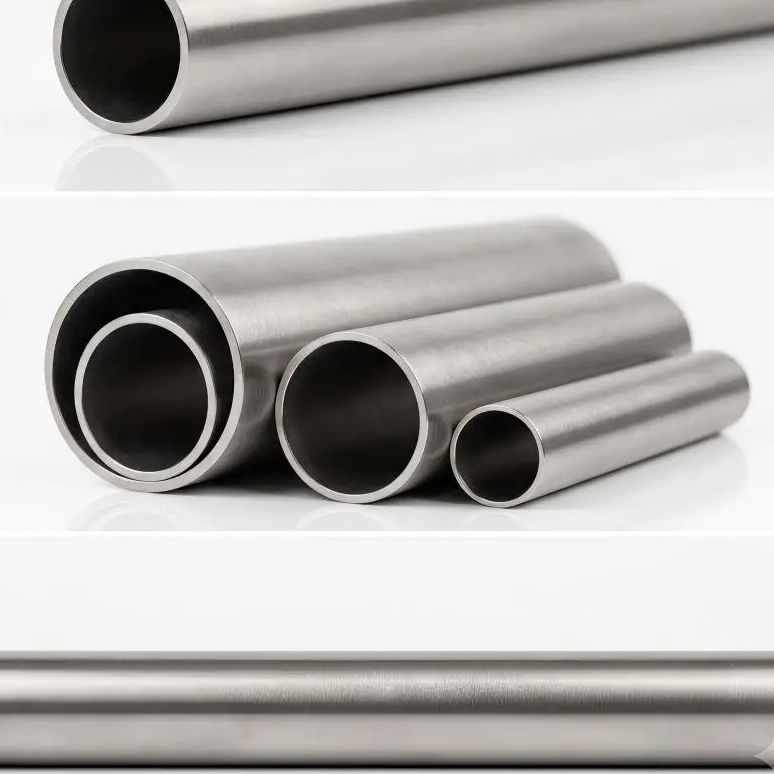
In global titanium procurement, differences in grade naming and acceptance criteria across standards such as ASTM, GOST, DIN, EN, and ISO present a primary challenge for buyers and engineers. This article systematically maps approximate equivalencies among major titanium alloy grades across these standard systems, clarifies key distinctions between them, and offers practical procurement guidance to help you avoid quality risks and delivery delays caused by grade confusion.
Important Notice: All grade equivalencies listed herein are based on industry practices regarding similar chemical compositions and mechanical properties and are provided for technical reference only. "Equivalent" or "Approximately Equivalent" does not imply standard equivalence or direct interchangeability. Final acceptance must strictly adhere to the standards specified in the procurement contract.
Why Alloy Grade Verification Is the First Hurdle in Titanium Procurement
A European customer inquired: "We need Gr.5 titanium plates per DIN standards." A Russian client requested: "Please provide the material certificate for VT6." A Chinese manufacturer asked: "Which standard should this order be accepted against?"
These conversations happen daily in global titanium trading. The root cause: titanium alloys with identical chemical compositions bear entirely different names across national standards, and "approximate correspondence" does not mean "equivalence." For procurement and engineering teams, understanding these grade mappings—and their critical differences—is essential to ensure smooth material delivery, prevent rejections, and avoid commercial disputes.
This guide focuses on procurement and engineering practice, systematically mapping the approximate grade equivalencies of key titanium materials—including industrial pure titanium, Ti-6Al-4V, Ti-Pd alloys, Ti-3Al-2.5V, and Ti-6Al-4V ELI—across major standards, while analyzing core differences between these systems.
Overview of Major Global Titanium Standard Systems
Before reviewing grade equivalencies, it is essential to understand the positioning and scope of each major standard system.
ASTM (American Society for Testing and Materials)
ASTM is one of the most widely used standard systems in global titanium trade. Its titanium standards primarily follow the "B" series, covering various product forms such as plates, pipes, bars, forgings, and castings. ASTM grades are designated as "Grade" followed by a number, e.g., Grade 2, Grade 5. ASTM standards are extensively applied in North America, the Middle East, Southeast Asia, and industrial projects worldwide.
GOST (Russian National Standard)
Russia maintains an independent and comprehensive GOST standard system. Its titanium grade designations use a combination of Cyrillic letters and numbers, such as VT1-0, VT6, and PT-3V. The GOST standards are mandatory in Russia, the Commonwealth of Independent States (CIS), and parts of Eastern Europe. For suppliers planning to enter the Russian market, understanding the GOST grade system is a prerequisite for market access.
DIN (German Institute for Standardization) and EN (European Standards)
German DIN standards long dominated the European titanium market. Although current European supply generally follows EN standards, DIN grades still frequently appear in existing drawings and legacy equipment documentation. The EN standard is now the unified material standard across the EU, with a grade system based on numeric codes and material numbers, such as 3.7035 (approximately equivalent to Gr.2).
ISO (International Organization for Standardization)
The ISO 5832 series primarily covers surgical implant materials in the titanium sector and should not directly replace industrial titanium standards. In the medical device field, ISO 5832-3 is listed alongside ASTM F136 as one of the core standards for Ti-6Al-4V ELI. Currently, the industrial titanium sector lacks an independent ISO standard system and typically refers to EN or ASTM standards.
GB/T (Chinese National Standard)
China's GB/T standard system comprehensively covers titanium and titanium alloy products and holds a dominant position in the domestic market. Chinese titanium exporters are typically well-versed in both ASTM and GB/T standards and can provide material certificates with cross-references across multiple standards.
International Approximate Comparison of Main Titanium Alloy Grades
The following table shows approximate equivalencies between industrial pure titanium and common titanium alloys across various standard systems. This is for technical reference only and should not be used as a basis for formal standard equivalence.
Alloy Type | nominal component | ASTM | GOST (Russia) | EN/DIN (Europe) | ISO | GB/T (China) | Notes |
Industrial Pure Titanium (Low Strength) | CP Ti | Gr.1 ≈ | VT1-00 (VT1-00) | 3.7025 (DIN 3.7025) | — | TA1 | Approximate match; Gr.1 and VT1-00 are not exactly equivalent. |
Industrial Pure Titanium (Medium Strength) | CP Ti | Gr.2 ≈ | VT1-0 (VT1-0) | 3.7035 (DIN 3.7035) | ISO 5832-2 | TA2 | Approximate match; Gr.2 and VT1-0 are not exactly equivalent. |
Industrial Pure Titanium (Higher Strength) | CP Ti | Gr.3 | — | 3.7055 (DIN 3.7055) | — | TA3 | — |
Industrial Pure Titanium (Maximum Strength) | CP Ti | Gr.4 | — | 3.7065 (DIN 3.7065) | — | TA4 | — |
Ti-6Al-4V | 6Al-4V | Gr.5 | VT6 (VT6) (Approximate Match) | 3.7165 (DIN 3.7165) | ISO 5832-3-like system | TC4 | VT6 also has a VT6S variant; Gr.5 and VT6 are not entirely equivalent. |
Ti-6Al-4V ELI | 6Al-4V ELI | Gr.23 (F136) | No direct equivalent grade | — | ISO 5832-3 | TC4 ELI | Confirm according to customer technical conditions (TU) |
Ti-3Al-2.5V | 3Al-2.5V | Gr.9 | No direct equivalent grade | 3.7195 | — | TC2 | PT-7M shares similarities in piping applications but is not chemically equivalent. |
Ti-Pd alloy | CP Ti + 0.2Pd | Gr.7 | Refer to Titanium-Palladium Alloy Specifications | 3.7235 | — | TA9 | — |
Ti-0.3Mo-0.8Ni | 0.3Mo-0.8Ni | Gr.12 | — | 3.7105 | — | TA10 | — |
ISO 5832 Series: Special Notes
ISO 5832 series standards primarily address surgical implant materials. Specifically, ISO 5832-2 corresponds to commercially pure titanium, while ISO 5832-3 corresponds to Ti-6Al-4V ELI. These standards should not be used for industrial titanium procurement unless explicitly specified by the customer.
Note on PT-7M and Gr.9
PT-7M is an alpha-type titanium alloy in the Russian standard system. While it shares some similarities with ASTM Gr.9 (Ti-3Al-2.5V) in pipe applications, their chemical compositions differ, so they cannot be used interchangeably. If the customer specifies PT-7M, confirmation must be made separately according to Russian technical conditions.
Key differences between different standards frameworks
Differences in grade names are merely superficial. The following deeper factors truly impact material acceptance:
1. Subtle differences in chemical composition ranges
Even within the same alloy system, different standards may specify slightly varying allowable ranges for elements. For instance, ASTM Gr.2 requires oxygen content ≤0.25%, but limits for oxygen and other impurities can differ across product standards and revision years. GOST ВТ1-0 also defines its own chemical composition ranges. For applications with tight process windows (e.g., superplastic forming, precision welding), these minor compositional differences can affect process adaptability. When purchasing, provide the complete chemical composition requirements of the target standard and have the supplier confirm whether the material meets all applicable standards.
2. Mechanical performance requirements differ
Minimum mechanical property requirements for the same alloy may vary across different standards. For instance, ASTM Gr.5 may specify slightly different properties in the annealed condition depending on the product form (e.g., ASTM B265 for sheet and strip, ASTM B348 for bar). GOST ВТ6 may have its own strength criteria. The standard used for design must be the one specified for procurement and acceptance; do not mix standards.
3. Test Methods and Acceptance Criteria
This is a critical yet often overlooked distinction. ASTM, GOST, and EN standards may differ systematically in tensile test specimen dimensions, test rates, impact test temperatures and methods, and non-destructive testing acceptance criteria. When requesting multi-standard material certificates from suppliers, ensure all tests are performed according to the specific requirements of each standard—not just that the chemical composition is compliant.
4. Heat Treatment Condition and Designation
The same grade may correspond to different default heat treatment states across standards. For example, designations for annealed conditions, marking of solution and aging states, and allowable supply conditions can vary between ASTM, EN, and GOST. When requesting a quote, clearly specify the required heat treatment state rather than listing only the grade.
5. Standard coverage of product forms
Not every standard covers all product forms. For example, ASTM B265 covers plates, ASTM B348 covers bars, and ASTM B338 covers heat exchanger tubes. GOST standards may categorize products differently. When purchasing, verify that the supplier's material certificate cites the correct product-specific standard number, not just a composition standard.
Practical Recommendations for Material Grade Cross-Reference in Procurement
1. Provide complete standard information when requesting a quote.
Do not just write "Gr.5" or "TC4". Specify the complete standard number, grade, version year, and product form standard. For example: "ASTM B265 Gr.5, 2021 Edition, Annealed Condition, 5mm Thickness". The more complete the information, the more accurately suppliers can quote and produce.
2. Define primary acceptance criteria and secondary reference standards
If materials must meet two standards (e.g., ASTM and GOST), specify one as the primary acceptance criterion and the other as a reference or supplement. We do not recommend requiring "full compliance with both standards," as this may force an extremely narrow intersection in composition and performance, increasing costs or making compliance impossible.
3. "Correspondence" does not mean "identity," nor does it imply "substitution."
This document and the industry-standard grade cross-reference table are for technical reference only. Unless explicitly accepted in writing by the customer, the supplier shall not deliver ASTM Gr.5 as ВТ6, or vice versa. The contract documents, material certificates, and packaging labels must strictly use the standard number and grade specified by the purchaser.
4. File language and authentication requirements must be discussed in advance.
Projects requiring GOST standards typically mandate Russian or bilingual material certificates. European projects under EN standards may require EN 10204 3.1 or 3.2 format certificates. These document requirements must be clarified during the inquiry stage to avoid delivery delays caused by non-compliant file formats after production is complete.
5. Special grades follow the Technical Conditions (TU) channel.
For grade combinations without formal standard references (e.g., supplying ELI material to Russia or GOST grades to Europe), acceptance is typically based on the customer's technical specifications. The supplier and buyer must reach a written agreement on the specific content of these technical specifications prior to contract signing.
Frequently Asked Questions
Q1: Are ASTM Gr.5 and GOST ВТ6 equivalent?
Both belong to the Ti-6Al-4V system with similar nominal compositions, but GOST standards specify distinct ranges for chemical composition, mechanical properties, and heat treatment requirements for ВТ6. Additionally, ВТ6 has variants such as ВТ6С. The two are approximately equivalent rather than identical; they should not be substituted without careful consideration during procurement, and acceptance criteria must be clearly defined.
Q2: Can the material meet both ASTM and GOST standards simultaneously?
Requirements can be specified, but the primary acceptance criteria must be clearly defined. Fully meeting all requirements of both standards may present technical challenges and incur additional costs; feasibility should be discussed with suppliers during the quotation phase.
Q3: DIN standards are obsolete. Why do customers still specify DIN grades?
While European supply generally follows EN standards, DIN grades still frequently appear in legacy drawings and technical documentation for older equipment. In such cases, it is recommended to verify the corresponding EN standard number so suppliers can manufacture and inspect according to current standards.
Q4: Can PT-3V be replaced with Ti-6Al-4V?
No. PT-3V is a distinct class of high-strength titanium alloy in the Russian system, with independent composition and performance characteristics. Unlike Ti-6Al-4V (Gr.5/VT6), it must be verified separately according to Russian technical specifications and cannot be simply substituted.
Q5: Can you provide material certificates with multi-standard comparisons?
We can provide material certificates for ASTM, EN, GOST, and other standards, with multi-standard cross-references. For specific standard documentation, please specify the target standard number, grade, and revision year when requesting a quote. We will then provide the corresponding technical solution and compliance assessment.
Conclusion
In titanium international trade, the ability to map grade equivalencies is fundamental for procurement and technical teams. Understanding the approximate correspondences and differences among ASTM, GOST, DIN, EN, ISO, and GB/T standards helps ensure accurate quoting and inspection, while enabling early identification of potential technical risks to prevent delivery delays and commercial disputes. The core principle: grade equivalencies are for reference only; final acceptance must always follow the standard specified in the contract.
If you face challenges with grade mapping or standard verification in international titanium procurement and need multi-standard material documentation, please send us your requirements and technical specifications. We provide technical comparison solutions and compliance assessments to help mitigate standard alignment risks in cross-border sourcing.
(Yucheng Haitai Industry | Titanium Plates, Tubes, Rods, Forgings |yuchenghaicompany.com)
English Version
Titanium Grade Comparison Chart: Explaining ASTM, GOST, DIN, EN, and ISO Standards
In global titanium procurement, differences in grade designations and acceptance criteria across ASTM, GOST, DIN, EN, and ISO standards are often the first hurdle for procurement and technical teams. This chart-based guide maps approximate equivalencies among major titanium alloy grades across these systems, highlights key distinctions, and offers practical procurement recommendations to help you avoid quality risks and delivery delays caused by grade confusion.
Important Notice: All grade equivalencies listed herein are based on industry practices regarding similar chemical compositions and mechanical properties and are provided for technical reference only. "Equivalent" or "Approximately Equivalent" does not imply standard equivalence or direct interchangeability. Final acceptance must strictly adhere to the standards specified in the procurement contract.
Why Alloy Grade Verification Is the First Hurdle in Titanium Procurement
A European customer inquired: "We need Gr.5 titanium plates per DIN standards." A Russian client requested: "Please provide the material certificate for VT6." A Chinese manufacturer asked: "Which standard should this order be accepted against?"
These conversations happen daily in global titanium trade. The root cause: titanium alloys with identical chemical compositions carry completely different designations across national standards, and "approximate equivalents" do not mean "interchangeable." For procurement and engineering teams, understanding these designation mappings—and the critical differences between them—is fundamental to ensuring smooth material delivery, avoiding rejections, and preventing commercial disputes.
This guide focuses on procurement and engineering practices, systematically mapping the approximate grade equivalencies of key titanium materials—including industrial pure titanium, Ti-6Al-4V, Ti-Pd alloys, Ti-3Al-2.5V, and Ti-6Al-4V ELI—across major standards. It also analyzes the core differences between these standards.
Overview of Major Global Titanium Standard Systems
Before reviewing grade equivalencies, it is essential to understand the positioning and scope of each major standard system.
ASTM (American Society for Testing and Materials)
ASTM is one of the most widely used standard systems in global titanium trade. Its titanium standards are primarily organized under the "B" series, covering various product forms such as plates, tubes, bars, forgings, and castings. ASTM grades are designated as "Grade" followed by a number (e.g., Grade 2, Grade 5). These standards are extensively applied in North America, the Middle East, Southeast Asia, and major industrial projects worldwide.
GOST (Russian National Standard)
Russia has its own independent and comprehensive GOST standards system. Titanium grades in Russia are named using a combination of Cyrillic letters and numbers, such as VT1-0, VT6, and PT-3V. The GOST standard holds mandatory status in Russia, CIS countries, and parts of Eastern Europe. For suppliers planning to enter the Russian market, understanding the GOST grade system is a prerequisite for market access.
DIN (German Institute for Standardization) and EN (European Standards)
German DIN standards long dominated the European titanium market. Although current European supply generally follows EN standards, DIN grades still frequently appear in existing drawings and legacy equipment documentation. The EN standard is now the unified material standard across the EU, using a numbering system based on numeric codes and material numbers, such as 3.7035 (approximately equivalent to Gr.2).
ISO (International Organization for Standardization)
The ISO 5832 series primarily covers surgical implant materials in the titanium sector and should not be used to directly replace industrial titanium standards. In the medical device field, ISO 5832-3 and ASTM F136 are jointly recognized as the core standards for Ti-6Al-4V ELI. Currently, the industrial titanium sector lacks an independent ISO standard system and typically refers to EN or ASTM standards instead.
GB/T (Chinese National Standard)
China's GB/T standard system comprehensively covers titanium and titanium alloy products, establishing a dominant position in the domestic market. Chinese titanium exporters are typically proficient in both ASTM and GB/T standards and can provide material certificates with multi-standard cross-references.
International Approximate Comparison of Main Titanium Alloy Grades
The following table provides approximate牌号 correspondences between commercially pure titanium and common titanium alloys across various standards. This information is for technical reference only and should not be used as a basis for formal standard equivalence.
Alloy Type | nominal component | ASTM | GOST (Russia) | EN/DIN (Europe) | ISO | GB/T (China) | Notes |
Industrial Pure Titanium (Low Strength) | CP Ti | Gr.1 ≈ | VT1-00 (VT1-00) | 3.7025 (DIN 3.7025) | — | TA1 | Approximate match; Gr.1 and VT1-00 are not exactly equivalent. |
Industrial Pure Titanium (Medium Strength) | CP Ti | Gr.2 ≈ | VT1-0 (VT1-0) | 3.7035 (DIN 3.7035) | ISO 5832-2 | TA2 | Approximate match; Gr.2 and VT1-0 are not exactly equivalent. |
Industrial Pure Titanium (Higher Strength) | CP Ti | Gr.3 | — | 3.7055 (DIN 3.7055) | — | TA3 | — |
Industrial Pure Titanium (Maximum Strength) | CP Ti | Gr.4 | — | 3.7065 (DIN 3.7065) | — | TA4 | — |
Ti-6Al-4V | 6Al-4V | Gr.5 | VT6 (VT6) (Approximate Match) | 3.7165 (DIN 3.7165) | ISO 5832-3-like system | TC4 | VT6 also has a VT6S variant; Gr.5 and VT6 are not entirely equivalent. |
Ti-6Al-4V ELI | 6Al-4V ELI | Gr.23 (F136) | No direct equivalent grade | — | ISO 5832-3 | TC4 ELI | Confirm according to customer technical conditions (TU) |
Ti-3Al-2.5V | 3Al-2.5V | Gr.9 | No direct equivalent grade | 3.7195 | — | TC2 | PT-7M shares similarities in piping applications but is not chemically equivalent. |
Ti-Pd alloy | CP Ti + 0.2Pd | Gr.7 | Refer to Titanium-Palladium Alloy Specifications | 3.7235 | — | TA9 | — |
Ti-0.3Mo-0.8Ni | 0.3Mo-0.8Ni | Gr.12 | — | 3.7105 | — | TA10 | — |
Special Notes for ISO 5832 Series
ISO 5832 series standards primarily address surgical implant materials. Specifically, ISO 5832-2 corresponds to commercially pure titanium, while ISO 5832-3 corresponds to Ti-6Al-4V ELI. These standards should not be used for industrial titanium procurement unless explicitly specified by the customer.
Notes on PT-7M and Gr.9
PT-7M is an alpha-type titanium alloy within the Russian standard system. While it shares some similarities with ASTM Gr.9 (Ti-3Al-2.5V) in tubing applications, its chemical composition differs, so it cannot be used as a direct substitute. If the customer specifies PT-7M, it must be confirmed separately against Russian technical conditions.
Key differences between different standards frameworks
Different brand names are merely superficial. The real factors affecting material acceptance are the following deeper differences:
1. Subtle differences in chemical composition ranges
Even within the same alloy family, different standards may specify slightly varying allowable ranges for elements. For example, ASTM Gr.2 requires oxygen content ≤0.25%, but limits for oxygen and other impurities can differ across product standards and revision years. GOST ВТ1-0 also defines its own chemical composition ranges. For applications with tight process windows (e.g., superplastic forming, precision welding), these minor compositional differences can affect process compatibility. When purchasing, provide the complete chemical requirements of your target standard and have suppliers confirm whether the material meets all applicable standards.
2. Mechanical performance requirements differ
Minimum mechanical property requirements for the same alloy may vary by standard. For instance, ASTM Gr.5 may have slightly different requirements in the annealed condition for various product forms (sheet per ASTM B265, bar per ASTM B348), while GOST ВТ6 may specify its own strength criteria. Specify the applicable standard for procurement and acceptance based on your design; do not mix standards.
3. Test Method and Acceptance Criteria
This is a critical yet often overlooked distinction. ASTM, GOST, and EN standards may differ systematically in tensile test specimen dimensions, test rates, impact test temperatures and methods, and non-destructive testing acceptance criteria. When requesting multi-standard material certificates from suppliers, ensure all tests are performed according to the specific requirements of each standard—not just that the chemical composition is compliant.
4. Heat Treatment Condition and Designation
The same grade may correspond to different default heat treatment states across standards. For example, designations for annealed conditions, marking of solution and aging states, and allowable supply conditions can vary between ASTM, EN, and GOST. When requesting a quote, clearly specify the required heat treatment state rather than listing only the grade.
5. Standard coverage of product forms
Not every standard covers all product forms. For example, ASTM B265 covers plates, ASTM B348 covers bars, and ASTM B338 covers heat exchanger tubes. GOST standards may categorize products differently. When purchasing, verify that the supplier's material certificate cites the correct product-specific standard number, not just a composition standard.
Practical Recommendations for Material Grade Cross-Reference in Procurement
1. Provide complete standard information when requesting a quote.
Do not just write "Gr.5" or "TC4". Specify the complete standard number, grade, version year, and product form standard. For example: "ASTM B265 Gr.5, 2021 Edition, Annealed Condition, 5mm Thickness". The more complete the information, the more accurately suppliers can quote and produce.
2. Define primary acceptance criteria and secondary reference standards
If materials must meet two standards (e.g., ASTM and GOST), specify one as the primary acceptance criterion and the other as a reference or supplement. We do not recommend requiring "full compliance with both standards," as this may force an extremely narrow intersection in composition and performance, increasing costs or making compliance impossible.
3. "Correspondence" does not mean "identity," nor does it imply "substitution."
This document and the industry-standard grade cross-reference table are for technical reference only. Unless explicitly accepted in writing by the customer, the supplier shall not deliver ASTM Gr.5 as ВТ6, or vice versa. The contract documents, material certificates, and packaging labels must strictly use the standard number and grade specified by the purchaser.
4. File language and authentication requirements must be discussed in advance.
Projects requiring GOST standards typically mandate Russian or bilingual material certificates. European projects under EN standards may require EN 10204 3.1 or 3.2 format certificates. These document requirements must be clarified during the inquiry stage to avoid delivery delays caused by non-compliant file formats after production is complete.
5. Special grades follow the Technical Conditions (TU) channel.
For grade combinations without formal standard equivalents (e.g., supplying ELI material to Russia or GOST grades to Europe), acceptance is typically based on the customer's technical specifications. The supplier and buyer must reach a written agreement on the specific technical requirements before signing the contract.
Frequently Asked Questions
Q1: Are ASTM Gr.5 and GOST ВТ6 equivalent?
Both belong to the Ti-6Al-4V system with similar nominal compositions, but GOST standards specify distinct requirements for ВТ6 regarding chemical composition, mechanical properties, and heat treatment. Additionally, ВТ6 has variants such as ВТ6С. They are approximate equivalents rather than identical; therefore, they cannot be used interchangeably without explicit acceptance criteria during procurement.
Q2: Can the material meet both ASTM and GOST standards simultaneously?
Requirements can be requested, but the primary acceptance criteria must be clearly defined. Fully meeting all requirements of both standards may present technical challenges and additional costs; feasibility should be discussed with suppliers during the quotation phase.
Q3: DIN standards are obsolete. Why do customers still specify DIN grades?
While current European supply generally follows EN standards, DIN grades still frequently appear in legacy drawings and technical documentation for older equipment. In such cases, it is recommended to also verify the corresponding EN standard number so that suppliers can manufacture and inspect according to current standards.
Q4: Can PT-3V be replaced with Ti-6Al-4V?
Not permitted. PT-3V is a distinct class of high-strength titanium alloy in the Russian system, with independent composition and performance characteristics. Unlike Ti-6Al-4V (Gr.5/VT6), it must be verified separately against Russian technical conditions and cannot be simply substituted.
Q5: Can you provide material certificates with multi-standard comparisons?
We provide material certificates compliant with ASTM, EN, GOST, and other standards, including multi-standard cross-references. For specific standard documentation, please specify the target standard number, grade, and revision year in your inquiry. We will then provide the corresponding technical solution and compliance assessment.
Conclusion
In international titanium trading, the ability to cross-reference grades is fundamental for procurement and technical teams. Mastering the approximate correspondences and differences among ASTM, GOST, DIN, EN, ISO, and GB/T standards not only enables accurate quoting and inspection but also helps identify potential technical risks early in the project lifecycle, preventing delivery delays and commercial disputes. The core principle: cross-references are for technical guidance only; final acceptance must always comply with the standard specified in the contract.
If you encounter challenges with grade cross-referencing or standard verification in international titanium procurement, or require multi-standard material documentation, please send us your requirements and technical specifications. We can provide technical comparison solutions and compliance assessments to help mitigate standard alignment risks in cross-border sourcing.
(Yucheng Haitai Industry | Titanium Plates, Tubes, Bars, Forgings |yuchenghaicompany.com)