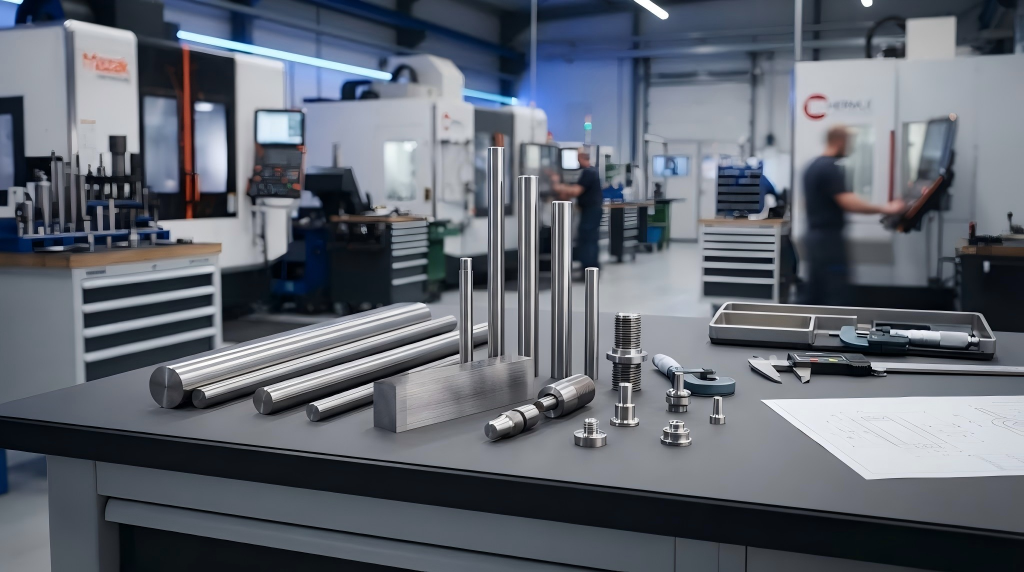
TA2 (GB/T designation, approximately equivalent to ASTM Grade 2) is one of the most widely used commercially pure titanium grades, prized for its excellent corrosion resistance, good weldability, and moderate cost. TA2 corresponds to or is approximately equivalent to ASTM Grade 2 in most commercial applications, but procurement must always follow the governing material standard. This guide outlines typical applications, selection criteria, and procurement considerations across chemical, marine,
TA2 Titanium Bar (ASTM Grade 2 Titanium): Properties, Applications, and Procurement Guide
Summary:TA2 (GB/T designation, approximately corresponding to ASTM Grade 2) is one of the most widely used commercially pure titanium grades, prized for its excellent corrosion resistance, good weldability, and moderate cost. In most commercial applications, TA2 is equivalent or closely corresponds to ASTM Grade 2, though procurement must always adhere to the governing material standard. This guide covers typical applications, selection criteria, and procurement considerations across chemical, marine, desalination, and general industrial sectors.
The Role of TA2 in Industrial Titanium
TA2 does not match TC4's high strength or TC4 ELI's ultra-high fracture toughness. Yet it remains one of the most widely used commercially pure titanium grades worldwide. The reason: in most industrial corrosion environments, TA2 performance is more than adequate, with lower procurement costs, easier fabrication, and less demanding welding requirements.
TA2 is commercially pure titanium, with properties ensured through controlled interstitial elements (iron, oxygen, carbon, nitrogen, hydrogen). It contains no aluminum or vanadium. Its core advantages:Excellent corrosion resistance in oxidizing, neutral, and chloride-containing environments—especially seawater and chemical processing applications; excellent weldability with proper inert gas shielding; and approximately 60% the density of steel.Verify material suitability against temperature, concentration, and chemical composition.
When to Choose TA2 Over TC4
If Your Priority Is... | Recommended Grade |
|---|---|
Corrosion resistance | TA2 (Grade 2) |
High strength | TC4 (Grade 5) |
Medical implant | TC4 ELI (Grade 23) |
Weldability | TA2 (Grade 2) |
Cost efficiency | TA2 (Grade 2) |
Precision machining | Depends on strength requirements |
TA2 Titanium Bar Application Selection Guide
Industry | Typical Components | Why TA2 |
|---|---|---|
Chemical Processing | Tie rods, stirrer shafts, fasteners, thermowells | Excellent corrosion resistance in oxidizing and chloride-containing environments |
Marine & Shipbuilding | Seawater piping flanges, underwater bolts, shaft sleeves, and support brackets | Seawater corrosion resistance; no coating required |
Desalination | Tube supports, spacer bars, tube sheets, fasteners | Long service life; compatible with titanium heat exchanger tubes |
Food & Pharmaceutical | Stirrer shafts, valve stems, filter supports | Non-toxic, chemically inert to organic media, and non-contaminating |
Heat Exchangers | Support rods, baffle tie rods, fasteners | Chloride pitting resistance, electrochemical compatibility |
Power Generation | Tube supports, fasteners, and seawater cooling components | Corrosion resistance in seawater and geothermal environments |
Chemical Equipment: The Primary Application Area
Heat Exchangers and Condensers:When process or cooling water contains chlorides, stainless steel is susceptible to pitting and stress corrosion cracking. TA2 offers excellent corrosion resistance in such environments. Typical components include tube sheet support rods, baffle tie rods, and low-load corrosion-resistant fasteners. For high-pressure bolts, upgrade to TC4 (Grade 5).
Reactors and Pressure Vessels:Stirrer shafts, internal supports, and thermowells leverage TA2's coating-free, non-contaminating properties. For high-torque stirrer shafts, structural redesign or high-strength alloys may be required.
Chlor-Alkali and PVC Plants:TA2 has decades of proven experience in wet chlorine and chlor-alkali applications, where its corrosion resistance significantly outperforms stainless steels.
Shipbuilding and Marine Engineering
Seawater Piping Systems:TA2 flanges, support brackets, and fasteners reduce galvanic corrosion risks when properly designed and paired with compatible materials, avoiding the crevice corrosion issues common in stainless steel exposed to seawater.
Underwater Hull Appendages:Rudder assemblies, stern shaft brackets, and sea chest fasteners benefit from TA2's reduced maintenance needs and enhanced service reliability. For classed vessels, supply may require approval from classification societies (DNV, BV, ABS, CCS, RMRS).
Propeller Shafting Accessories:Seal rings, shaft sleeves, and fasteners made from TA2 deliver corrosion-free performance between dry-dockings.
Seawater Desalination
In large-scale MSF and MED projects, TA2 is used for evaporators and heat exchange systems. Tube sheets, support rods, and fasteners are manufactured from TA2 plate, forgings, or bars. Desalination projects require EN 10204 3.1/3.2 certificates, ultrasonic testing reports, and full heat number traceability.
TA2 Titanium Bar vs. 316L Stainless Steel Bar
Property | TA2 (Grade 2) | 31 6L Stainless Steel |
|---|---|---|
Density | ~4.51 g/cm³ | ~8.0 g/cm³ |
Seawater Corrosion Resistance | Excellent | Good (susceptible to pitting/crevice corrosion) |
Chloride Stress Corrosion Cracking | Resistant | Susceptible to certain chloride-containing environments, especially at elevated temperatures |
Weight | ~56% lighter | Heavier |
Tensile Strength (Typical ASTM Minimum) | ≥ 400 MPa | ≥ 485 MPa |
Initial Material Cost | Higher | Lower |
Lifecycle Maintenance Cost | Typically lower in corrosive environments | May be higher due to corrosion repairs |
Select TA2 for long-term corrosion resistance in chloride-containing or seawater environments. Choose 316L for mild environments where initial cost is the primary constraint.
Common Supply Specifications
Item | Typical Parameters |
|---|---|
Grade | TA2 (GB/T, approx. ASTM Grade 2) |
Diameter Range | Commonly 6 mm – 200 mm; small-diameter precision bars (φ3–20 mm) for Swiss-type CNC machining available in stock |
Supply Form | Hot-rolled bar, cold-drawn bar, forged bar |
Heat Treatment | Annealed (M) |
Surface Condition | Ground, turned, as-rolled |
Applicable Standards | GB/T 2965 / ASTM B348 |
NDT | Ultrasonic testing available upon request |
Procurement Inquiry Checklist
✓ Standard:GB/T 2965 or ASTM B348
✓ Grade:TA2 (or ASTM Grade 2)
✓ Diameter and Length:Specific dimensions or cut-to-length
✓ Quantity:Pieces or total weight
✓ Product Form:Hot-rolled / Cold-drawn / Forged
✓ Surface Condition:Ground / Turned / As-Rolled
✓ Material Certificate:EN 10204 3.1 / 3.2 / GB/T format
✓ Additional:Ultrasonic testing, classification society approval, third-party inspection
✓ Destination:For logistics and documentation
Frequently Asked Questions
Q1: TA2 or TC4?
Choose TA2 for corrosion resistance with moderate strength; choose TC4 for high-load applications (large fasteners, rotating parts). TA2 offers significant cost advantages in large-scale applications.
Q2: Is TA2 required for fasteners?
Yes, suitable for general industrial corrosion-resistant fasteners. For high-strength aerospace or high-pressure bolts, use TC4.
Q3: Maximum service temperature?
Continuous service temperature depends on the environment, but TA2 is generally used below approximately 300°C. At higher temperatures, risks of oxidation and hydrogen absorption increase significantly.
Q4: Weldability?
Excellent with proper inert gas shielding. Titanium welding requires stricter contamination control than conventional steels, but properly executed welds match the base metal's corrosion resistance.
Q5: TA2 vs. 316L?
TA2 offers significantly better corrosion resistance and is ~56% lighter, though it has a higher initial cost. 316L is more economical in mild environments. Refer to the comparison table above for detailed property breakdown.
Q6: Is the item in stock?
Common stock includes precision bars for Swiss-type CNC machining. We regularly stock TA2 bar in diameters 10–100 mm, with cut-to-length processing. Stock sizes are available promptly; custom production depends on dimensions and quantity.
Conclusion
TA2's widespread adoption follows simple engineering logic: in most corrosive environments, the best solution is "just right, absolutely reliable, and economically sustainable."
We supply precision TA2 titanium bars for Swiss-type CNC machining, chemical equipment, desalination, marine engineering, and industrial applications. Our TA2 titanium bars meet GB/T and ASTM standards and come with material certificates, dimensional inspection reports, ultrasonic testing, and custom cutting services. Contact us for material selection support, technical evaluation, and quote assistance.
[Send us your specifications to get a TA2 titanium bar quote and technical support]
(Yucheng Hai Titanium | TA2 / TC4 / TC4 ELI Titanium Bar |yuchenghaicompany.com)