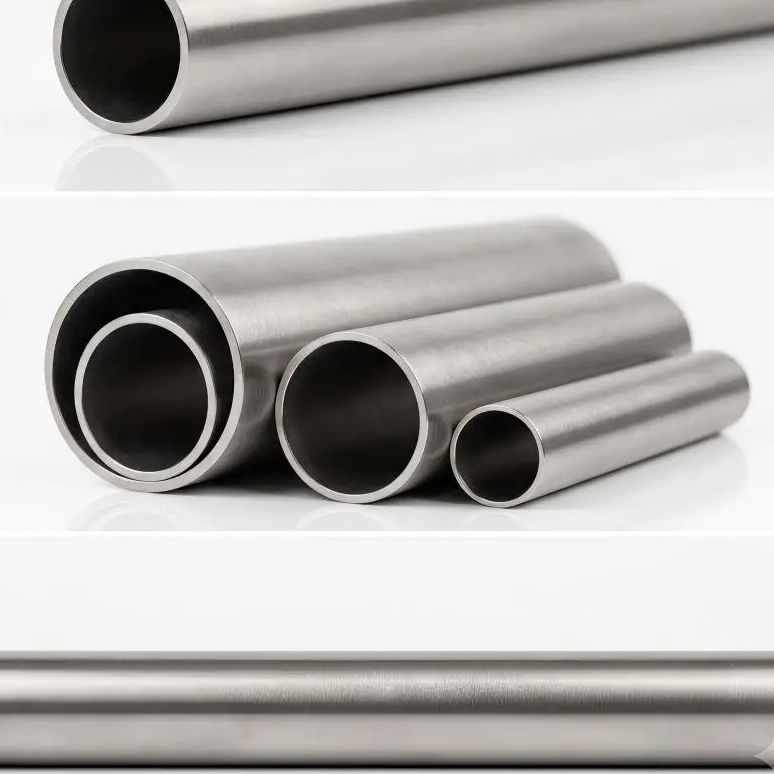
EPC projects in the Middle East enforce rigorous supplier audits. Selecting the wrong supplier can lead to schedule delays, non-compliant documentation, and safety incidents. This guide provides procurement and engineering managers with a systematic framework for evaluating titanium suppliers, covering core dimensions such as certifications, document traceability, manufacturing capacity, third-party inspection cooperation, and regional experience.
Evaluating suppliers isn't about the lowest bid—it's about their ability to withstand full EPC audits.
Middle East oil & gas, chemical, and seawater desalination projects are typically delivered by international EPC contractors. Owners include national energy companies, utility providers, and large industrial groups. For titanium suppliers, the bar goes far beyond "on-time delivery" and "quality compliance." From prequalification and factory audits to material trials and batch documentation, every step must withstand rigorous scrutiny.
In Middle East EPC procurement practice, the time invested upfront in supplier evaluation is the most cost-effective investment to avoid issues later in the project. A titanium supplier that successfully passes full audit scrutiny has typically already been vetted across multiple rounds for technical capability, documentation systems, and production discipline.
This guide outlines actionable supplier evaluation criteria for Middle East EPC projects, tailored for procurement and engineering teams. Whether sourcing ASTM B338 Gr.2 titanium tubes for heat exchangers or evaluating Gr.7, Gr.28 titanium alloys for sour service, suitability must be confirmed against NACE MR0175/ISO 15156 standards based on specific operating conditions. This framework applies to all titanium procurement scenarios.
Key Requirements of Middle East EPC Contractors for Titanium Suppliers
Before diving into the specific evaluation criteria, it's essential to understand the baseline expectations for material suppliers in Middle East EPC projects. Unlike standard industrial procurement, material suppliers in EPC projects are not just product providers; they are critical links in the project compliance chain. Contractors and owners typically expect suppliers to demonstrate the following core capabilities:
Complete documentation: Full traceable records from material certificates to non-destructive testing reports.
Transparent Manufacturing Process: Willing to undergo on-site audits and witness testing by third-party inspection agencies.
Reliable Delivery Commitment: Stable raw material supply chain and production scheduling ensure on-time delivery.
Proven track record: Experience supplying projects in similar industries or of comparable scale, with verifiable case studies available.
Understanding these foundational expectations helps suppliers demonstrate their capability to meet EPC project requirements during the evaluation process.
Level 1: Basic Qualifications and System Certification
1. Quality Management System Certification
ISO 9001 is the baseline requirement for all types of titanium suppliers. For suppliers directly involved in the oil and gas equipment manufacturing chain (e.g., valve and pipe fitting manufacturers), API Q1 may serve as a project advantage. For general titanium material suppliers (e.g., titanium tubes, plates, and bars), an ISO 9001 quality management system and complete material traceability are typically mandatory. Some projects may also require ISO 14001 (environmental management) and ISO 45001 (occupational health and safety) certifications.
2. Qualifications of Material Manufacturer
Are you partnering with traders, or directly with manufacturers or integrated manufacturing-and-trading enterprises with stable processing capabilities? While traders may offer more pricing flexibility, manufacturers and integrated enterprises typically provide stronger advantages in documentation traceability, technical responsiveness, and delivery control. Verifying a supplier's actual manufacturing capacity and position within the supply chain is the first critical step. The differences between Chinese titanium manufacturers and traders will be discussed further later.
3. Export Qualifications and Track Record
Does the supplier hold import/export rights? What were their export performance figures over the past three years? Do they have a track record of shipments to the Middle East? A verified, authentic list of export performance is more convincing than any verbal promise.
Level 2: Material Documentation and Traceability – The Critical Lifeline for Middle East Projects
1. Material Certificate
Per project specifications, EPC projects typically require EN 10204 3.1 certification; some critical equipment or owner-specified projects may require EN 10204 3.2. Material certificates must cover chemical composition, mechanical properties, and heat treatment condition. The certificate must clearly display the heat/batch number, which must be traceable to the melt batch.
2. Non-destructive Test Report
Titanium tubes must be accompanied by eddy current or ultrasonic testing reports. Plates and forgings shall provide corresponding non-destructive testing documentation as required by the applicable standards. Reports must contain original data for the supplied batch, not sample templates.
3. NACE MR0175 Compliance Confirmation
If the project involves acidic conditions, verify that the supplier can provide a formal NACE compliance certification. It is important to note that compliance with NACE MR0175/ISO 15156 is not determined by simply stating "a specific grade is compliant." Instead, suitability must be confirmed based on the material grade, heat treatment condition, and specific service environment (including hydrogen sulfide partial pressure, temperature, pH value, and chloride ion concentration). The supplier should provide a formal compliance statement tailored to the specific grade and operating parameters.
4. PMI Material Identification
More Middle East EPC projects now require PMI testing before shipment to ensure the delivered material grade matches the certificate. It is essential to confirm whether the supplier has in-house PMI capabilities or can cooperate with a third party commissioned by the client.
Level 3: Authenticity of Production Capacity and Delivery Commitments
1. Capacity and Production Schedule
How can suppliers demonstrate their production capacity meets your project requirements? Can they provide details on current order backlog (without disclosing client information)? If a supplier's lead time is significantly shorter than the industry standard, ask about the specific measures ensuring this timeline.
2. Sourcing and Preparation Strategy
The lead time for titanium production largely depends on the supply of upstream titanium sponge and intermediate坯料. Does the supplier have a stable partnership with upstream raw material manufacturers? Do they maintain regular inventory or a procurement strategy to handle urgent orders? These factors help you assess the reliability of delivery commitments.
3. Small-batch and prototype orders
Before placing a formal order for Middle East EPC projects, suppliers are typically required to complete a small-batch trial run to validate material performance, document accuracy, and delivery processes. A supplier's willingness to cooperate with the trial and their ability to demonstrate execution quality in this phase comparable to large-scale delivery serve as key indicators of their capability.
Level 4: Third-Party Inspection Cooperation and Factory Transparency
1. Willingness to accept third-party inspection
Middle Eastern projects typically mandate on-site inspections or witnessed testing by agencies such as SGS, TÜV, Bureau Veritas, Intertek, and DNV. Can the supplier open their factory for inspection? Are they able to respond quickly and cooperate with the inspection plan? If a supplier is vague about third-party inspection requirements or creates obstacles, this should raise serious red flags.
2. Factory floor management level
If on-site factory audits are feasible, focus on: raw material labeling and segregation, production equipment maintenance status, inspection equipment calibration records, and finished product labeling and traceability systems. A well-managed factory will not overlook these details.
3. Welding Procedure Qualification and Welder Certification
If the procured titanium products involve welding (e.g., welded pipes), suppliers must provide valid Welding Procedure Specifications (WPS) and welder qualification records. These documents are essential to ensure weld quality.
Level 5: Middle East Market Expertise and Logistics Capabilities
1. Are you familiar with the EPC documentation framework in the Middle East?
Middle Eastern large-scale projects have specific supplier documentation requirements, ranging from material pre-qualification and factory inspection to packing lists and certificates of origin. Each format and process follows strict standards. Suppliers with experience in Middle Eastern projects are more familiar with this system, significantly reducing communication and revision efforts for the buyer.
2. Customs clearance and documentation expertise
Customs clearance requirements vary across Kuwait, Qatar, Saudi Arabia, and the UAE, with strict formatting rules for certificates of origin, commercial invoices, and packing lists. Can the supplier provide a complete document package? Do they have experience handling customs clearance at Middle Eastern ports? These details directly impact whether materials will arrive on site on time.
3. After-Sales Response and Emergency Supply Capability
If any issues arise upon material delivery (e.g., document discrepancies, surface defects, or quantity mismatches), can the supplier provide a substantive response within the agreed timeframe? Are they equipped to initiate an emergency replenishment process? These factors reflect the supplier's true service capabilities.
Chinese Titanium Manufacturers vs. Traders: What Buyers Need to Know
When evaluating Chinese titanium suppliers, buyers typically encounter two types of entities: manufacturers and traders. Understanding the difference between them helps in making a more informed choice.
Manufacturer (or manufacturer-integrated trading company)
Own production facilities and processing capabilities for greater control over material quality and delivery timelines.
File traceability systems are typically more comprehensive, providing a complete traceability chain from raw materials to finished products.
Faster technical response with direct support for custom specifications and special requirements.
China's titanium industry chain is concentrated in regions such as Baoji, Shaanxi; Liaoning; and Sichuan. Baoji is one of the largest domestic titanium processing bases.
Trader
May offer more competitive pricing, especially for off-the-shelf standard specifications.
However, the file traceability chain may become more complex due to additional intermediate steps.
Technical support and after-sales response may not be as deep as those from the original manufacturer.
For Middle East EPC projects, prioritize industrial and trading integrated suppliers with direct manufacturing or stable processing capabilities. If working with traders, allocate more audit resources to document traceability and third-party inspection.
Titanium Supplier Audit Checklist
Audit Criteria | Key Issue | Pass Signal |
Certifications | Is the ISO 9001 still valid? | Provide a copy of the valid certificate. |
Export Performance | Are there any shipping records to the Middle East? | Sample Bill of Lading or Customs Declaration (Customer information may be redacted) |
Material File | Can you provide an EN 10204 3.1 or 3.2 certificate? | Sample file is clear and traceable by heat/batch number. |
NACE Compliance | Are you familiar with the requirements of NACE MR0175? | Compliance confirmation documents available for specific grades, heat treatment conditions, and operating parameters. |
PMI Testing | Do you have experience with PMI equipment or related procedures? | Can work with third parties to complete PMI and issue reports. |
Production Capacity Assurance | How do you ensure on-time delivery? | Please specify the source of raw materials and current production capacity allocation. |
Third-party inspection | Do you accept on-site inspections from SGS, TÜV, BV, or DNV? | Proactively cooperate, with no additional restrictions. |
File Experience | Do you have experience submitting documents for EPC projects in the Middle East? | Provide the file checklist and submission process guide. |
Logistics Capabilities | Are you familiar with Middle East customs clearance and documentation requirements? | Experienced in shipping to the Middle East; can assist with document preparation. |
Technical Support Capabilities | Can you provide a grade selection recommendation? | Recommend materials based on operating conditions such as medium, temperature, and pressure. |
Project Experience | Do you have relevant industry supply records? | Anonymous project examples available for reference |
Frequently Asked Questions
Q1: Can all titanium suppliers meet the requirements of Middle East EPC projects?
Not necessarily. Middle East EPC projects demand significantly higher standards for document integrity and traceability compared to standard industrial projects. Some suppliers who perform well in general markets may reveal deficiencies in their documentation systems, inadequate inspection equipment, or slow technical responses when subjected to rigorous EPC audits. The more thorough the initial assessment, the lower the risk downstream.
Q2: What advantages do Chinese titanium suppliers have in the Middle East market?
China is one of the world's largest titanium producers, with complete supply chains in Baoji (Shaanxi), Liaoning, Sichuan, and other regions. Compared to European and American suppliers, Chinese titanium companies typically offer more competitive pricing, flexible delivery schedules, and greater willingness to handle small-batch or customized orders. However, buyers must invest additional effort in vendor qualification reviews and document traceability to identify suppliers with genuine EPC capabilities.
Q3: What should you watch out for if a supplier's quote is significantly below the market average?
Low prices may indicate cost-cutting in raw material sourcing, heat treatment processes, or documentation preparation. We recommend verifying the authenticity of the supplier's material certificates, confirming their verifiable export track record, and ensuring they are willing to undergo third-party full-process inspection. The likelihood of obtaining compliant EPC materials at prices significantly below market rates is extremely low.
Q4: What information should be provided to suppliers at the project's outset to obtain accurate quotes?
Recommendations: Provide material grade and standard, specifications (size and quantity), operating conditions (temperature, pressure, medium composition), required documentation standards (e.g., EN 10204 3.1 or 3.2), need for third-party inspection, delivery terms, and destination port. The more complete the information, the more accurate the quote will be.
Q5: How to choose between a manufacturer and a trader?
For Middle East EPC projects, prioritize integrated manufacturers and traders with direct manufacturing or stable processing capabilities to ensure complete document traceability and direct technical support. If engaging with traders, allocate additional resources to document verification and third-party inspection. Refer to the "Chinese Titanium Manufacturers vs. Traders" section of this article for guidance.
Conclusion
Evaluating Chinese titanium suppliers for Middle East EPC projects is fundamentally about securing long-term technical assurance and execution synergy. The numbers on a quotation are just the starting point; what truly determines whether a project proceeds smoothly lies behind those figures: the supplier's qualification system, documentation capabilities, and familiarity with strict EPC workflows.
Yucheng Hai Titanium, based in Baoji, China's premier titanium hub, has long supplied ASTM-compliant titanium tubes, plates, bars, and forgings to chemical, seawater desalination, and oil & gas projects across the Middle East. We are well-versed in Middle Eastern EPC documentation and approval processes, support third-party inspections, and provide complete document packages—from material certificates to PMI test reports.
If you're evaluating titanium suppliers for a Middle East EPC project, please send us your requirements. We can provide technical selection recommendations, qualification documents, and pricing proposals within 24 hours to support every step of your supplier evaluation process.
[Submit your project requirements to receive review support documents and a quote within 24 hours]
(Yucheng Haitai Industry (Dongguan) Co., Ltd. | CNC Precision Titanium Rods | TA1 / TA2 / TC4 / TC4 ELI Titanium Rods |yuchenghaicompany.com)
English Version
How to Evaluate Chinese Titanium Suppliers for Middle East EPC Projects: A Procurement Guide
Middle Eastern EPC projects subject material suppliers to rigorous audits. Selecting the wrong supplier can cause schedule delays, documentation non-compliance, or safety incidents. This article provides procurement and engineering professionals with a systematic framework for evaluating Chinese titanium suppliers, covering qualification certifications, documentation traceability, production capabilities, third-party inspection cooperation, and regional experience.
Evaluating suppliers isn't about the lowest bid—it's about their ability to withstand full EPC audits.
Middle East oil & gas, chemical, and seawater desalination projects are typically delivered by international EPC contractors. Owners include national energy companies, utility providers, and large industrial groups. For titanium suppliers, the bar goes far beyond "on-time delivery" and "quality compliance." From prequalification and factory audits to material trials and batch documentation, every step must withstand rigorous scrutiny.
In Middle East EPC procurement practice, the time invested upfront in supplier evaluation is the most cost-effective investment to avoid issues later in the project. A titanium supplier that successfully passes full audit scrutiny has typically already been vetted across multiple rounds for technical capability, documentation systems, and production discipline.
This article outlines a practical supplier evaluation framework based on the actual requirements of EPC projects in the Middle East, intended for procurement and engineering management teams. Whether selecting ASTM B338 Gr.2 titanium tubes for heat exchangers or evaluating Gr.7, Gr.28, and other titanium alloys for sour service conditions, suitability must be confirmed against NACE MR0175/ISO 15156 standards in conjunction with specific operating conditions. This evaluation framework applies to all titanium procurement scenarios.
Key Requirements of Middle East EPC Contractors for Titanium Suppliers
Before diving into the specific evaluation criteria, it's essential to understand the baseline expectations for material suppliers in Middle East EPC projects. Unlike standard industrial procurement, material suppliers in EPC projects are not just product providers; they are critical links in the project compliance chain. Contractors and owners typically expect suppliers to demonstrate the following core capabilities:
Complete documentation: Full traceable records from material certificates to non-destructive testing reports.
Transparent Manufacturing Process: Willing to undergo on-site audits and witness testing by third-party inspection agencies.
Reliable Delivery Commitment: Stable raw material supply chain and production scheduling ensure on-time delivery.
Proven track record: Experience supplying projects in similar industries or of comparable scale, with verifiable case studies available.
Understanding these foundational expectations helps suppliers demonstrate their capability to meet EPC project requirements during the evaluation process.
Level 1: Basic Qualifications and System Certification
1. Quality Management System Certification
ISO 9001 is the baseline requirement for all types of titanium suppliers. For suppliers directly involved in the oil and gas equipment manufacturing chain (e.g., valve and pipe fitting manufacturers), API Q1 may serve as a project advantage. For general titanium material suppliers (e.g., titanium tubes, plates, and bars), an ISO 9001 quality management system and complete material traceability are typically mandatory. Some projects may also require ISO 14001 (environmental management) and ISO 45001 (occupational health and safety) certifications.
2. Qualifications of Material Manufacturer
Are you partnering with traders, or directly with manufacturers or integrated manufacturing-and-trading enterprises with stable processing capabilities? While traders may offer more pricing flexibility, manufacturers and integrated enterprises typically provide stronger advantages in documentation traceability, technical responsiveness, and delivery control. Verifying a supplier's actual manufacturing capacity and position within the supply chain is the first critical step. The differences between Chinese titanium manufacturers and traders will be discussed further later.
3. Export Qualifications and Track Record
Does the supplier hold import/export rights? What were their export performance figures over the past three years? Do they have a track record of shipments to the Middle East? A verified, authentic list of export performance is more convincing than any verbal promise.
Level 2: Material Documentation and Traceability – The Critical Lifeline for Middle East Projects
1. Material Certificate
Per project specifications, EPC projects typically require EN 10204 3.1 certification; some critical equipment or owner-specified projects may require EN 10204 3.2. Material certificates must cover chemical composition, mechanical properties, and heat treatment condition. The certificate must clearly display the heat/batch number, which must be traceable to the melt batch.
2. Non-destructive Test Report
Titanium tubes must be accompanied by eddy current or ultrasonic testing reports. Plates and forgings shall provide corresponding non-destructive testing documentation as required by the applicable standards. Reports must contain original data for the supplied batch, not sample templates.
3. NACE MR0175 Compliance Confirmation
If the project involves acidic conditions, verify that the supplier can provide an official NACE compliance certification. Note that NACE MR0175/ISO 15156 compliance is not simply a matter of determining whether "a specific grade qualifies." Instead, suitability must be confirmed by evaluating the material grade, heat treatment condition, and specific operating parameters (e.g., H₂S partial pressure, temperature, pH, chloride concentration). The supplier must provide an official compliance statement tailored to the specific grade and operating conditions.
4. PMI Material Identification
More Middle East EPC projects now require PMI testing before shipment to ensure the delivered material grade matches the certificate. It is essential to confirm whether the supplier has in-house PMI capabilities or can cooperate with a third party commissioned by the client.
Level 3: Authenticity of Production Capacity and Delivery Commitments
1. Capacity and Production Schedule
How can suppliers demonstrate that their production capacity meets your project requirements? Can they provide an overview of their current order backlog (without disclosing client details)? If a supplier quotes a lead time significantly shorter than the industry standard, ask about the specific safeguards or mechanisms behind this claim.
2. Sourcing and Preparation Strategy
The lead time for titanium production largely depends on the supply of upstream titanium sponge and intermediate坯料. Does the supplier have a stable partnership with upstream raw material manufacturers? Do they maintain regular inventory or a procurement strategy to handle urgent orders? These factors help you assess the reliability of delivery commitments.
3. Small-batch and prototype orders
Before placing formal orders for Middle East EPC projects, suppliers are typically required to complete a small-batch trial run. This step validates material performance, documentation accuracy, and delivery processes. A supplier's willingness to cooperate with the trial run—and their ability to demonstrate execution standards during this phase that match those expected for mass production—is a key indicator of their overall capability.
Level 4: Third-Party Inspection Cooperation and Factory Transparency
1. Willingness to accept third-party inspection
Middle Eastern projects typically mandate on-site inspections or witnessed testing by agencies such as SGS, TÜV, Bureau Veritas, Intertek, and DNV. Can the supplier open their factory for inspection? Are they able to respond quickly and cooperate with the inspection plan? Exercise extreme caution if a supplier is vague about third-party inspections or creates obstacles.
2. Factory floor management level
If on-site factory audits are feasible, focus on: raw material labeling and segregation, production equipment maintenance status, inspection equipment calibration records, and finished product labeling and traceability systems. A well-managed factory will not overlook these details.
3. Welding Procedure Qualification and Welder Certification
If the procured titanium involves welding (e.g., welded pipe), the supplier must provide valid Welding Procedure Qualification Records (WPQR) and welder certification. These documents are essential for ensuring weld quality.
Level 5: Middle East Market Expertise and Logistics Capabilities
1. Are you familiar with the EPC documentation framework in the Middle East?
Middle Eastern large-scale projects have specific vendor documentation requirements, from material pre-qualification and factory inspection to packing lists and certificates of origin. Vendors with experience in Middle Eastern projects are more familiar with this system, significantly reducing communication and revision efforts for the purchaser.
2. Customs clearance and documentation expertise
Customs clearance requirements vary across Kuwait, Qatar, Saudi Arabia, and the UAE, with strict formats for certificates of origin, commercial invoices, and packing lists. Can the supplier provide a complete document package? Do they have experience handling customs clearance at Middle Eastern destination ports? These details directly impact whether materials will arrive on site on time.
3. After-Sales Response and Emergency Supply Capability
If any issues arise upon material delivery to the site (e.g., document discrepancies, surface defects, quantity mismatches), can the supplier provide a substantive response within the committed timeframe? Are they capable of initiating an emergency replenishment process? These factors reflect the supplier's true service capabilities.
Chinese Titanium Manufacturers vs. Traders: What Buyers Need to Know
When evaluating Chinese titanium suppliers, buyers typically encounter two types of entities: manufacturers and traders. Understanding the difference between them helps you make a more informed choice.
Manufacturer (or manufacturer-trader)
Owns production facilities and processing capabilities for direct control over material quality and delivery timelines.
The file traceability system is typically more comprehensive, providing a complete traceability chain from raw materials to finished products.
Faster technical response with direct support for special specifications and custom requirements.
China's titanium industry chain is concentrated in regions such as Baoji, Shaanxi; Liaoning; and Sichuan. Baoji is one of the country's largest titanium processing bases.
Trader
May offer more competitive pricing, especially for off-the-shelf purchases of standard specifications.
However, the file traceability chain may become more complex as intermediate steps are added.
Technical support and after-sales response depth may not match that of the original manufacturer.
For Middle East EPC projects, prioritize integrated manufacturers and traders with direct production or stable processing capabilities. If engaging a pure trader, allocate additional resources to document traceability and third-party inspections.
Titanium Supplier Audit Checklist
Audit Criteria | Key Issue | Pass Signal |
Certifications | Is the ISO 9001 still valid? | Provide a copy of the valid certificate. |
Export Performance | Are there any shipping records to the Middle East? | Sample Bill of Lading or Customs Declaration (Customer information may be redacted) |
Material File | Can you provide an EN 10204 3.1 or 3.2 certificate? | Sample file is clear and traceable by heat/batch number. |
NACE Compliance | Are you familiar with the requirements of NACE MR0175? | Compliance confirmation documents available for specific grades, heat treatment conditions, and operating parameters. |
PMI Testing | Do you have experience with PMI equipment or related procedures? | Can work with third parties to complete PMI and issue reports. |
Production Capacity Assurance | How do you ensure on-time delivery? | Please specify the source of raw materials and current production capacity allocation. |
Third-party inspection | Do you accept on-site inspections from SGS, TÜV, BV, or DNV? | Proactively cooperate, with no additional restrictions. |
File Experience | Do you have experience submitting documents for EPC projects in the Middle East? | Provide the file checklist and submission process guide. |
Logistics Capabilities | Are you familiar with Middle East customs clearance and documentation requirements? | Experienced in shipping to the Middle East; can assist with document preparation. |
Technical Support Capabilities | Can you provide a grade selection recommendation? | Recommend materials based on operating conditions such as medium, temperature, and pressure. |
Project Experience | Do you have relevant industry supply records? | Anonymous project examples available for reference |
Frequently Asked Questions
Q1: Do all titanium suppliers meet the requirements of Middle East EPC projects?
Not necessarily. Middle East EPC projects demand significantly higher standards for document integrity and traceability compared to typical industrial projects. Some suppliers who perform well in general markets may reveal weaknesses—such as inadequate documentation systems, insufficient inspection equipment, or slow technical responses—when subjected to the rigorous audits required by EPC contracts. The more thorough the initial assessment, the lower the risk downstream.
Q2: What advantages do Chinese titanium suppliers have in the Middle East market?
China is one of the world's largest titanium producers, with complete processing supply chains in Baoji (Shaanxi), Liaoning, Sichuan, and other regions. Compared to European and American suppliers, Chinese titanium companies typically offer more competitive pricing and flexible lead times, with greater flexibility for small-batch and customized orders. However, buyers must dedicate additional effort to vetting qualifications and ensuring document traceability to identify suppliers with genuine EPC capabilities.
Q3: What should you watch out for if a supplier's quote is significantly below the market average?
Low prices may indicate cost-cutting in raw material sourcing, heat treatment processes, or documentation preparation. We recommend closely verifying the supplier's material certificates for authenticity, confirming their verifiable export track record, and ensuring they are willing to undergo third-party full-process inspections. The probability of obtaining compliant EPC materials at prices significantly below market levels is extremely low.
Q4: What information should be provided to suppliers at the project's outset to ensure accurate quotes?
Recommended details: Material grade and standard, dimensions and quantity, operating conditions (temperature, pressure, medium composition), required documentation standards (e.g., EN 10204 3.1 or 3.2), third-party inspection requirements, delivery terms, and destination port. The more complete the information, the more accurate the quote.
Q5: How do I choose between a manufacturer and a trader?
For Middle East EPC projects, prioritize integrated manufacturers and traders with direct production or stable processing capabilities to ensure comprehensive document traceability and direct technical support. If partnering with traders, allocate additional resources to audit document traceability and third-party inspections. Refer to the "Chinese Titanium Manufacturers vs. Traders" section of this article for details.
Conclusion
Evaluating Chinese titanium suppliers for Middle East EPC projects is fundamentally about securing long-term technical assurance and project execution synergy. Quotation figures are merely the starting point; what truly determines whether a project proceeds smoothly lies in the underlying qualification framework, documentation capabilities, and familiarity with strict EPC processes.
Yucheng Hai Tai Materials, based in Baoji, China's titanium industry hub, supplies ASTM-compliant titanium tubes, plates, bars, and forgings to chemical, seawater desalination, and oil & gas projects across the Middle East. We are well-versed in Middle Eastern EPC documentation and audit procedures, support third-party inspections, and provide complete document packages ranging from material certificates to PMI test reports.
If you're evaluating titanium suppliers for a Middle East EPC project, please send us your requirements. We can provide technical selection recommendations, qualification documents, and pricing proposals within 24 hours to support every step of your supplier evaluation process.
[Submit your project requirements to receive review support documents and a quote within 24 hours]
Yucheng Haitai Industry (Dongguan) Co., Ltd. | Swiss-type Precision Titanium Rods | TA1 / TA2 / TC4 / TC4 ELIyuchenghaicompany.com)