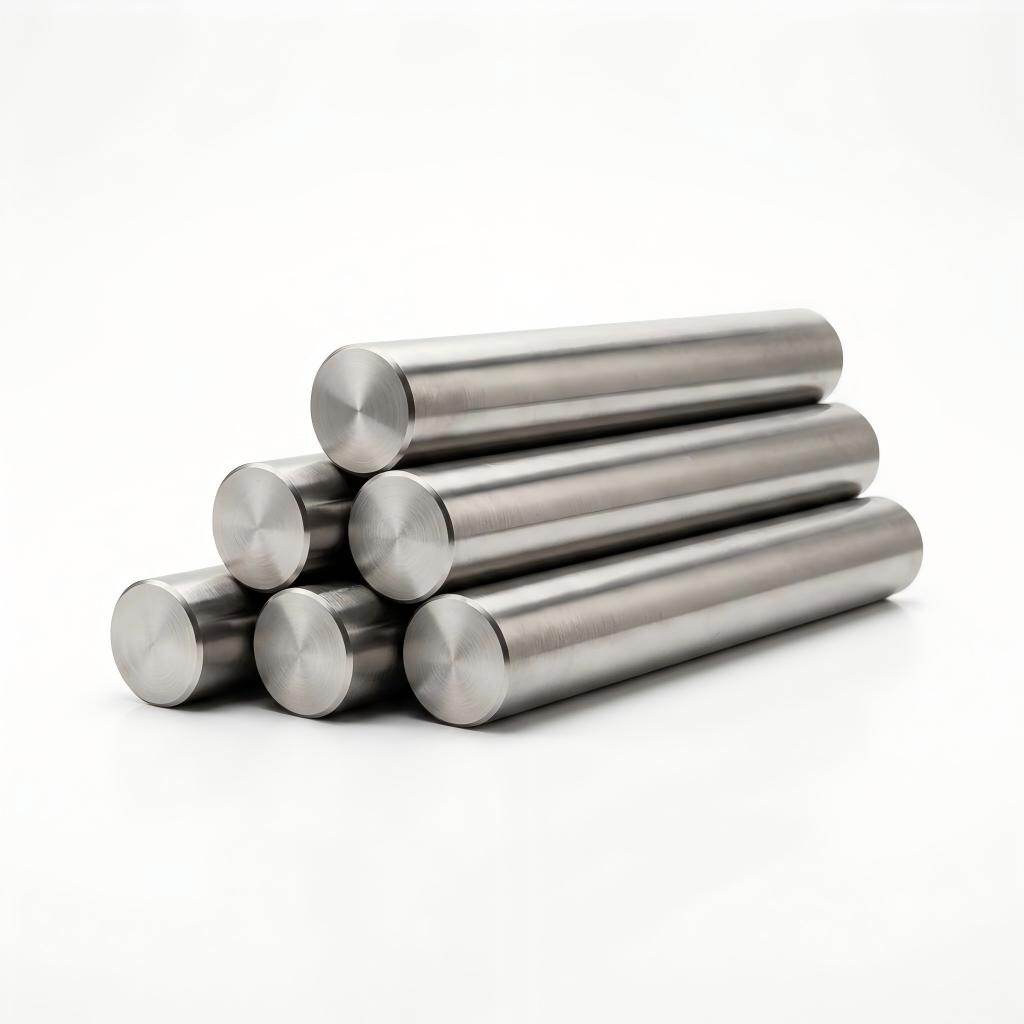
For European manufacturers, choosing between Chinese titanium suppliers and traditional ones in Europe, the U.S., or Japan involves more than just price—it's a complex decision shaped by anti-dumping tariffs, lead times, quality validation, and supply chain stability. This article provides an analytical framework covering total cost of ownership, hidden costs, quality system differences, and risk management to help European buyers make optimal sourcing decisions based on their specific project needs.
Beyond price, what else impacts your procurement costs?
Chinese titanium prices are more competitive, but is it worth choosing for my project?
This is the most frequently asked question we encounter when engaging with potential European customers. It reflects a common dilemma for European manufacturers in procurement decisions: on one hand, Chinese titanium products are typically more price-competitive than suppliers from Europe, the U.S., or Japan; on the other, concerns about anti-dumping duties, quality consistency, documentation compliance, and delivery uncertainty often lead purchasing managers to choose local suppliers at the final stage.
In reality, the answer isn't a simple "yes" or "no." It depends on your project type, application domain, traceability requirements, and how much effort you're willing to invest in supplier management. This article aims to provide an objective framework to help you evaluate these factors holistically. The core question isn't "China vs. non-China," but whether the supplier possesses the process capabilities, quality systems, and export experience required for your project.
Behind the Price Gap: Structural Factors, Not Simple Labels
First, it's important to note that titanium prices are not fixed; they fluctuate with sponge titanium raw material costs, exchange rates, energy expenses, and market supply-demand dynamics. Therefore, any fixed percentage stating "Chinese titanium is X% cheaper than Western suppliers" can be misleading. However, by examining cost structures, we can understand why Chinese titanium typically offers a price advantage.
China is one of the world's largest titanium producers, with a complete industrial cluster centered in Baoji, Shaanxi, covering sponge titanium production, melting, forging, rolling, and machining. An integrated supply chain, economies of scale, and regional supplier clusters form the foundation of cost competitiveness. Additionally, Chinese titanium manufacturers offer flexibility in small-batch orders, customization, and rapid delivery—capabilities that many large Western titanium mills struggle to match.
Titanium manufacturers in Europe, the U.S., and Japan have advantages in brand reputation, certification systems, long-term application data, and customer service networks. Their prices are typically higher, but for certain projects, these added values may justify the premium.
Overlooked components of the total landed cost
Many European buyers purchasing titanium for the first time from China often compare only unit prices at the factory gate. However, the true driver of procurement decisions should be the total landed cost. Below are key cost factors to consider in a typical purchase:
Cost Element | Chinese Supplier | Suppliers from Europe, the U.S., and Japan |
Factory Price | Typically more competitive | Usually higher |
Ocean/Air Freight | High (Ocean Freight) | Low (Ground or Short-Sea Shipping) |
Anti-dumping duties (if applicable) | Product category, HS code, and country of origin can significantly impact landed cost. | None |
Import Customs Clearance and VAT | Payable, Standard Procedure | No customs duties for transactions within the EU |
Third-party inspection fees | Initial certification or critical applications may require scheduling | Usually, no additional verification is required. |
Safety stock for lead time | Maintain a safety stock to account for shipping and customs variability. Many European buyers mitigate risk through staggered delivery schedules or local inventory arrangements. | Shorter lead times, lower inventory pressure |
File Review and Management | Initial supplier onboarding may require additional document review. | Familiar with the file system; low audit cost |
Anti-dumping duties are the biggest variable. As of now, the EU maintains anti-dumping measures on certain Chinese titanium products. Applicable duties vary by product category, HS code, and country of origin, significantly impacting landed costs. For European manufacturers evaluating Chinese titanium sourcing, the first step is to confirm with customs brokers, import agents, or the EU TARIC database whether the target product's HS code falls under anti-dumping measures and what the current duty rate is. This factor alone can fundamentally alter the price competitiveness of Chinese titanium. Conversely, if the product is not subject to these duties, the cost advantage becomes substantially greater.
Logistics and lead times also significantly impact costs. Sea freight from major Chinese ports to European main ports (such as Rotterdam, Hamburg, Antwerp) typically takes 30 to 45 days. Including customs clearance and inland transportation, it often takes 8 to 12 weeks or more from order placement until materials arrive at the factory. This contrasts with the 2 to 4 week lead times of local European suppliers. For buyers with tight project deadlines or unstable demand forecasts, the capital cost of holding higher safety stock must also be factored into the total cost.
Quality and Files: The Hidden Cost of Trust
If price and tariffs are explicit costs, then quality verification and document management are hidden costs.
1. Material Certificate and Heat/Batch Number Traceability
When sourcing from a reliable titanium manufacturer in China, you can typically obtain material certificates meeting EN 10204 3.1 or 3.2 requirements, along with complete heat traceability records. The content and format of these documents are fundamentally the same as those issued by Western suppliers. The real difference lies not in document availability, but in European buyers' familiarity with and trust in Chinese supplier documentation systems. During initial collaborations, buyers often need to invest extra time in document review and format alignment; this management cost should be accounted for in your procurement plan.
2. Cooperation with third-party inspections
For procurement of aerospace components, medical implants, or critical chemical processing equipment, European buyers often require third-party inspection. Experienced Chinese suppliers are open to this and can coordinate on-site inspections and witness testing with agencies such as SGS, TÜV, Bureau Veritas, and DNV. Inspection costs vary based on scope, location, and specific requirements and should be evaluated separately in the procurement budget.
3. Quality Consistency and Batch-to-Batch Stability
This reflects the core concern among some European buyers regarding Chinese titanium. Objectively, China's titanium industry exhibits significant stratification. Taking the Baoji industrial cluster as an example, it includes high-end manufacturers with Nadcap certification that have long supplied international aerospace and medical OEMs, alongside small and medium-sized enterprises serving general industrial markets with more relaxed quality controls. The actual quality risk for buyers depends largely on which tier of the supply chain their selected supplier belongs to, rather than simply being determined by the "Made in China" label. The investment in supplier evaluation is a necessary cost to ensure consistent quality.
When is China's advantage in titanium materials most evident?
Based on the above analysis, China's comprehensive advantages in sourcing titanium materials are likely more pronounced in the following scenarios:
Large project scale and product exemption from anti-dumping duties: economies of scale reduce per-unit logistics and inspection costs, maximizing price competitiveness.
Industrial applications have relatively mature and transparent material standards: for example, titanium heat exchangers, seawater desalination units, and general industrial piping. The documentation and standards frameworks for these applications are well-established, minimizing interpretation gaps between buyers and suppliers.
For customized specifications or small-batch, diverse orders: Chinese titanium producers excel in manufacturing flexibility and custom services. Many SMEs are willing to handle small orders and non-standard specifications that major Western titanium plants often decline.
The buyer possesses solid international procurement experience and supplier management capabilities, including a team skilled in handling import documentation, coordinating third-party inspections, and communicating with overseas suppliers to more effectively control hidden costs.
When might a traditional supplier be more suitable?
Reasons to choose suppliers from Europe, the U.S., or Japan in the following scenarios:
The product falls under EU anti-dumping duties, and the resulting tax rate eliminates any significant cost advantage. In this case, sourcing from a local supplier is the simpler, lower-risk option.
Applies to highly regulated sectors such as aerospace and medical implants, where the supplier is not yet on the customer's approved vendor list: Gaining qualification for inclusion in an OEM's approved vendor list for aviation or medical devices requires a lengthy audit process. Switching suppliers in the short term incurs extremely high costs.
Tight lead times or high demand volatility that makes long-cycle safety stock unaffordable: Local suppliers offer clear advantages with shorter lead times and faster responsiveness. For projects requiring local inventory, existing certifications, or short lead times, traditional suppliers may still hold an edge.
The project requires suppliers to hold specific certifications (e.g., Nadcap, OEM-specific approvals), which Chinese suppliers currently lack. In this scenario, the certification requirements inherently limit the pool of eligible suppliers.
Practical Guide: Cost Assessment for Titanium Procurement in China
1. Compare based on total landed cost, not factory price.
After obtaining FOB or CIF quotes from Chinese suppliers, always add anti-dumping duties (if applicable), marine insurance, destination port clearance fees, inland transportation costs, and potential third-party inspection fees to arrive at an equivalent figure for comparison with European supplier DDP quotes.
2. The HS code and anti-dumping duty rate are the first steps.
Before requesting quotes from Chinese suppliers, verify with a customs broker, import agent, or the EU TARIC database whether the target product falls under anti-dumping measures and what the applicable duty rate is. This step is essential to determine if subsequent price comparisons are meaningful.
3. Treat supplier screening as an investment, not a cost.
Time and money spent evaluating supplier qualifications, reviewing document samples, and conducting small-batch trials are the most effective investments to prevent downstream quality issues and delivery delays. Successful titanium sourcing from China typically belongs to buyers who thoroughly vet suppliers during the early stages.
4. Build trust starting with a trial order.
If possible, start with a small trial order to evaluate the supplier's product quality, document accuracy, and delivery commitments. Once the trial is successful, gradually increase volume. This approach minimizes risk and lays the foundation for a long-term partnership.
5. Evaluate the supplier's export experience and communication skills.
European buyers particularly prioritize suppliers' English proficiency, experience with export documentation, familiarity with Incoterms, packaging standards, and ability to cooperate on customs clearance in the destination country. Many quality issues among Chinese suppliers stem not from manufacturing but from communication gaps and document errors in international trade processes. Confirming an exporter team's responsiveness, document accuracy, and problem-solving capabilities during supplier evaluation is key to mitigating execution risks downstream.
Frequently Asked Questions
Q1: Is the quality of Chinese titanium products truly inferior to that of Western suppliers?
It varies by manufacturer. China hosts both high-end OEMs with international certifications serving the aerospace and medical sectors, as well as standard factories focused on general industrial markets. Quality differences depend on the supplier's tier, not their origin. The key is conducting thorough supplier assessments and qualification audits before procurement.
Q2: What is the anti-dumping tariff rate, and how can I verify it?
Anti-dumping duties vary by product category, HS code, and country of origin, and may change following reviews. When evaluating procurement options, consult a customs broker, import agent, or the EU TARIC database for the most up-to-date rates applicable to your target products.
Q3: What is the typical lead time for sourcing titanium materials from China?
From order placement to material arrival at the European factory, it typically takes 8 to 12 weeks or more. The production cycle accounts for approximately 4 to 6 weeks, sea freight takes about 30 to 45 days, and customs clearance plus inland transport requires roughly 1 to 2 weeks. We recommend allowing sufficient safety stock and delivery buffer in your project plan.
Q4: Is it still cost-effective to source from China for smaller order quantities?
Depends on the specific product, tariffs, and logistics costs. For small-batch orders, higher unit costs for shipping and inspection can erode price advantages. However, Chinese suppliers' flexibility in small-batch customization remains attractive for specialized products that are difficult to source from Western vendors.
Q5: What support do you offer to European customers?
We supply ASTM, AMS, and EN-compliant titanium tubes, plates, bars, and forgings to European customers. We offer custom machining per drawings, precision cutting to length, third-party inspections via SGS and TÜV, and full compliance documentation including material certificates and heat traceability. For CIF cost estimates or project-specific proposals, please send us your requirements.
Conclusion
Choosing between Chinese titanium suppliers and traditional Western sources isn't a trade-off between "price" and "reliability." It's about finding the optimal balance in total cost based on project requirements, risk tolerance, and supply chain management resources. For experienced and prepared buyers, China's titanium market offers diverse options and competitive value. However, for projects requiring local inventory, existing certifications, or short lead times, traditional suppliers may still hold an advantage.
If you're evaluating titanium supply options for European manufacturing projects and need to understand landed cost estimates from China sources and compliance feasibility, please send us your product specifications, quantities, and requirements. We can provide preliminary technical solutions, cost analysis, and documentation support to help you make clearer procurement decisions.
[Submit your procurement request to receive landed cost analysis and compliance assessment for Chinese titanium products]
(Yucheng Haitai Industry | Precision Turned Titanium Rods | TA1 / TA2 / TC4 / TC4 ELI)yuchenghaicompany.com)
English Version
China Titanium Suppliers vs. European and U.S. Suppliers: A Total Cost Analysis for Buyers
For European manufacturers, choosing between Chinese titanium suppliers and established providers in Europe, the U.S., or Japan involves more than just price. It's a comprehensive decision that includes anti-dumping duties, logistics lead times, quality verification, and supply chain stability. This guide offers an analytical framework comparing Chinese titanium with Western sources across total procurement cost, hidden costs, quality system differences, and risk control—helping European buyers make optimal decisions based on their specific project needs.
Beyond price, what else impacts your procurement costs?
Chinese titanium prices are more competitive, but is it worth choosing for my project?
This is the most frequently asked question we encounter when engaging with potential European customers. It reflects a common dilemma for European manufacturers in procurement decisions: on one hand, Chinese titanium products are typically more price-competitive than suppliers from Europe, the U.S., or Japan; on the other, concerns about anti-dumping duties, quality consistency, documentation compliance, and delivery uncertainty often lead purchasing managers to choose local suppliers at the final stage.
In reality, the answer isn't a simple "yes" or "no." It depends on your project type, application domain, traceability requirements, and how much effort you're willing to invest in supplier management. This article aims to provide an objective framework to help you evaluate these factors holistically. The core question isn't "China vs. non-China," but whether the supplier possesses the process capabilities, quality systems, and export experience required for your project.
Behind the Price Gap: Structural Factors, Not Simple Labels
First, it's important to note that titanium prices are not fixed; they fluctuate with sponge titanium raw material costs, exchange rates, energy expenses, and market supply-demand dynamics. Therefore, any fixed percentage stating "Chinese titanium is X% cheaper than Western suppliers" can be misleading. However, by examining cost structures, we can understand why Chinese titanium typically offers a price advantage.
China is one of the world's largest titanium producers, with a complete industrial cluster centered in Baoji, Shaanxi, covering sponge titanium production, melting, forging, rolling, and machining. An integrated supply chain, economies of scale, and regional supplier clusters form the foundation of cost competitiveness. Additionally, Chinese titanium manufacturers offer flexibility in small-batch orders, customization, and rapid delivery—capabilities that many large Western titanium mills struggle to match.
Titanium manufacturers in Europe, the U.S., and Japan have advantages in brand reputation, certification systems, long-term application data, and customer service networks. Their prices are typically higher, but for certain projects, these added values may justify the premium.
Overlooked components of the total landed cost
Many European buyers purchasing titanium for the first time from China often compare only unit prices at the factory gate. However, the true driver of procurement decisions should be the total landed cost. Below are key cost factors to consider in a typical purchase:
Cost Element | Chinese Supplier | Suppliers from Europe, the U.S., and Japan |
Factory Price | Typically more competitive | Usually higher |
Ocean/Air Freight | High (Ocean Freight) | Low (Ground or Short-Sea Shipping) |
Anti-dumping duties (if applicable) | Product category, HS code, and country of origin can significantly impact landed cost. | None |
Import Customs Clearance and VAT | Payable, Standard Procedure | No customs duties for transactions within the EU |
Third-party inspection fees | Initial certification or critical applications may require scheduling | Usually, no additional verification is required. |
Safety stock for lead time | Maintain a safety stock to account for shipping and customs variability. Many European buyers mitigate risk through staggered delivery schedules or local inventory arrangements. | Shorter lead times, lower inventory pressure |
File Review and Management | Initial supplier onboarding may require additional document review. | Familiar with the file system; low audit cost |
Anti-dumping duties are the biggest variable. To date, the EU continues to apply anti-dumping measures to certain Chinese titanium products. Applicable duty rates vary by product classification, HS code, and country of origin, significantly affecting landed costs. For European manufacturers evaluating Chinese titanium sourcing, the first step is to confirm with customs brokers, import agents, or via the EU TARIC database whether the target product's HS code falls under anti-dumping measures and what the current applicable rate is. This factor alone can fundamentally alter the price competitiveness of Chinese titanium. Conversely, if the product is not subject to duties, the cost advantage becomes substantially greater.
Logistics and lead times also significantly impact costs. Sea freight from major Chinese ports to European main ports (such as Rotterdam, Hamburg, Antwerp) typically takes 30 to 45 days. Including customs clearance and inland transportation, it often takes 8 to 12 weeks or more from order placement until materials arrive at the factory. This contrasts with the 2 to 4 week lead times of local European suppliers. For buyers with tight project deadlines or unstable demand forecasts, the capital cost of holding higher safety stock must also be factored into the total cost.
Quality and Files: The Hidden Cost of Trust
If price and tariffs are explicit costs, then quality verification and document management are hidden costs.
1. Material Certificate and Heat/Batch Number Traceability
When sourcing from reliable Chinese titanium manufacturers, you typically receive material certificates compliant with EN 10204 3.1 or 3.2, along with full heat traceability documentation. The content and format of these documents are fundamentally identical to those issued by Western suppliers. The real difference lies not in document availability, but in European buyers' familiarity with and trust in Chinese suppliers' documentation systems. During initial collaborations, buyers often need to invest additional time in document review and format alignment; this management cost should be accounted for in the procurement plan.
2. Cooperation with third-party inspections
For procurement of aerospace components, medical implants, or critical chemical processing equipment, European buyers often require third-party inspection. Experienced Chinese suppliers are open to this and can coordinate on-site inspections and witness testing with agencies such as SGS, TÜV, Bureau Veritas, and DNV. Inspection costs vary based on scope, location, and specific requirements and should be evaluated separately in the procurement budget.
3. Quality Consistency and Batch-to-Batch Stability
This represents the primary concern among European buyers regarding Chinese titanium products. It is important to note objectively that China's titanium industry exhibits significant stratification. Taking the Baoji industrial cluster as an example, it includes high-end manufacturers with Nadcap certification and long-term supply contracts for international aerospace and medical OEMs, alongside small and medium-sized enterprises serving general industrial markets with more relaxed quality controls. The actual quality risk faced by buyers depends largely on the tier of the supplier they select within the value chain, rather than simply being determined by the "Made in China" origin label. The cost invested in supplier vetting is a necessary expenditure to ensure consistent quality.
When is China's advantage in titanium materials most evident?
Based on the above analysis, China's comprehensive advantages in sourcing titanium materials are likely more pronounced in the following scenarios:
Large project scale and product exemption from anti-dumping duties: economies of scale reduce per-unit logistics and inspection costs, maximizing price competitiveness.
Industrial applications have relatively mature and transparent material standards: for example, titanium heat exchangers, seawater desalination units, and general industrial piping. The documentation and standards frameworks for these applications are well-established, minimizing interpretation gaps between buyers and suppliers.
For customized specifications or small-batch, diverse orders: Chinese titanium producers excel in manufacturing flexibility and custom services. Many SMEs are willing to handle small orders and non-standard specifications that major Western titanium plants often decline.
The buyer possesses solid international procurement experience and supplier management capabilities, including a team skilled in handling import documentation, coordinating third-party inspections, and communicating with overseas suppliers to more effectively control hidden costs.
When might a traditional supplier be more suitable?
Reasons to choose suppliers from Europe, the U.S., or Japan in the following scenarios:
The product falls under EU anti-dumping duties, and the resulting tax rate eliminates any significant cost advantage. In this case, sourcing from a local supplier is the simpler, lower-risk option.
Applies to highly regulated sectors such as aerospace and medical implants, where suppliers are not yet on the customer's approved vendor list: Gaining qualification for inclusion in an OEM's approved supplier roster for aerospace or medical applications involves a lengthy audit process, making the cost of switching suppliers prohibitively high in the short term.
Tight delivery timelines or high demand volatility make it difficult to carry long-cycle safety stock: local suppliers offer a clear advantage with shorter lead times and faster response. For projects requiring local inventory, existing certifications, or short lead times, traditional suppliers may still hold an edge.
The project requires suppliers to hold specific certifications (e.g., Nadcap, OEM approvals), which Chinese suppliers have not yet obtained. In this case, the certification requirements inherently limit the pool of eligible candidates.
Practical Guide: Cost Assessment for Titanium Procurement in China
1. Compare based on total landed cost, not factory price.
After obtaining FOB or CIF quotes from Chinese suppliers, be sure to add anti-dumping duties (if applicable), ocean freight insurance, destination port clearance fees, inland transportation costs, and any potential third-party inspection fees. This will give you an equivalent figure for comparison with DDP quotes from European suppliers.
2. The HS code and anti-dumping duty rate are the first steps.
Before requesting quotes from Chinese suppliers, verify the specific HS code of your target product against anti-dumping measures and confirm the applicable duty rate via a customs broker, importing agent, or the EU TARIC database. This step is essential to determine whether further price comparisons are meaningful.
3. Treat supplier screening as an investment, not a cost.
Investing time and resources in evaluating supplier qualifications, reviewing document samples, and conducting small-batch trials is the most effective way to prevent future quality issues and delivery delays. Buyers who succeed in sourcing titanium from China are typically those who invest heavily in thorough upfront vetting.
4. Build trust starting with a trial order.
If possible, start with a small trial order to evaluate the supplier's product quality, document accuracy, and delivery commitments. Once the trial is successful, gradually increase the volume. This approach controls risk and lays the foundation for a long-term partnership.
5. Evaluate the supplier's export experience and communication skills.
European buyers prioritize suppliers' English proficiency, experience in export documentation, familiarity with Incoterms, packaging standards, and ability to cooperate on customs clearance at the destination. For many Chinese suppliers, quality issues stem not from manufacturing but from communication errors and document mistakes in international trade processes. Verifying an exporter's team responsiveness, document accuracy, and problem-solving capabilities during supplier evaluation is key to mitigating downstream execution risks.
Frequently Asked Questions
Q1: Is the quality of Chinese titanium products truly inferior to that of Western suppliers?
It depends. China has high-end manufacturers with international certifications supplying aerospace and medical OEMs, as well as standard factories serving general industrial markets. Quality differences depend on the specific supplier tier, not origin. The key is thorough supplier evaluation and qualification checks before procurement.
Q2: What is the anti-dumping tariff rate, and how can I verify it?
Anti-dumping duties vary by product category, HS code, and country of origin, and may be adjusted during review. When evaluating procurement options, consult a customs broker, import agent, or the EU TARIC database to obtain the latest specific duty rates for your target products.
Q3: What is the typical lead time for sourcing titanium from China?
From order placement to material arrival at the European factory, it typically takes 8 to 12 weeks or more. The production cycle accounts for approximately 4 to 6 weeks, sea freight takes about 30 to 45 days, and customs clearance plus inland transport requires around 1 to 2 weeks. We recommend allocating sufficient safety stock and lead time buffers in your project plan.
Q4: Is it still cost-effective to source from China for smaller purchase volumes?
Depends on the specific product, tariffs, and logistics costs. For small-batch orders, higher unit costs for shipping and inspection can erode price advantages. However, Chinese suppliers' flexibility in small-batch customization remains attractive for specialized products with unique specifications that are difficult to source in Western markets.
Q5: What support do you provide to European customers?
We supply ASTM, AMS, and EN-compliant titanium tubes, sheets, bars, and forgings to European customers. We offer custom fabrication per drawings and precision cutting to length, with third-party inspections by SGS, TÜV, and other accredited agencies. Full compliance documentation is provided, including material certificates and heat lot traceability. For CIF cost evaluation or project-specific proposals, please share your requirements with us.
Conclusion
Choosing between Chinese titanium suppliers and traditional Western sources isn't a trade-off between "price" and "reliability." It's about finding the optimal total cost balance based on project requirements, risk tolerance, and supply chain management resources. For experienced, well-prepared buyers, China's titanium market offers diverse options and competitive value. However, for projects requiring local inventory, existing certifications, or short lead times, traditional suppliers may still hold an advantage.
If you're evaluating titanium supply options for European manufacturing projects and need cost estimates (CIF) and compliance feasibility for China-sourced materials, please share your product specifications, quantities, and requirements. We'll provide preliminary technical solutions, cost analysis, and documentation support to help you make informed procurement decisions.
[Submit your procurement request to receive landed cost analysis and compliance assessment for Chinese titanium products]
(Yucheng Haitai Industry | Precision Turning Titanium Rods | TA1 / TA2 / TC4 / TC4 ELI)yuchenghaicompany.com)