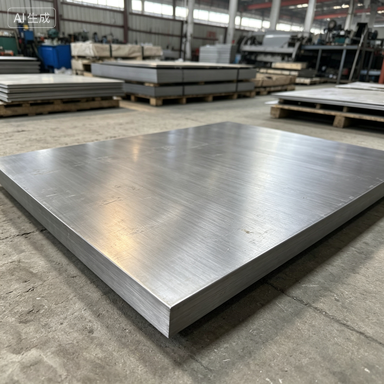
AMS 4911 is one of the most widely used specifications for titanium sheet in the aerospace industry. This guide helps procurement and engineering professionals understand the core technical requirements of AMS 4911, key differences from ASTM B265, essential elements for purchase documents, inquiry checklists, and critical considerations for supplier evaluation—enabling informed, reliable decisions in aerospace titanium sheet sourcing.
In aerospace materials selection, standards define the safety baseline.
For ground-based industrial equipment, material standards may still be treated as guidelines. In aerospace, however, they are synonymous with airworthiness and safety. A single alloy designation, a heat treatment record, or an NDT report—any oversight in these areas can lead to the rejection of an entire batch of parts or even more severe consequences.
Titanium alloy Ti-6Al-4V (Gr. 5) is the most widely used titanium material in aerospace structural components. From fuselage structures, fasteners, and brackets to formed parts and select engine area components, one standard almost always governs material selection: AMS 4911. This specification covers annealed thin sheet, thick plate, and strip products of Ti-6Al-4V alloy, establishing it as a core material standard recognized globally within the aerospace supply chain.
For buyers planning to purchase aerospace-grade titanium plate, understanding AMS 4911 is not optional—it's the first step to ensuring product compliance and supplier reliability.
What is AMS 4911? How does it differ from ASTM B265?
ASTM B265 and AMS 4911 belong to different standards systems. ASTM B265, issued by ASTM, is a general industrial material specification covering titanium and titanium alloy plates, sheets, and strips in grades such as Gr.1, Gr.2, Gr.5, Gr.7, and Gr.12. It is widely used in chemical processing, seawater desalination, marine engineering, and other fields. The standard defines the basic chemical composition, mechanical properties, and dimensional tolerances of the materials.
AMS 4911 is an aerospace material specification published by SAE, specifically designed for Ti-6Al-4V sheet, plate, and strip. It imposes significantly stricter requirements than ASTM B265 regarding material consistency, manufacturing process control, inspection, and document traceability. The key differences between the two are as follows:
Comparison Criteria | ASTM B265 (Gr.5) | AMS 4911 |
Application Areas | General Industrial | Aerospace |
Standard System | ASTM Material Specifications | SAE Aerospace Materials Specifications |
Chemical Composition | Fits Gr.5 range | The internal control scope may be narrower than Gr.5, depending on supplier and customer requirements. |
Mechanical Properties | Room Temperature Tensile Properties | Room-temperature tensile properties; additional testing may be required per version and customer specifications. |
microstructure | Usually, no special requirements. | The microstructure must be uniform and exhibit characteristics typical of the annealed Ti-6Al-4V state; abnormal microstructures that could impair performance are not permitted. |
Non-destructive Testing | Optional or as requested by the customer | Ultrasonic testing is typically required in aerospace procurement. The specific inspection coverage, acceptance criteria, and applicable standards shall be determined based on AMS 4911 version and customer-specific requirements. |
File Traceability | General MTC requirements | Complete heat treatment records and furnace lot traceability typically require EN 10204 3.1 or 3.2 certificates, along with a declaration of conformity. |
Surface Quality | General industrial requirements | Stricter surface contamination and defect control requirements |
In short, Gr.5 titanium plates meeting ASTM B265 may not pass AMS 4911 acceptance. When aviation buyers request a quote for "Gr.5 titanium plate" without specifying the standard, suppliers may price based on industrial specifications, resulting in material unsuitable for aerospace parts. Clearly stating the full AMS 4911 standard number and revision year is the first step to preventing procurement errors.
What information must be provided when requesting a quote for AMS 4911 procurement?
A complete request for quotation (RFQ) is essential to ensure accurate vendor pricing. For the AMS 4911 titanium plate procurement, we recommend specifying the following details in your RFQ:
Standard Number and Version Year: e.g., AMS 4911L or AMS 4911K. Technical requirements may vary by version.
Material Grade: Ti-6Al-4V (Gr.5).
Product Form and Dimensions: Specify whether sheet or plate, including required thickness, width, and length, as well as cut-to-size requirements.
Heat Treatment Condition: The annealed condition is the standard delivery state per AMS 4911. Any special requirements must be specified separately.
Ultrasonic Testing Requirements: Specify whether ultrasonic testing is required, along with acceptance criteria and inspection coverage. If the customer has internal specifications, include them as well.
Additional customer specifications: supplementary technical requirements from major OEMs such as Boeing, Airbus, GE, and Safran.
File and Certification Requirements: e.g., EN 10204 3.1 or 3.2 certificates, NADCAP certification, First Article Inspection Report, etc.
Delivery Destination and Logistics Requirements: Port of destination, Incoterms, special packaging requirements, etc.
The more complete the information, the more accurate suppliers' quotes and technical proposals will be, reducing communication costs later caused by unclear specifications.
Core technical requirements for AMS 4911
1. Material and Heat Treatment Condition
AMS 4911 covers thin sheet, thick plate, and strip products of Ti-6Al-4V alloy in the annealed condition. Annealing must be performed under controlled conditions to ensure a uniform microstructure. Suppliers shall provide complete heat treatment records demonstrating that each batch was processed according to the approved procedure.
2. Chemical Composition
AMS 4911 chemical composition ranges are generally consistent with Ti-6Al-4V, but some aerospace-grade suppliers tighten internal limits for key elements (such as oxygen, iron, aluminum, and vanadium) beyond the standard to ensure batch-to-batch performance consistency. When purchasing, request actual chemical composition analysis reports from suppliers to verify their internal control levels.
3. Mechanical properties
Room-temperature tensile properties are mandatory and include tensile strength, yield strength, elongation, and reduction of area. Depending on the specific version of AMS 4911 and customer procurement specifications, additional requirements such as high-temperature tensile, bend, or shear tests may also apply. These must be clearly specified during the inquiry stage to avoid future disputes.
4. Microstructure
The microstructure of titanium alloys directly influences fatigue performance and damage tolerance. AMS 4911 requires a uniform microstructure consistent with the annealed condition Ti-6Al-4V, excluding any anomalous structures that could compromise performance. Suppliers typically provide micrographs or certification reports as evidence.
5. Non-destructive testing
Ultrasonic testing is commonly required in aerospace procurement. The specific inspection coverage, acceptance criteria, and applicable standards depend on the version of AMS 4911 and any additional customer specifications. Some projects may also require penetrant or radiographic testing as supplementary methods.
6. Surface Quality and Contamination Control
Aerospace titanium sheets require strict surface contamination control, particularly to prevent iron and hydrogen contamination as well as other sources that could compromise subsequent hot forming and fatigue performance. AMS 4911 mandates clean surfaces free of scale, oil, grease, metal marks, or other foreign contaminants. Controlling contamination during production and storage is a critical component of supplier quality management.
Document requirements for purchasing AMS 4911 titanium plate
In aviation procurement, "material qualification" means not only that the product itself is qualified but also that all supporting documentation is complete and traceable. Below is the core list of documents typically required from suppliers when procuring AMS 4911 titanium plates:
Material Test Certificate (MTC): In EN 10204 3.1 or 3.2 format, clearly stating AMS 4911 standard number and version, grade, heat/batch number, chemical composition, and actual mechanical properties.
Heat Treatment Record: Includes furnace ID, temperature profile, soak time, and cooling method.
Ultrasonic Inspection Report: Ultrasonic test results for each plate, including scan method, applicable standards, and acceptance criteria.
Microstructure Report: Micrographs and evaluation conclusions shall be provided upon request.
Surface Contamination Test Report: Provided per customer specifications.
Compliance Statement: The supplier formally declares that the product complies with AMS 4911 and all additional procurement specifications.
First Article Inspection (FAI) Report: Aerospace customers typically require an AS9102 FAI report to verify that material processing and part manufacturing comply with specifications.
All heat/lot numbers across documents must be consistent and traceable to the raw material melt batch. Any break in the documentation chain—even if the product itself is compliant—may result in rejection due to "non-compliant documentation."
How to evaluate titanium plate suppliers for aerospace projects
Auditing suppliers in the aerospace supply chain can be more time-consuming than auditing the products themselves. When evaluating titanium plate suppliers, focus on these key dimensions:
1. Do you have experience supplying aviation materials?
The aviation sector has its own unique language and processes—from first-article inspection to deviation handling, from Nadcap certification to customer-specific approval procedures. Suppliers with prior experience in aerospace supply are more familiar with these workflows, significantly reducing project communication costs. Asking whether a supplier holds Nadcap certifications for Heat Treating, NDT, or Chemical Processing is an effective way to quickly assess their aerospace capabilities. For projects entering the OEM supply chain directly, also verify whether the supplier has a customer-approved special process certification system.
2. Is the file structure complete and audit-ready?
As previously noted, documentation for aerospace materials is highly demanding. Whether a supplier can provide complete, standardized, and traceable-to-heat-lot documentation is a key indicator of their professionalism. We recommend requesting document samples from suppliers early in the partnership to assess their quality.
3. Can you accept customer or third-party on-site audits?
Aerospace customers typically retain the right to conduct on-site supplier audits or designate third-party agencies (such as NADCAP auditors or customer representatives) for process witnessing and product inspection. A supplier's openness to these requirements demonstrates confidence in its manufacturing capabilities and quality management system.
4. Do you support small-batch and prototype boards?
Aviation R&D and MRO markets often require small quantities of diverse titanium sheets. Whether suppliers accept low-volume orders, provide prototype plates, and offer flexible cut-to-size capabilities directly impacts the procurement team's project timelines.
Yucheng Haitai Materials has long supplied AMS- and ASTM-compliant titanium alloy sheets, plates, and strips to the aerospace, medical, and industrial sectors. We understand the stringent standards and traceability requirements of aerospace procurement; every batch is accompanied by complete test reports and full traceability documentation, with third-party inspection support.
Frequently Asked Questions
Q1: Is AMS 4911 material always more expensive than ASTM B265?
This is typical. AMS 4911 materials require stricter process control, more inspection points, and comprehensive documentation, all of which are reflected in the cost. However, for aviation projects, the value of compliant materials far outweighs their price. The airworthiness risks and potential rejection costs associated with using non-aviation-grade materials often exceed the material price difference.
Q2: Is writing just "Ti-6Al-4V" sufficient for procurement?
Insufficient. The complete standard designation (e.g., AMS 4911), including its version year, delivery condition (annealed), and any additional customer specifications or drawing requirements must be specified. Both the standard number and version year are mandatory, as technical requirements may vary between different versions issued in different years.
Q3: What post-processing options are available for AMS 4911 sheets?
AMS 4911 specifies that annealed sheet and plate can be directly used for aerospace manufacturing processes such as sheet metal forming, machining, and welding. Certain aerospace components may require a post-heat-treatment condition per design specifications; however, this must comply with component standards and customer-approved procedures and is outside the scope of AMS 4911.
Q4: A supplier states "compliant with AMS 4911" but lacks NADCAP certification. Is this acceptable?
It depends on the specific customer and project requirements. AMS 4911 itself does not mandate that suppliers hold Nadcap certification; however, many aerospace prime manufacturers require Nadcap as a prerequisite for supplier qualification. If a supplier lacks Nadcap certification, it must be confirmed that their heat treatment and inspection processes still fully meet all requirements of AMS 4911, with adequate validation performed by the customer or a third party.
Q5: What AMS 4911 titanium plate sizes and thicknesses do you offer?
We offer AMS 4911 Ti-6Al-4V titanium plates in various specifications to meet your requirements, including custom cutting. Please provide the exact dimensions, quantity, year version, and any additional specification requirements so we can prepare a technical proposal and quote.
Conclusion
AMS 4911 is more than a standard number; it represents a comprehensive material assurance system built for aviation safety. For purchasers, understanding this standard and selecting suppliers who strictly adhere to it are critical steps to ensuring that every aircraft part is safe and reliable from the very start of its material sourcing.
Looking for AMS 4911-compliant Ti-6Al-4V titanium plate for your aviation project? Need technical selection guidance or complete documentation? Send us your specifications and drawings. We can provide material certification, document review, third-party inspection support, and quotes based on your AMS 4911 revision, customer requirements, and drawing specifications.
[Send your specifications and drawings to receive a technical proposal and quote for AMS 4911 materials]
(Yucheng Haitai Industry (Dongguan) Co., Ltd. | CNC Precision Titanium Rods | TA1 / TA2 / TC4 / TC4 ELI Titanium Rods |yuchenghaicompany.com)
English Version
AMS 4911 Titanium Sheet Supplier Guide: Specifications, Certification, Inspection, and Purchasing Requirements
AMS 4911 is one of the most widely used specifications for Ti-6Al-4V titanium alloy sheet in the aerospace industry. This guide, designed for procurement and engineering professionals, outlines the core technical requirements of AMS 4911, key differences from ASTM B265, essential documentation, a pre-inquiry checklist, and supplier evaluation criteria to help you make informed sourcing decisions for aerospace-grade titanium sheet.
In aerospace materials selection, standards define the safety baseline.
For ground-based industrial equipment, material standards may still be treated as guidelines. In aerospace, however, they are synonymous with airworthiness and safety. A single alloy designation, a heat treatment record, or an NDT report—any oversight in these areas can lead to the rejection of an entire batch of parts or even more severe consequences.
Titanium alloy Ti-6Al-4V (Gr. 5) is the most widely used titanium material in aerospace structural components. From fuselage structures, fasteners, and brackets to formed parts and select engine area components, one standard almost always governs material selection: AMS 4911. This specification covers annealed thin sheet, thick plate, and strip products of Ti-6Al-4V alloy, establishing it as a core material standard recognized globally within the aerospace supply chain.
For buyers planning to purchase aerospace-grade titanium plate, understanding AMS 4911 is not optional—it's the first step to ensuring product compliance and supplier reliability.
What is AMS 4911? How does it differ from ASTM B265?
ASTM B265 and AMS 4911 belong to different standards systems. ASTM B265 is a general industrial material specification published by ASTM, covering titanium and titanium alloy sheets, thin plates, and strips in grades such as Gr.1, Gr.2, Gr.5, Gr.7, and Gr.12. It is widely used in chemical processing, seawater desalination, marine applications, and other fields. The standard defines the basic chemical composition, mechanical properties, and dimensional tolerances of the materials.
AMS 4911 is an aerospace material specification published by SAE, specifically designed for Ti-6Al-4V sheet, plate, and strip. It imposes significantly stricter requirements than ASTM B265 regarding material consistency, manufacturing process control, inspection, and document traceability. The key differences between the two are as follows:
Comparison Criteria | ASTM B265 (Gr.5) | AMS 4911 |
Application Areas | General Industrial | Aerospace |
Standard System | ASTM Material Specifications | SAE Aerospace Materials Specifications |
Chemical Composition | Fits Gr.5 range | The internal control scope may be narrower than Gr.5, depending on supplier and customer requirements. |
Mechanical Properties | Room Temperature Tensile Properties | Room-temperature tensile properties; additional testing may be required per version and customer specifications. |
microstructure | Usually, no special requirements. | The microstructure must be uniform and exhibit characteristics typical of the annealed Ti-6Al-4V state; abnormal microstructures that could impair performance are not permitted. |
Non-destructive Testing | Optional or as requested by the customer | Ultrasonic testing is typically required in aerospace procurement. The specific inspection coverage, acceptance criteria, and applicable standards shall be determined based on AMS 4911 version and customer-specific requirements. |
File Traceability | General MTC requirements | Complete heat treatment records and furnace lot traceability typically require EN 10204 3.1 or 3.2 certificates, along with a declaration of conformity. |
Surface Quality | General industrial requirements | Stricter surface contamination and defect control requirements |
In short, Gr. 5 titanium plates meeting ASTM B265 do not necessarily pass AMS 4911 acceptance. When aerospace buyers request a quote for "Gr. 5 titanium plates" without specifying the full standard, suppliers may price based on industrial specifications, resulting in material that cannot be used for aerospace parts. Clearly stating the complete AMS 4911 standard number and revision year is the first step to avoiding procurement errors.
What information must be provided when requesting a quote for AMS 4911 procurement?
A complete request for quotation (RFQ) is essential to ensure accurate vendor pricing. For the AMS 4911 titanium plate procurement, we recommend specifying the following details in your RFQ:
Standard Number and Version Year: e.g., AMS 4911L or AMS 4911K. Technical requirements may vary by version.
Material Grade: Ti-6Al-4V (Gr.5).
Product Form and Dimensions: Specify whether sheet or plate, including required thickness, width, and length, as well as cut-to-size requirements.
Heat Treatment Condition: The annealed condition is the standard delivery state per AMS 4911. Any special requirements must be specified separately.
Ultrasonic Testing Requirements: Specify whether ultrasonic testing is required, along with acceptance criteria and inspection coverage. If the customer has internal specifications, include them as well.
Additional customer specifications: supplementary technical requirements from major OEMs such as Boeing, Airbus, GE, and Safran.
File and Certification Requirements: e.g., EN 10204 3.1 or 3.2 certificates, NADCAP certification, First Article Inspection Report, etc.
Delivery Destination and Logistics Requirements: Port of destination, Incoterms, special packaging requirements, etc.
The more complete the information, the more accurate suppliers' quotes and technical proposals will be, reducing communication costs later caused by unclear specifications.
Core technical requirements for AMS 4911
1. Material and Heat Treatment Condition
AMS 4911 covers sheet, plate, and strip products of Ti-6Al-4V alloy in the annealed condition. Annealing must be performed under controlled conditions to ensure a uniform microstructure. Suppliers shall provide complete heat treatment records verifying that each batch was processed in accordance with approved procedures.
2. Chemical Composition
AMS 4911 has a chemical composition range that is generally consistent with Ti-6Al-4V. However, some aerospace-grade suppliers tighten internal controls for key elements (such as oxygen, iron, aluminum, and vanadium) beyond the standard to ensure consistency across batches. When purchasing, request actual chemical composition reports from suppliers to verify their internal control levels.
3. Mechanical properties
Room-temperature tensile properties are mandatory and include tensile strength, yield strength, elongation, and reduction of area. Depending on the specific version of AMS 4911 and customer procurement specifications, additional requirements such as high-temperature tensile testing, bend testing, or shear testing may also apply. These must be clearly specified during the inquiry stage to prevent future disputes.
4. Microstructure
The microstructure of titanium alloys directly affects fatigue performance and damage tolerance. AMS 4911 requires a uniform microstructure consistent with the annealed condition Ti-6Al-4V, prohibiting any abnormal structures that could impair performance. Suppliers typically provide microscopic images or evaluation reports as proof.
5. Non-destructive testing
Ultrasonic testing is commonly required in aviation procurement. The specific inspection coverage, acceptance criteria, and applicable standards are determined by the version of AMS 4911 and any customer-specific supplementary requirements. Some projects may also require penetrant testing or radiographic testing as additional methods.
6. Surface Quality and Contamination Control
Aerospace titanium plates require strict surface contamination control, particularly to prevent iron and hydrogen contamination, as well as other sources that could compromise subsequent hot working and fatigue performance. AMS 4911 mandates a clean surface free of scale, oil, grease, metal marks, or other foreign contaminants. Controlling contamination during production and storage is a critical component of supplier quality management.
Document requirements for purchasing AMS 4911 titanium plate
In aviation procurement, "material qualification" means not only that the product itself is qualified but also that all supporting documentation is complete and traceable. Below is the core list of documents typically required from suppliers when procuring AMS 4911 titanium plates:
Material Test Certificate (MTC): In EN 10204 3.1 or 3.2 format, clearly stating AMS 4911 standard number and version, grade, heat/batch number, chemical composition, and actual mechanical properties.
Heat Treatment Record: Includes furnace ID, temperature profile, soak time, and cooling method.
Ultrasonic Inspection Report: Ultrasonic test results for each plate, including scan method, applicable standards, and acceptance criteria.
Microstructure Report: Micrographs and evaluation conclusions shall be provided upon request.
Surface Contamination Test Report: Provided per customer specifications.
Compliance Statement: The supplier formally declares that the product complies with AMS 4911 and all additional procurement specifications.
First Article Inspection (FAI) Report: Aerospace customers typically require an AS9102 FAI report to verify that material processing and part manufacturing comply with specifications.
All heat/lot numbers across documents must be consistent and traceable to the raw material melt batch. Any break in the documentation chain—even if the product itself is compliant—may result in rejection due to "non-compliant documentation."
How to evaluate titanium plate suppliers for aerospace projects
Auditing suppliers in the aerospace supply chain can be more time-consuming than auditing the products themselves. When evaluating titanium plate suppliers, focus on these key dimensions:
1. Do you have experience supplying aviation materials?
The aerospace industry operates with unique language and processes—from first-article inspection to deviation handling, from NADCAP certification to customer-specific approval procedures. Suppliers with prior aerospace experience are more familiar with these workflows, significantly reducing project communication costs. Asking whether a supplier holds NADCAP certifications for Heat Treating, Non-Destructive Testing (NDT), or Chemical Processing is an effective way to quickly assess their aerospace capabilities. For projects entering the aerospace OEM supply chain directly, also verify whether the supplier has customer-approved special process certification systems in place.
2. Is the file structure complete and audit-ready?
As noted, aviation materials involve extensive documentation. The ability of a supplier to provide complete, standardized, traceable-to-heat-lot files is a key indicator of their professionalism. We recommend requesting file samples from suppliers early in the partnership to assess document quality.
3. Can you accept customer or third-party on-site audits?
Aerospace customers typically retain the right to conduct on-site supplier audits or designate third parties (e.g., NADCAP auditors, customer representatives) to witness processes and inspect products. A supplier's openness to these requirements demonstrates confidence in its manufacturing capabilities and quality management system.
4. Do you support small-batch and prototype boards?
Aerospace R&D and MRO markets often require small quantities of diverse titanium plates. Whether suppliers accept low-volume orders, provide prototype sheets, and offer flexible cut-to-size capabilities directly impacts procurement project timelines.
Yucheng Haitai Materials has long supplied AMS- and ASTM-compliant titanium alloy sheets, plates, and strips to the aerospace, medical, and industrial sectors. We understand the strict standards and traceability requirements of aerospace procurement; every batch includes full test reports and traceability documentation in accordance with specifications, with third-party inspection support available.
Frequently Asked Questions
Q1: Is AMS 4911 plate always more expensive than ASTM B265 plate?
Typically, yes. AMS 4911 materials require stricter process controls, more extensive testing, and comprehensive documentation, all of which contribute to higher costs. However, for aviation projects, the value of compliant materials far outweighs the price difference. The airworthiness risks and potential rejection costs associated with using non-aviation-grade materials often exceed the material cost differential.
Q2: Is writing just "Ti-6Al-4V" sufficient for procurement?
Insufficient. The complete standard number (e.g., AMS 4911) with its version year, delivery condition (annealed), and any additional customer specifications or drawing requirements must be specified. Both the standard number and version year are mandatory, as technical requirements may vary between different versions.
Q3: What post-processing options are available for AMS 4911 sheets?
AMS 4911-qualified annealed sheet can be used directly for aerospace manufacturing processes such as sheet metal forming, machining, and welding. Certain aerospace parts may require a post-heat-treated condition based on design specifications; however, these must comply with part specifications and customer approval procedures and are therefore outside the scope of AMS 4911.
Q4: A supplier claims compliance with AMS 4911 but lacks NADCAP certification. Is this acceptable?
This depends on specific customer and project requirements. AMS 4911 itself does not mandate that suppliers hold Nadcap certification; however, many aerospace OEMs require Nadcap as a prerequisite for supplier qualification. If a supplier lacks Nadcap certification, it must be confirmed that their heat treatment and inspection processes still meet all requirements of AMS 4911, with adequate verification conducted by the customer or a third party.
Q5: What AMS 4911 titanium plate sizes and thicknesses do you offer?
We can supply AMS 4911 Ti-6Al-4V titanium plates in various specifications per your requirements, including custom cutting. Please provide the specific dimensions, quantity, year version, and any additional technical requirements so we can prepare a technical proposal and quote.
Conclusion
AMS 4911 is more than a standard number; it represents a comprehensive materials assurance system built for aviation safety. For purchasers, understanding this standard and selecting suppliers who strictly adhere to it are critical steps in ensuring that every aircraft component is safe and reliable from the material source.
If you're looking for Ti-6Al-4V titanium plates compliant with AMS 4911 for your aerospace project, or need technical selection guidance and full documentation support, please send us your specifications and drawings. Based on your AMS 4911 version, customer requirements, and drawing specs, we can provide material certification, document review, third-party inspection support, and quotation proposals.
[Send your specifications and drawings to receive a technical proposal and quote for AMS 4911 material]
Yucheng Haitai Industry (Dongguan) Co., Ltd. | Swiss-type Precision Titanium Rods | TA1 / TA2 / TC4 / TC4 ELIyuchenghaicompany.com)